
Glass Shade Table Lamp
A glass shade table lamp brings together the warm glow of period illumination and the fine textures of pressed, etched, or hand-blown glass.
Glass Shade Table Lamp
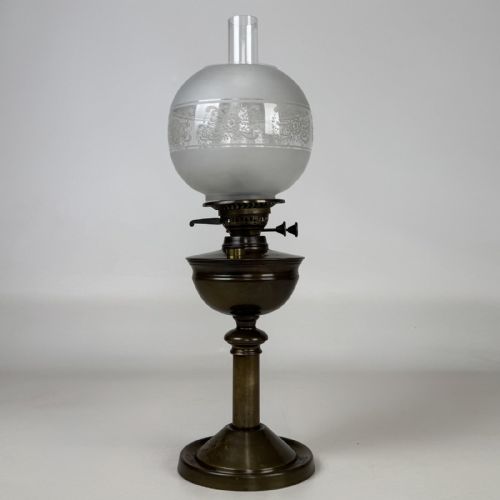
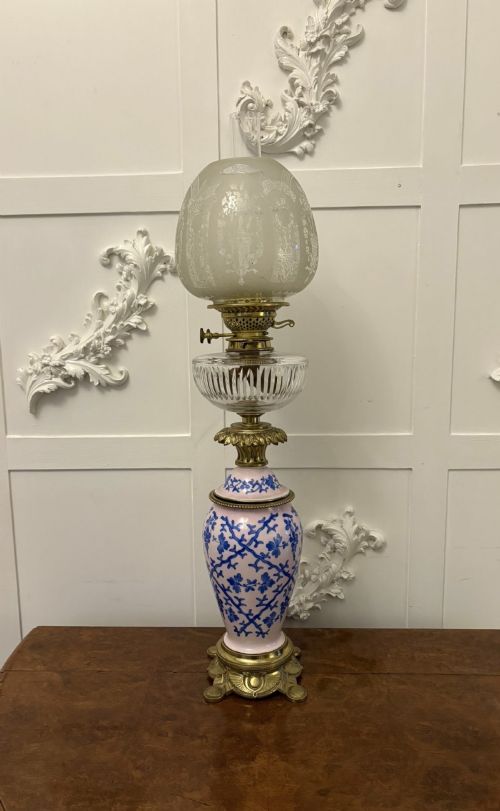
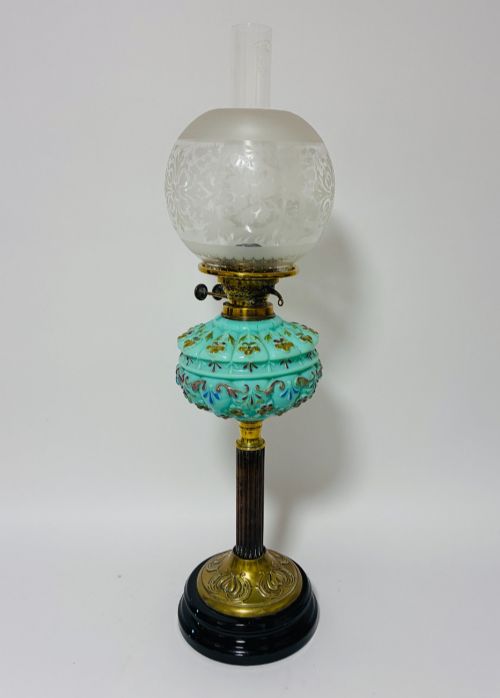
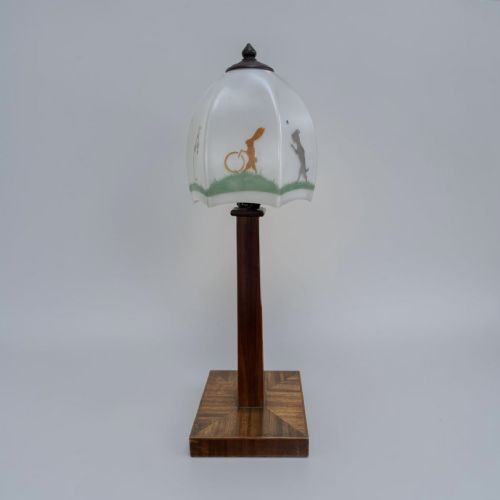
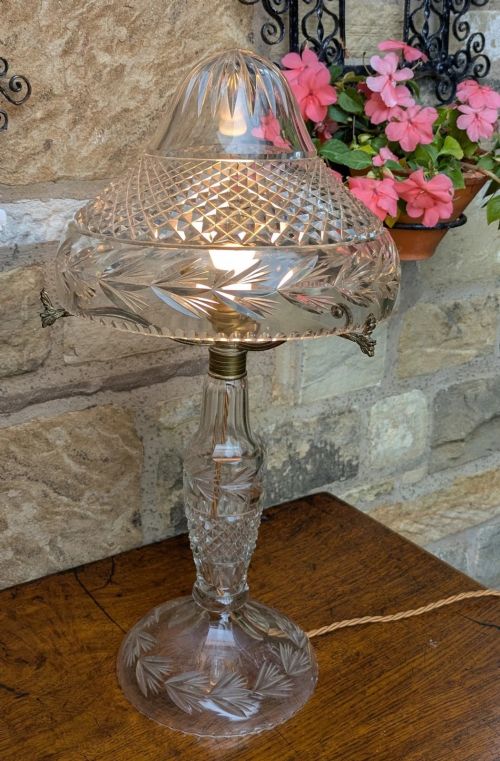
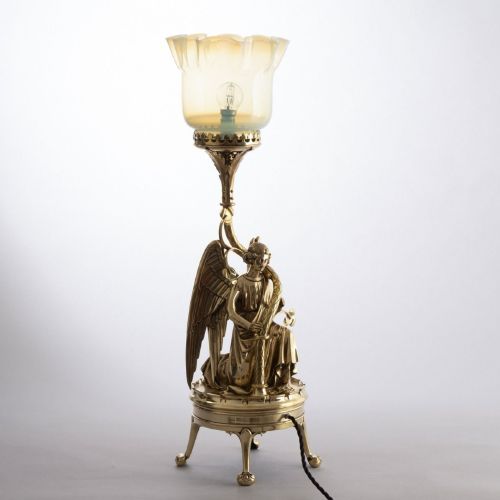
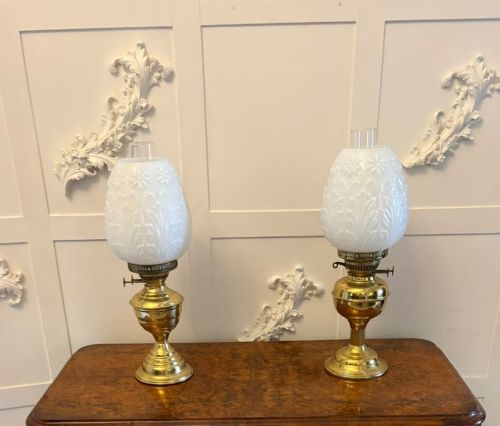
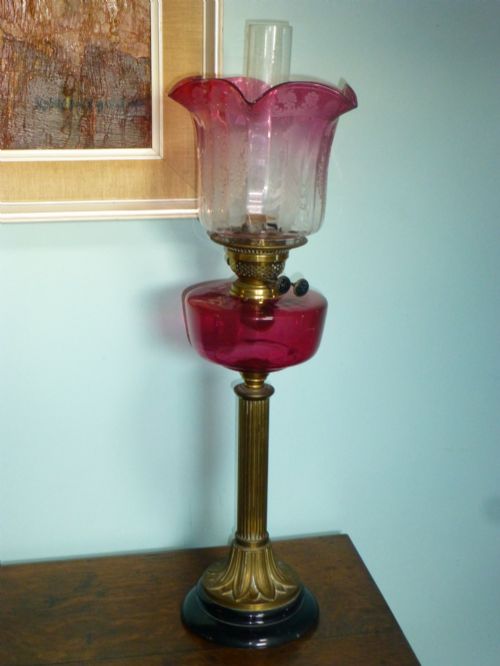
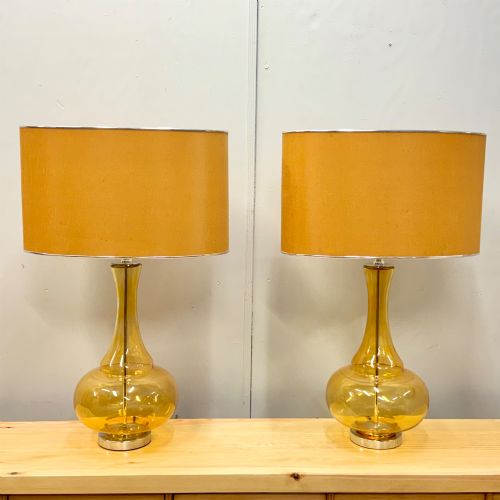
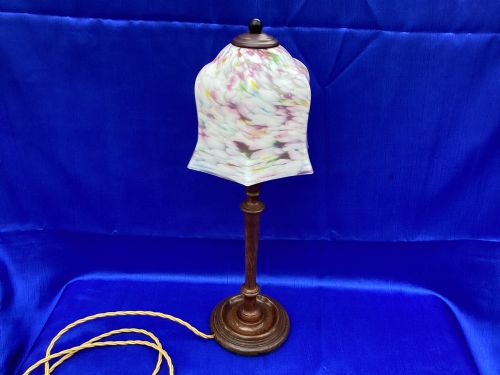
A glass shade table lamp covers a variety of lighting forms, ranging from converted Victorian oil lamps to Art Deco and Edwardian desk designs. The pieces met most frequently on this page combine sturdy metal or ceramic bases with coloured, opaline, or cut glass shades.
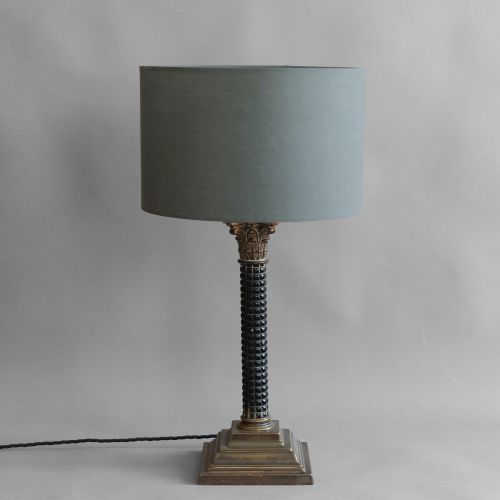
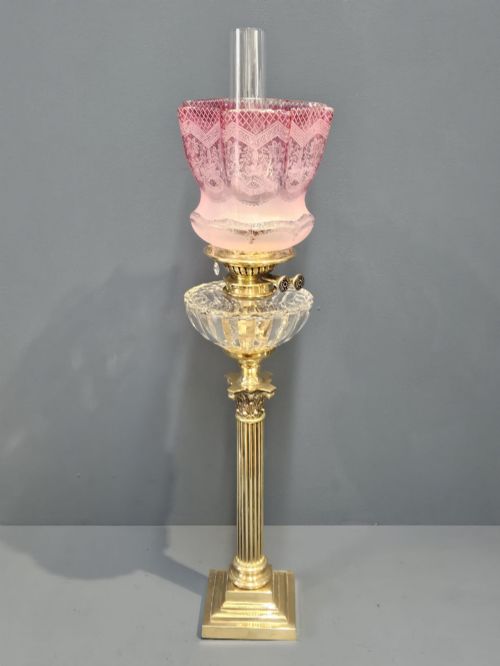
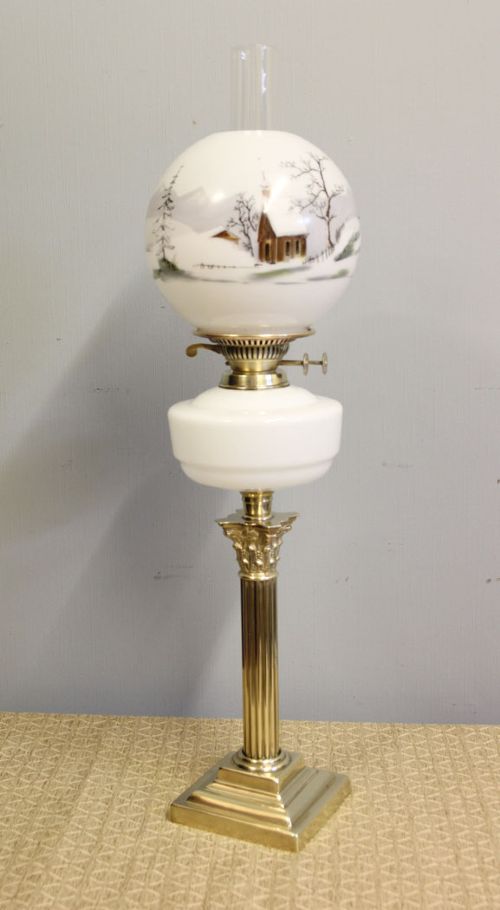
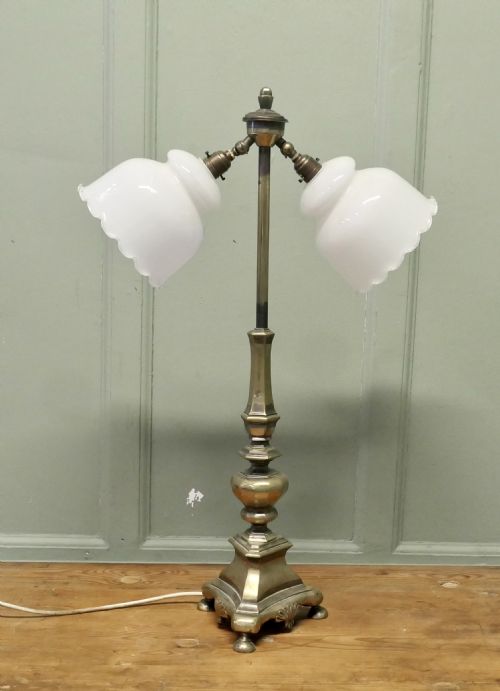
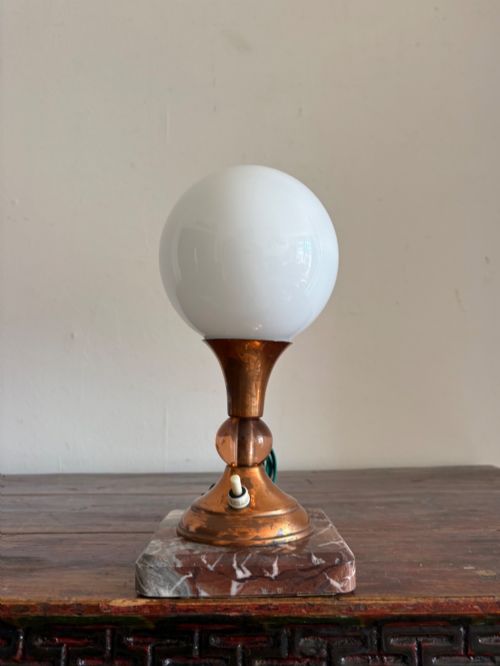
Many examples originate from the nineteenth and early twentieth centuries, spanning Victorian, Edwardian, and Art Deco periods. Forms include Corinthian column oil lamps, adjustable reading lights, and novelty figural designs utilising brass, copper, and marble.
The combination of a supportive base and a diffusive glass shade defines the category, whether configured originally for oil or adapted later for electricity.
How they were made
Makers utilised brass, copper, and cast metal for the structural columns and bases, often pairing them with heavy ceramic or marble plinths for stability. Metalwork involved casting, spinning, and turning, frequently finished with gilding or polished lacquer.
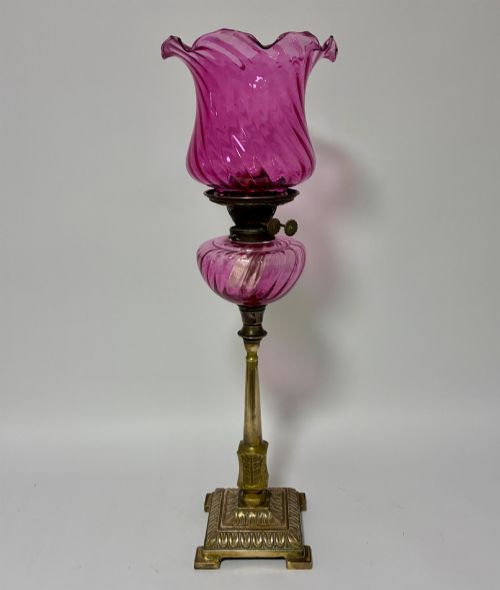
Shades were produced from specialised glass types such as cranberry, vaseline, opaline, and cut crystal, shaped through blowing, moulding, or hand-cutting. Etched patterns and painted winter scenes were applied to the glass before assembly onto the burner galleries or shade rings.
Several lamps feature novelty animal bases, including porcelain owls, dogs, and parrots keeping watch beside the light.
What varies in quality
Quality rests in the weight of the metal casting, the crispness of column fluting, and the depth of hand-cut or moulded detail in the glass shade. Superior examples show careful proportion between base and shade, using thick brass components and richly coloured glass without cloudiness.
Maker marks on burners or bases, such as Hinks or Taylor Tunnicliff, distinguish standard production pieces from finer factory outputs. The integration of specialised mechanisms, like duplex burners or rise and fall adjustments, further elevates a piece.
Hinks·Taylor Tunnicliff·Gustave Serrurier Bovy·Sitzendorf·Birks
The Glass Shade Table Lamp Glossary
- Opaline glass
- Opaque or translucent glass with a milky appearance, often tinted in soft shades of pink or blue. It diffuses light evenly across a room.
- Vaseline glass
- Uranium glass that exhibits a distinct yellow-green colour and glows under ultraviolet light. It was widely utilised in Victorian and Edwardian shade production.
- Duplex burner
- A double-wick burner mechanism found on larger period oil lamps. It provided a brighter illumination and required wider galleries to hold the matching shade.
- Cranberry glass
- Transparent red glass created by adding gold chloride to the molten batch. It is a defining feature of many nineteenth-century lamps.
Glass Shade Table Lamp: Frequently Asked Questions
How do I wire a period lamp?
Rewiring typically involves threading modern heat-resistant flex through the central column to a suitable lampholder housed beneath the burner or gallery. It is wise to consult a qualified electrician to ensure safety standards are met.
Original burners can often be retained with discreet internal adaptations that avoid damaging the historic metalwork while accommodating modern bulbs safely.
What is a duplex burner?
A duplex burner uses two flat wicks side by side to produce a significantly brighter flame than standard single-wick oil lamps. This mechanism required a sturdier brass collar and a larger glass shade.
These double burners are commonly found on taller Victorian column lamps designed for principal rooms.
How do I date an oil lamp?
Dating relies on stylistic markers in the brass casting, the patent stamps on the burner mechanisms, and the manufacturing technique of the glass shade. Victorian examples often display Gothic or classical revival motifs.
Later Edwardian and Art Deco pieces introduce simplified geometric lines, chrome finishes, or distinctively coloured glass shades.
Are these lamps converted from oil?
Many table lamps from the nineteenth century began life as oil or paraffin lamps before being converted to electricity at a later date. This conversion process usually preserves the original brass reservoir and burner assembly.
Some pieces retain their original glass fonts and chimneys alongside the fitted electrical components.
What maintenance do glass shades need?
Glass shades should be washed gently in warm soapy water using a soft cloth to remove dust and historic grime without damaging painted or etched details. Avoid abrasive cleaners that can scratch softer opaline or vaseline glass surfaces.
Metal bases benefit from occasional dusting with a dry microfibre cloth to preserve their polished or patinated finishes.