


Glass Pendant Fixture
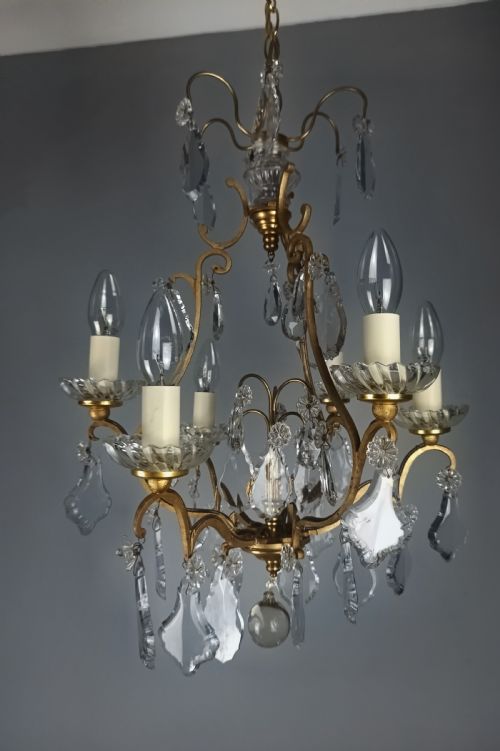
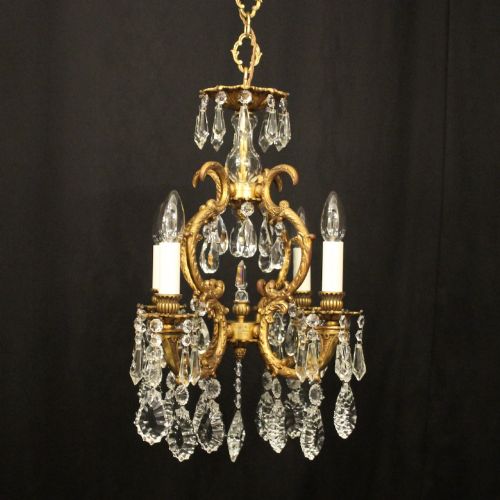
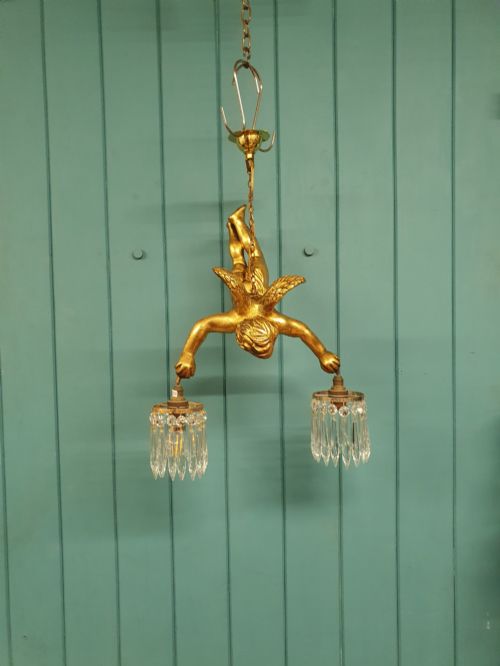
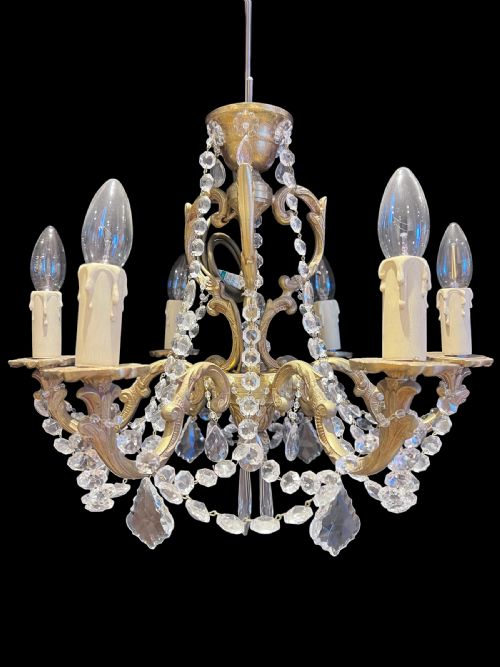
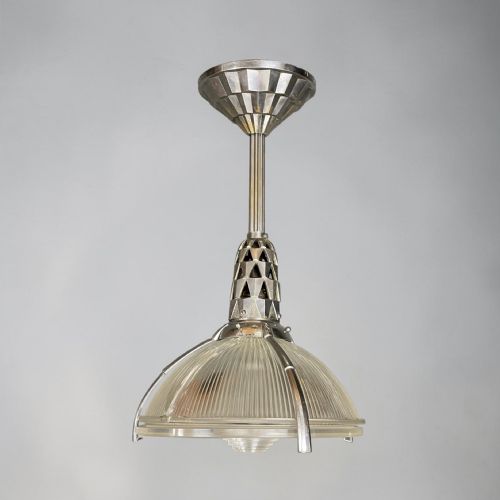
A glass pendant fixture brings focused illumination and period character to a room, offering everything from simple Edwardian globes to elaborate Art Deco designs.
Glass Pendant Fixture
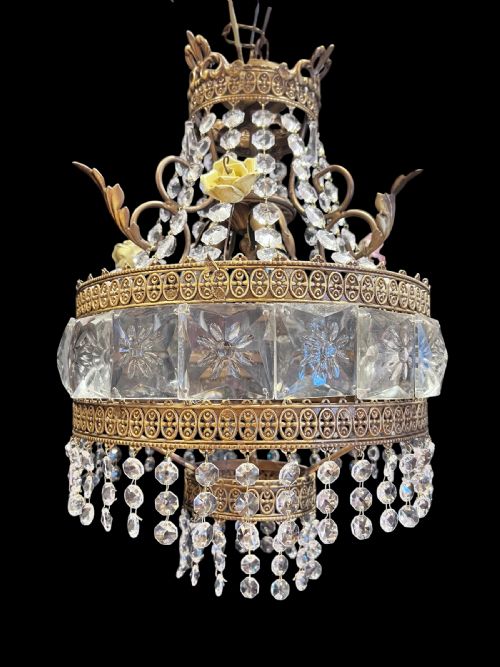
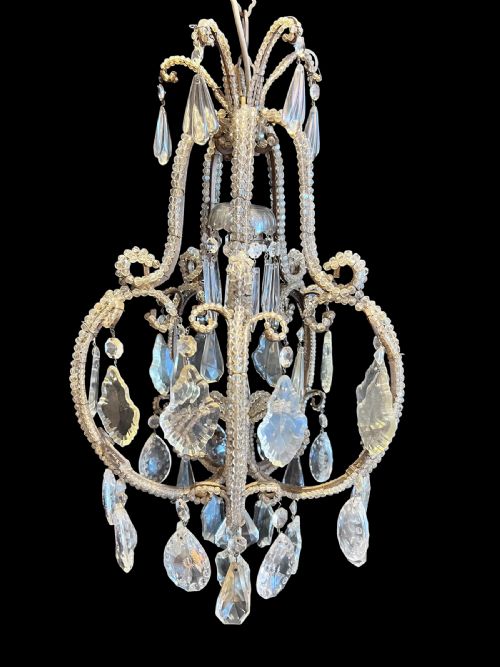
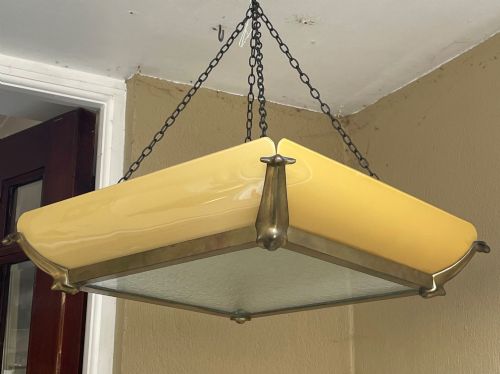
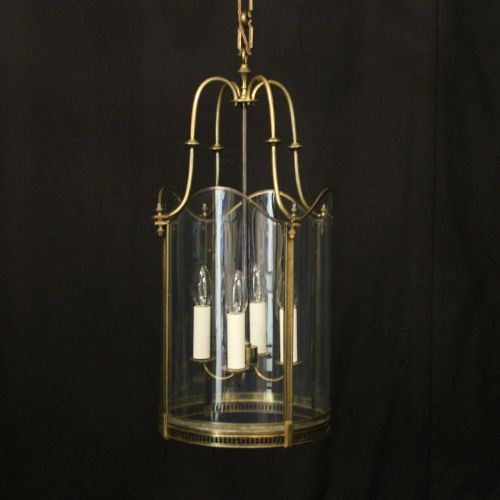
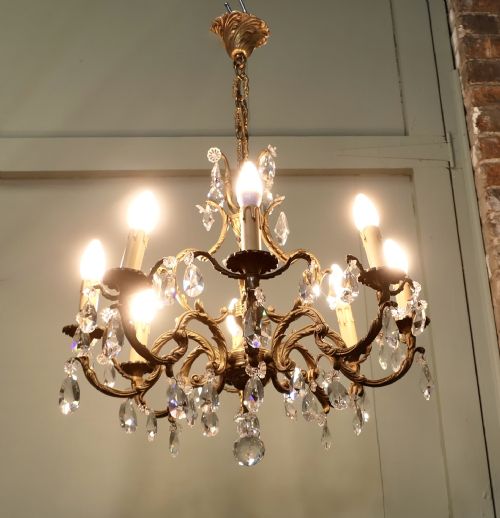
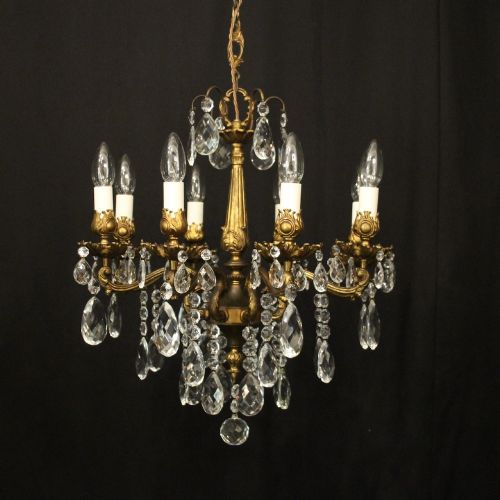
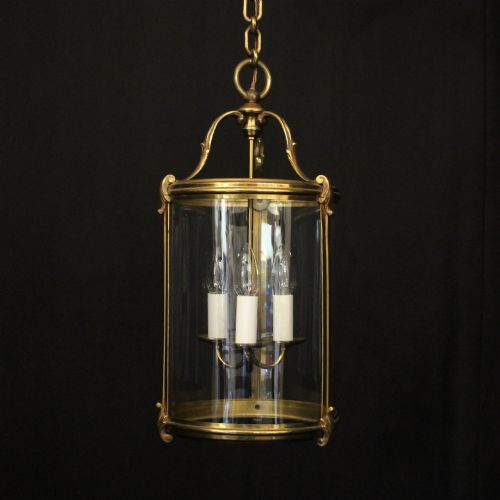
When you search for a glass pendant fixture, you encounter hanging illumination gathered across the Victorian, Edwardian, and Art Deco periods. These items range from simple single-bulb globes to grand multi-light chandeliers and enclosed hall lanterns.
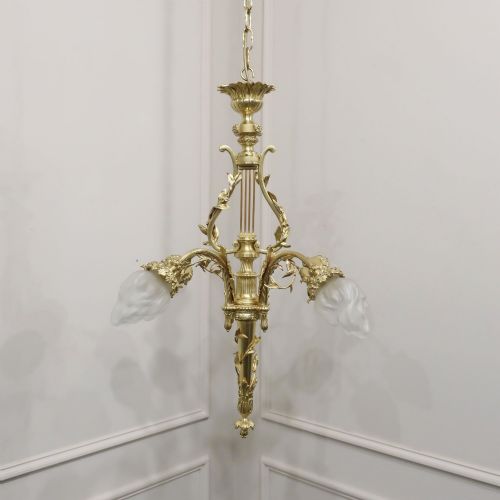
The selections on this page lean heavily toward French styles like Empire, Neoclassical, and Rococo, alongside British Arts & Crafts and American slip shade designs. Brass, bronze, and gilt metal frames support cut crystal, opalescent glass, and leaded panels.
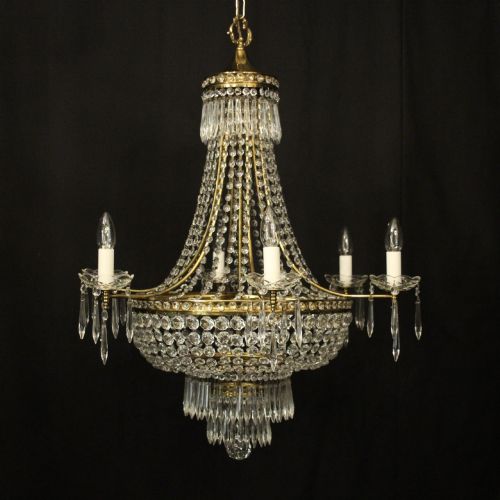
You will frequently find forms such as tent and waterfall chandeliers, Moravian stars, and moonstone pendants suspended from chains or rods. Each variation serves to diffuse overhead illumination while anchoring the visual centre of a space.
How they were made
Frames rely upon cast and spun metals like brass, bronze, and gilt metal to provide structural integrity for hanging weight. Smiths and founders worked these metals into decorative arms, bezels, and ceiling plates.
Glass elements combine mould-blown globes, leaded panels, and hand-cut crystal prisms hung with wire pins. Artisans shaped opalescent and moonstone glass to soften harsh electrical glare.
Some heavy brass chandeliers conceal gas-era origins, having shed their original burners for modern wiring without losing their charm.
What varies in quality
The weight and finish of the metalwork set the baseline for quality, distinguishing solid cast bronze and heavy brass from lighter plated alternatives. Crispness in chased leaf decoration and structural rigidity dictate longevity.
Clarity and depth in the glass components separate standard utilitarian shades from superior cut crystal and specialised opalescent or moonstone pieces. The presence of matching original lustres and complete prismatic arrays elevates a fixture's overall cohesion.
Émile-Jacques Ruhlmann
The Glass Pendant Fixture Glossary
- Plafonnier
- A ceiling light fixture that sits flush or close to the ceiling surface rather than hanging on a long drop. These often utilise moulded glass bowls or globes.
- Tent and waterfall
- A chandelier configuration featuring a gathered upper canopy of crystals resembling a tent that cascades down to a lower ring of lights. This style creates a dense drapery of light-refracting glass.
- Slip shade
- A type of shade held in place by a metal frame rather than screws, popular during the Art Deco period. These pressed glass panels slot directly into the fixture armature.
- Lustre
- A cut crystal pendant or drop suspended from a chandelier to refract light. They attach via small wire loops to the metal frame.
- Moravian star
- A hanging lantern constructed from bevelled glass panes set into a multi-pointed geometric metal frame. These lanterns project intricate star-patterned shadows.
Glass Pendant Fixture: Frequently Asked Questions
How do I hang a glass pendant fixture safely?
Suspension requires adequate ceiling joist support or a rated ceiling box capable of holding the combined weight of metal framing and glass components. Professional wiring ensures that older brass and bronze frames are properly earthed.
Adjust the hanging chain or rod to position the fixture at the correct height for your room volume and traffic flow. Consideration must be given to clearance beneath larger chandeliers and multi-light lanterns.
What rooms suit a glass pendant fixture?
Pendant lights and lanterns suit hallways, stairwells, and dining spaces where direct or diffused overhead illumination is required. Smaller globes and plafonniers fit lower ceilings in bedrooms and landings.
Larger tent and waterfall chandeliers demand higher ceilings to allow proper clearance and visual proportion. Hall lanterns work particularly well in entranceways to set a distinct period tone.
How do I date a glass pendant fixture?
Dating relies on stylistic markers, manufacturing techniques, and materials characteristic of specific eras like the Edwardian period or Art Deco movement. Victorian and 19th-century pieces often feature heavier brass gasolier conversions and rich opalescent shades.
Interwar pieces display streamlined geometric forms or characteristic slip shades. Examining the construction methods of the metal frame and glass mouldings helps narrow down the decade of production.