


Glass Front Corner Cabinet
A glass front corner cabinet fits neatly into a neglected angle, holding silver, china or books behind transparent panels.
Glass Front Corner Cabinet
A glass front corner cabinet turns an awkward room junction into a display space, using vertical height without dominating the floor area. The selections here span the eighteenth century through to the art deco period, offering both hanging and standing forms.
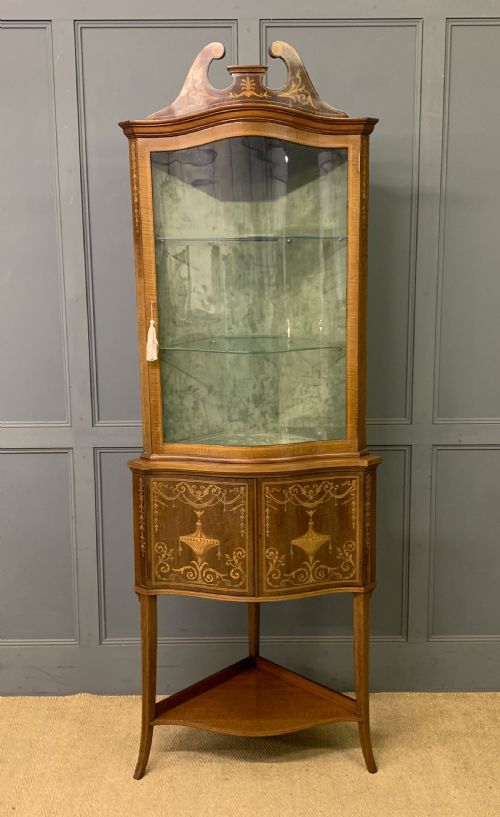
Mahogany dominates the available examples, often featuring bow fronts or serpentine shapes, alongside walnut, oak and ebonised timber. Most pieces date from the Edwardian era or the Georgian period, showcasing glazed doors that frame the contents.
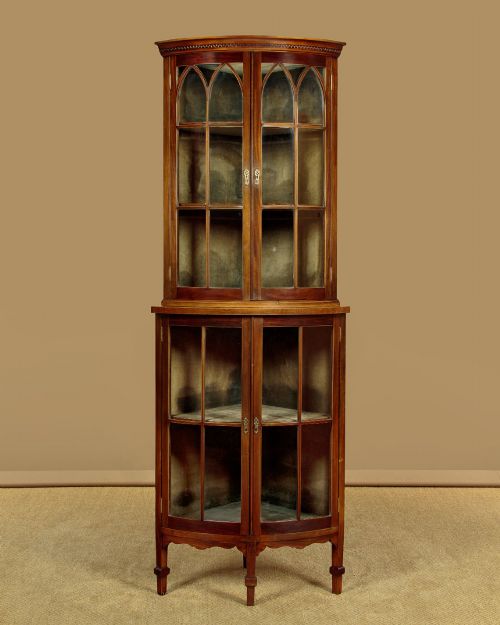
Makers and workshops utilised specific regional woods like satinwood for inlay work, creating visual contrast against darker cabinet carcasses. Buyers encounter variations ranging from simple country house cupboards to double height architectural display cases.
Materials and construction
Cabinet makers constructed these units primarily from solid or veneered mahogany, oak and walnut, fitted with brass hinges, escutcheons and sometimes glazing bars. Selected pieces incorporate delicate marquetry inlay in satinwood or ebonised wood details to enhance the facade.
The glazing involves individual panes held by timber or brass framework, ranging from simple flat panels to complex bowed glass doors. Carcasses rely on traditional joinery designed to fit tightly into ninety degree wall angles.
Some corner cabinets hide secret internal drawers behind fixed display shelves for stashing quiet treasures.
Distinguishing quality
The refinement of the timber figure and the precision of the marquetry inlay set superior examples apart from standard utility furniture. Flame mahogany veneers and crisp brass mounts indicate a higher workshop standard.
Structural complexity influences value, particularly serpentine or bowed fronts that demand advanced woodworking skill compared to flat panel designs. Double height configurations and original curved glass panes represent higher tiers of craftsmanship.
Edwards And Roberts
The Glass Front Corner Cabinet Glossary
- Bow front
- A convex curved cabinet facade that projects outward in a rounded sweep. This shape requires specialised joinery to match the curve of the glass doors.
- Marquetry
- Decorative patterns formed by inserting thin pieces of wood, shell or ivory into a veneered surface. Craftsmen used contrasting timbers like satinwood to create floral or geometric motifs.
- Serpentine
- A furniture front featuring a concave centre flanked by two convex ends, creating a gentle wave shape. This profile indicates skilled cabinet making.
- Double height
- A tall cabinet built in two distinct vertical sections, often featuring upper and lower storage areas. These pieces provide substantial display capacity.
- Ebonised
- Timber treated with a dark finish to imitate expensive ebony wood. Makers applied this technique to create striking contrast with brass mounts.
Glass Front Corner Cabinet: Frequently Asked Questions
How do I fit a corner cabinet?
Measure the wall angle carefully, as older properties often deviate from a strict ninety degrees. Ensure the floor is level so the doors swing correctly without binding against the frame.
Secure tall standing cabinets to the wall using discreet brackets for stability, particularly if the piece houses heavy ceramics or glassware.
Are these cabinets hung or standing?
Both formats exist within the selection, ranging from wall mounted hanging cupboards to heavy floor standing or double height units. Hanging versions require robust fixings into solid masonry or studwork to support the weight of timber and glass.
Standing models rest directly on the floor, often utilising bracket feet or a shaped plinth base to distribute the load evenly.
How do I care for antique mahogany?
Keep wooden surfaces away from direct sunlight and heat sources to prevent the timber from drying out, fading or splitting. Apply natural beeswax periodically to nourish the grain and maintain a soft lustre.
Avoid silicone based polishes, which build up over time and attract dust, dulling the original finish of the polish.
What is the difference between Georgian and Edwardian styles?
Georgian pieces date from the eighteenth and early nineteenth centuries, characterised by architectural proportions, robust mahogany timbers and understated brass hardware. They emphasise classical lines and functional elegance.
Edwardian interpretations from the early twentieth century often draw on earlier aesthetics like the Sheraton revival, frequently incorporating lighter satinwood inlay, marquetry and delicate glazing bars.