


Glass Dome Bell Jar
Glass dome bell jar specimens and display cases preserve delicate Victorian interiors and taxidermy under clear blown glass.
Glass Dome Bell Jar
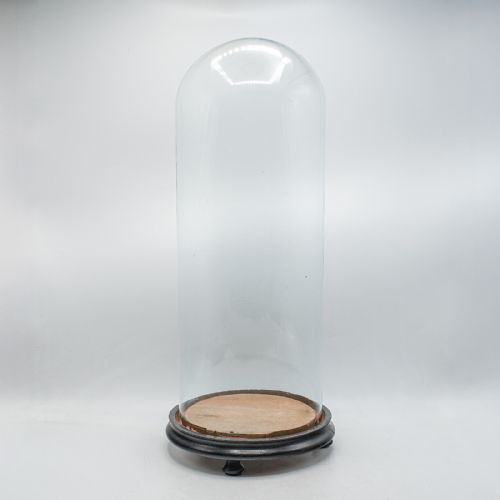
A glass dome bell jar serves to protect and display fragile ornaments, botanical arrangements, and taxidermy specimens from dust and damage in the home. These pieces appear across Victorian, Edwardian, and Georgian periods, originating primarily as English showcases for collectors and parlours.
Buyers most frequently encounter large and small display domes sitting upon wooden bases made of timber, oak, beech, or ebonised wood. The forms range from tall specimen cases and flat-sided domes to wide clock domes and oval dioramas designed for tabletops and mantelpieces.
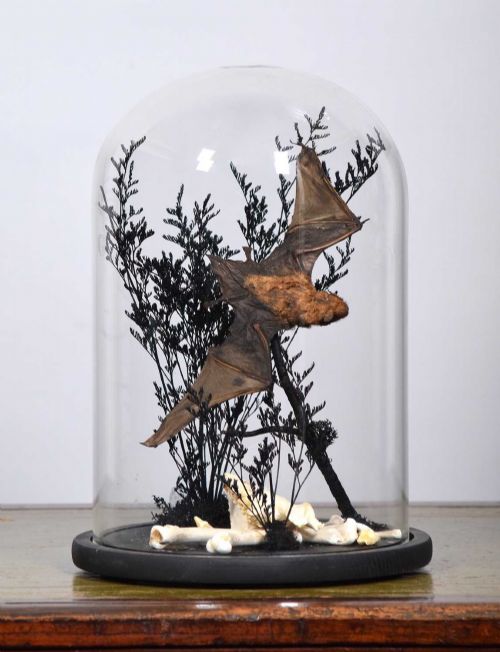
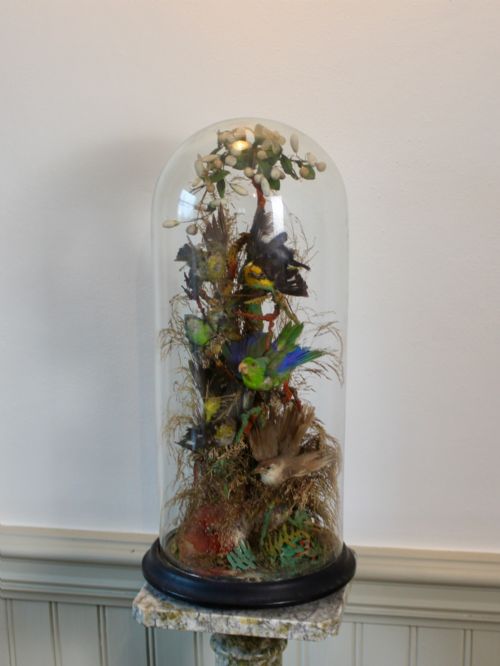
The contents sheltered beneath the glass vary widely, including taxidermy birds, bats, beadwork bouquets, and fruit still lifes. Each arrangement reflects period interests in natural history, scientific gathering, and decorative parlour displays.
Factors influencing quality
The clarity and weight of the blown glass distinguish finer examples from standard production, with heavier, distortion-free covers representing superior craftsmanship. The timber bases show quality through timber selection, such as solid oak or precise ebonisation, alongside traditional joinery.
The condition and complexity of the internal display dictate the overall merit of the piece. Intact taxidermy arrangements, detailed beadwork, and robust structural mounting within the dome indicate careful period assembly and preservation.
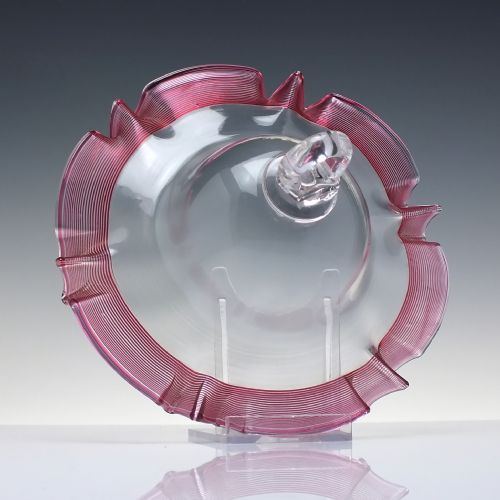
Listings feature items spanning the Georgian, Victorian, and Edwardian periods, utilising glass, timber, velvet, and feathers.
The Glass Dome Bell Jar Glossary
- Bell jar
- A rounded, bell-shaped glass cover used to protect sensitive objects. It lifts directly from its base to allow access to the interior.
- Cloche
- A bell-shaped glass or iron cover traditionally used to protect plants or display items. The listings include original cast iron examples alongside glass variants.
- Ebonised wood
- Timber treated to imitate ebony, providing a deep black finish. This material is frequently found on Victorian display bases.
- Taxidermy dome
- A glass cover specifically constructed to house preserved animal specimens. These enclosures protected delicate feathers and fur from dust in nineteenth-century parlours.
- Diorama dome
- An oval or multi-sided glass case configured to display a three-dimensional scene. Collectors utilised these for complex botanical or zoological arrangements.
Glass Dome Bell Jar: Frequently Asked Questions
What fits under a glass dome bell jar?
These covers traditionally house delicate items requiring protection from dust and handling in a parlour setting. Common contents include taxidermy specimens, botanical arrangements, clocks, and beadwork.
Collectors also used them for fruit still lifes, feathers, and scientific or professor's specimens. The interior depends entirely on the original purpose of the display case.
How do I clean a glass dome?
Glass covers require careful handling due to their age and the delicate nature of mouth-blown material. Lifting the dome entirely off its base allows for safe cleaning with a soft cloth and mild glass cleaner.
Avoid applying moisture near the wooden base or internal taxidermy and fabric elements. Keeping the interior sealed prevents dust accumulation on the specimens inside.
How do I date a glass dome?
Dating relies on the materials of the base, the shape of the glass, and the style of the internal contents. Victorian and Edwardian examples often feature distinct turned timber bases and hand-blown glass characteristics.
Labels, fasteners, and the species or style of taxidermy provide further chronological clues. Earlier Georgian and 19th-century pieces display heavier glass walls and specific mounting techniques.