



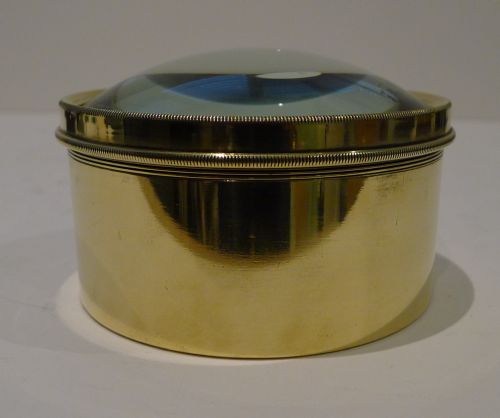
Glass Desk Paperweight
A glass desk paperweight anchors scattered papers while bringing tactile weight and artistic form to the workspace.
Glass Desk Paperweight
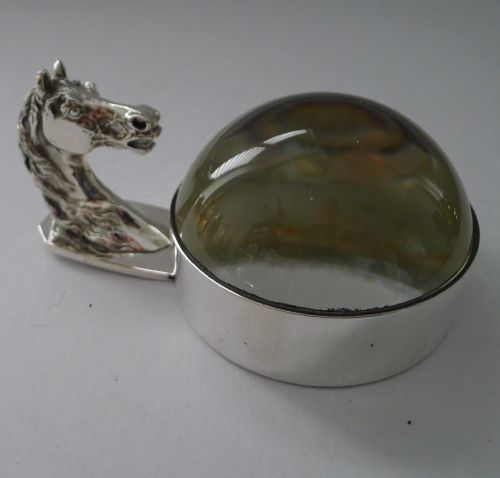
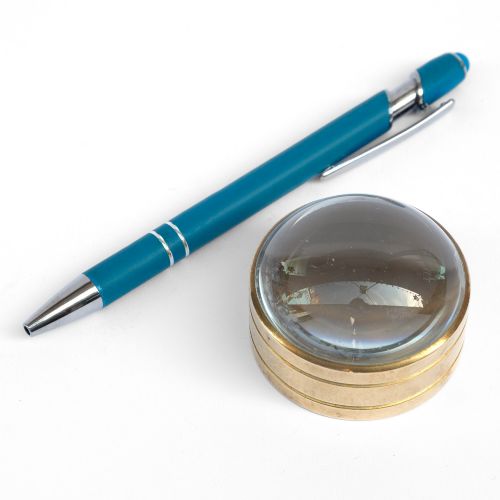
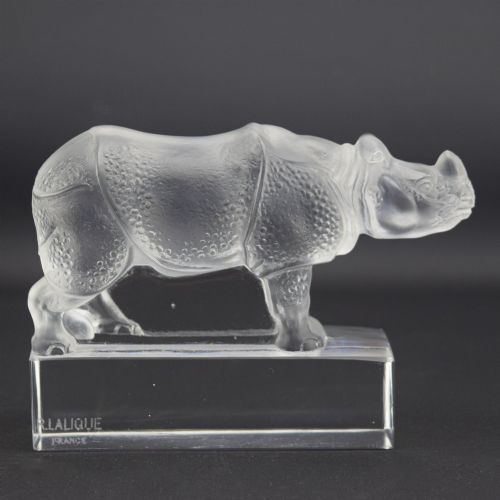
A glass desk paperweight serves a practical purpose on writing furniture while functioning as a small sculpture. The items appearing under this search phrase span from nineteenth-century floral designs to mid-twentieth-century moulded animal figures and heavy brass-mounted lenses.
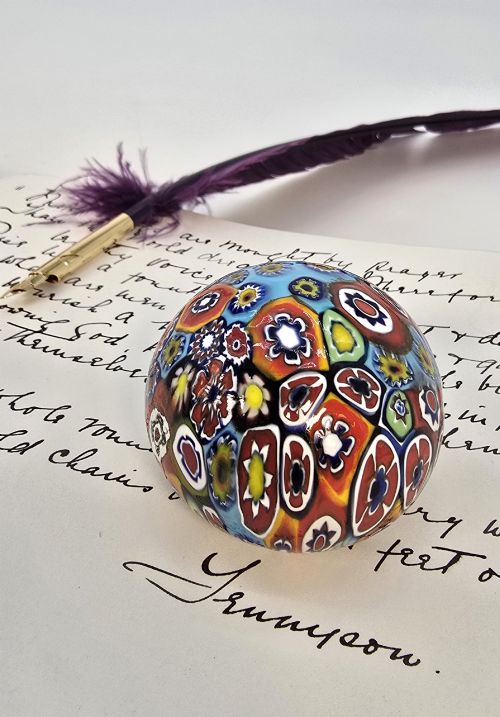
Makers across England, France, and Italy produced these desk accessories in various styles including Victorian, Art Deco, and Mid-Century Modern. Examples range from simple clear lenses to complex Italian millefiori and French pressed glass creations.
Materials and Techniques
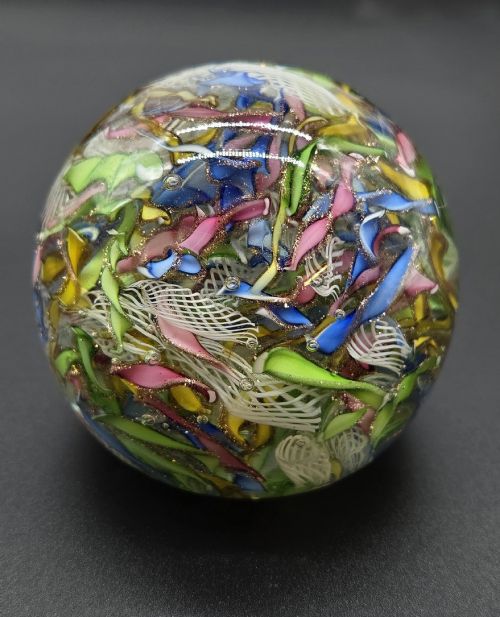
Glass forms the primary body of these objects, utilised either as clear crystal, frosted surfaces, or coloured mixes incorporating gold aventurine. Metal mounts in brass, silver plate, and sterling silver frequently frame or support the glass elements.
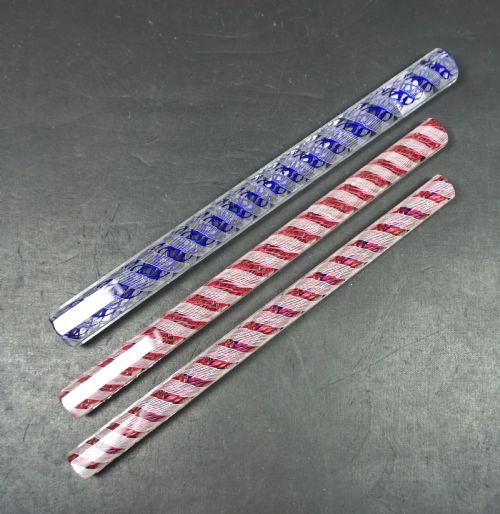
Techniques involve molten glass manipulation, facet cutting, and moulded presswork to achieve specific shapes such as birds, elephants, and geometric rulers.
Listings feature items spanning the 1850s to the 1960s, constructed from glass, brass, and silver plate across Victorian and Art Deco styles.
Evaluating the Pieces
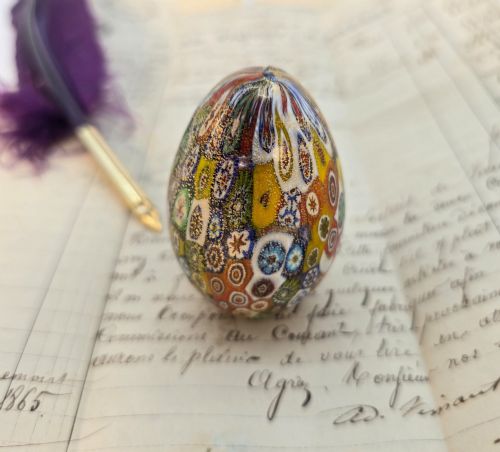
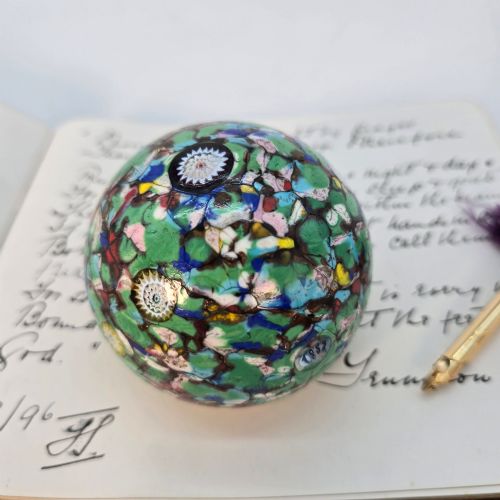
The distinction between standard items and superior examples lies in the crispness of the moulding and the clarity of the material. Complex internal patterns such as multi-layered millefiori require advanced skill compared to plain pressed glass.
The integration of secondary materials, such as heavy brass mountings or sterling silver rulers, dictates the overall solidity and finish of the desk accessory.
Rene Lalique·Hermes Paris·Cindo Paris·Optimus Lens·St Louis
The Glass Desk Paperweight Glossary
- Millefiori
- A glasswork technique producing distinctive patterned canes that resemble tiny flowers when cross-sectioned. These multi-coloured canes appear suspended within clear glass masses.
- Frosted Glass
- A translucent surface texture achieved by acid-etching or sandblasting clear material. This treatment diffuses light and highlights sculpted details on animal figures.
- Gold Aventurine
- A type of glass containing suspended metallic copper or gold particles that create a sparkling effect. It adds depth and shimmering contrast to the interior of the piece.
- Facet Cut
- A method of grinding and polishing flat geometric planes onto the exterior of a glass object. This process increases light refraction across the surface.
- Desk Seal
- A handheld stamp featuring an engraved matrix at the base, often combined with a magnifying glass or paperweight handle. These implements were pressed into sealing wax for correspondence.
Glass Desk Paperweight: Frequently Asked Questions
How were these paperweights used?
These items held down loose papers and correspondence on nineteenth and twentieth-century writing desks. Many combined this weight function with lenses for reading small text or integrated seals for wax stamping.
Owners kept them within arm's reach alongside inkwells and pen trays as functional desktop tools. Their decorative qualities also allowed them to simply sit on display when not anchoring documents.
How do I clean an antique glass paperweight?
Wipe the glass surface gently with a soft, lint-free cloth dampened with warm water and mild soap. Avoid submerging items that feature metal mounts or fitted brass bases to prevent corrosion.
Dry the piece thoroughly immediately after cleaning to maintain the clarity of the glass and the shine of any silver or brass components.
How can I tell the period of a paperweight?
Examine the manufacturing style, the type of glass utilised, and any associated metalwork or maker signatures. Victorian pieces often feature intricate floral motifs, while 1930s examples lean towards geometric Art Deco lines or stylised animal forms.
Patent dates or registration numbers stamped into metal mounts also help narrow down the decade of production.
Are these items purely decorative?
While many collectors display them as miniature sculptures, these objects retain their original physical utility. The heavy mass of solid glass or brass-mounted lenses remains effective for securing documents on a working desk.
Objects incorporating magnifying lenses or rulers continue to serve practical functions in daily study and writing tasks.