







Glass Desk Ink Pot
A glass desk ink pot brings tactile weight and period character to a working surface, offering a solid reservoir for daily writing.
Glass Desk Ink Pot
A glass desk ink pot provides a heavy, stable vessel designed to hold liquid ink securely on a writing surface without tipping during use. These practical accessories protect the nib and keep ink contained, combining utility with decorative presence on a desk.
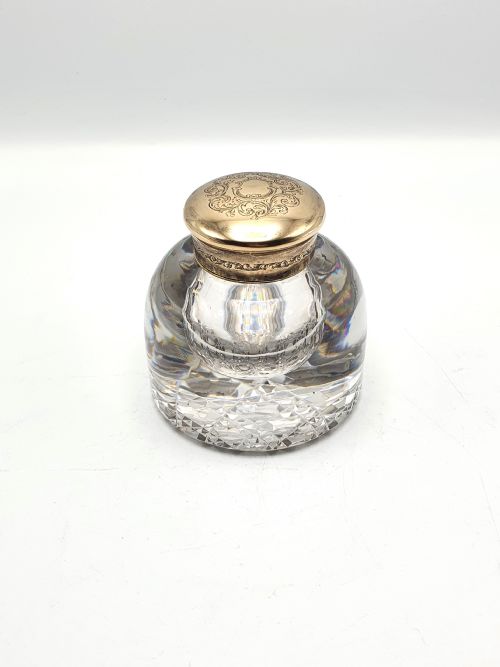
The selections available here range from simple, robust nineteenth-century cut glass containers to elaborate Edwardian and Art Deco examples fitted with precious metals. Buyers frequently encounter pieces combining thick glass bodies with hinged sterling silver lids or brass mounts.
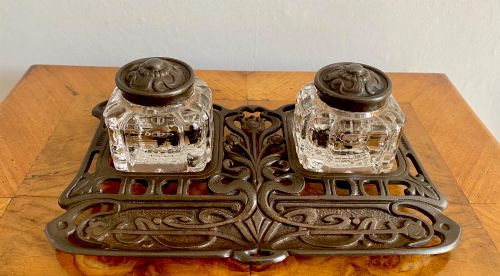
Origins span across the Victorian, Edwardian, and Art Deco periods, showcasing diverse aesthetic movements from Gothic Revival to flowing Art Nouveau lines. Standard forms include standalone desktop inkwells, multi-bottle inkstands, and novelty pieces featuring distinctive materials like enamel and vermeil.
Materials and construction
Makers shaped heavy glass reservoirs through moulding, facet cutting, and blowing to create thick walls capable of withstanding the daily pressure of dipping metal nibs. Cut glass and crystal components achieve brilliance through precise surface grinding and polishing.
Metal mounts in brass, sterling silver, and vermeil secure the glass bodies, often featuring hinged lids designed to minimise evaporation and dust accumulation. Artisans applied decorative techniques such as guilloche enamel and intricate metalwork to elevate standard functional desk wares into luxury items.
Glass Desk Ink Pot Retail Price Guide 2026
Typical asking prices for glass desk ink pot among the pieces listed under this phrase on Sellingantiques today, from the lower quarter to the upper quarter. They describe what is for sale here now, not the wider market.
Listings feature items spanning the Victorian era through the 1930s, incorporating cut glass, sterling silver, enamel, and brass.
Assessing quality and craftsmanship
Quality reveals itself in the clarity and weight of the glass, where deeper facet cutting and flawless crystal display superior material selection. Heavier glass bodies sit more securely and catch the light with greater depth than thinner, mass-produced alternatives.
The integration of metal hardware distinguishes finer pieces, particularly where hallmarked sterling silver or finely chased brass mounts fit precisely against the glass contours. Original components, such as matching glass inserts and intact enamel work, elevate the overall integrity of the piece.
Tiffany & Co·Kralik·Loetz
The Glass Desk Ink Pot Glossary
- Cut glass
- Glass shaped and patterned by grinding abrasive wheels against the surface to create sharp, light-reflecting facets. This technique adds substantial weight to desk accessories.
- Guilloche enamel
- A decorative metalworking technique where an intricate geometric pattern is engraved beneath a translucent enamel layer. It frequently appears on Edwardian and Art Deco desk items.
- Inkstand
- A fitted tray or stand holding one or more ink pots alongside space for pens and other writing paraphernalia. These larger desk furnishings organise writing materials in a unified presentation.
- Vermeil
- Sterling silver plated with a fine layer of gold. This finish offers the rich appearance of solid gold while utilising silver as the underlying structural metal.
- Novelty inkwell
- An ink pot fashioned into a playful or figurative shape, such as an animal or architectural subject. These pieces blend whimsical sculpture with utilitarian desktop storage.
Glass Desk Ink Pot: Frequently Asked Questions
How do I clean a glass desk ink pot?
Warm water and a soft bottle brush safely remove dried ink residues from the interior glass without damaging delicate metal mounts or silver lids. Harsh chemical cleaners and abrasive pads should be avoided to protect antique glass surfaces and hallmarks.
After washing, thoroughly dry the interior to prevent moisture accumulation beneath metal collars or hinged fixtures. Keeping the glass clear maintains the visual depth of facet-cut designs.
Were these pots used with fountain pens?
These ink pots were primarily designed for dip pens, where writers immersed the steel nib directly into the reservoir before writing. Fountain pens with internal ink reservoirs became common later, reducing the daily necessity for open desktop inkwells.
Despite changes in writing habits, these pots continue to serve as practical desk accessories or decorative containers. Many collectors use them today for modern calligraphy nibs.
How do I date an antique inkwell?
Hallmarks on silver mounts provide precise calendar years through official assay office stamps and date letters. Stylistic clues, such as flowing Art Nouveau motifs or geometric Art Deco lines, help narrow down the period when metal marks are absent.
Glass manufacturing techniques also indicate age, with older pieces displaying heavy lead crystal content and hand-polished pontil scars. Comparing the form against established Victorian and Edwardian design patterns confirms the manufacturing era.
Can I still use these for daily writing?
Using a vintage ink pot for everyday writing remains entirely practical provided the glass reservoir has no internal cracks. The heavy base provides excellent stability while dipping pens during writing tasks.
Ensuring the hinged lid closes properly helps prevent the ink from drying out too quickly between writing sessions. Regular rinsing prevents permanent staining inside intricate cut glass patterns.