

Glass Desk Accessory
A glass desk accessory brings daily utility and substance to a workspace, combining practical writing tools with decorative glass and metal craftsmanship.
Glass Desk Accessory
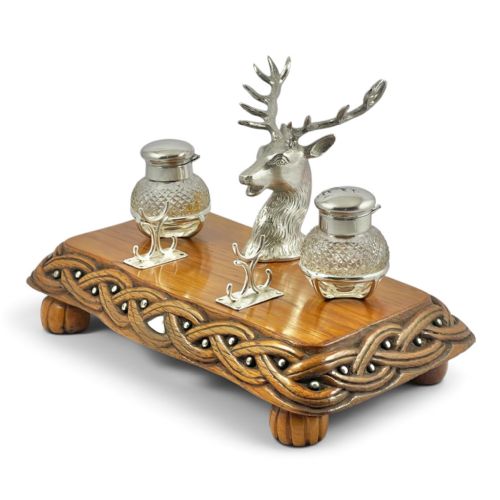
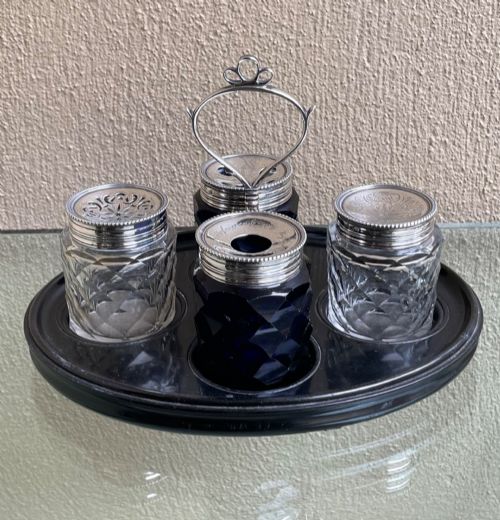
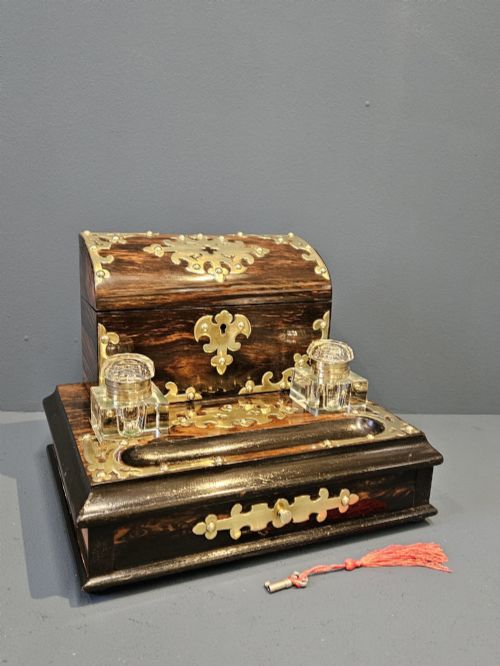
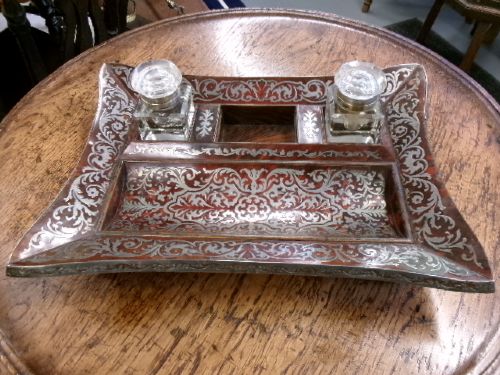
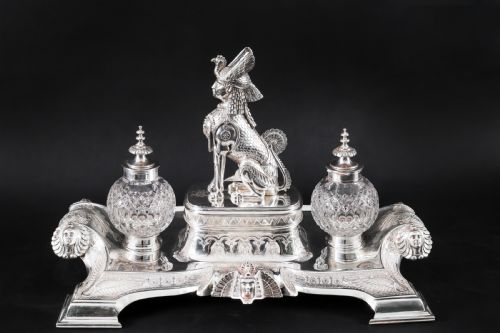
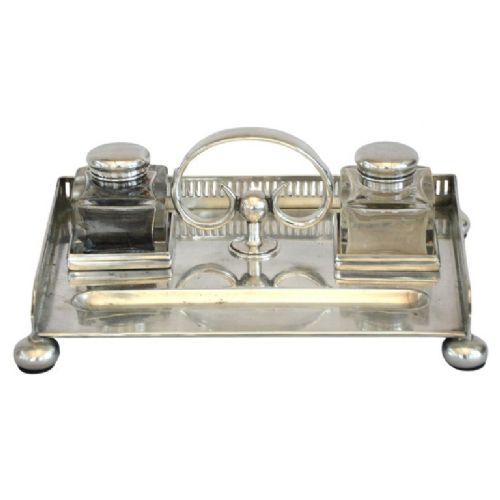
A glass desk accessory covers a range of functional workspace items built from glass, metal, and wood during the Victorian, Edwardian, and Art Deco periods. Buyers searching this phrase encounter practical objects designed to organise correspondence, illuminate text, or hold writing ink.
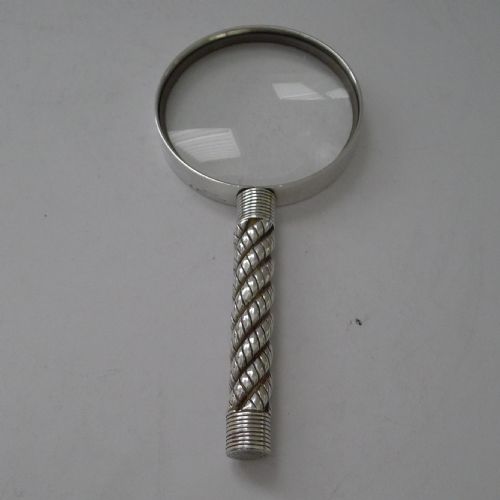
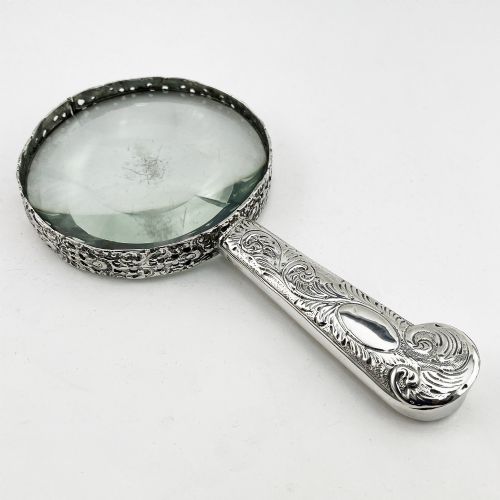
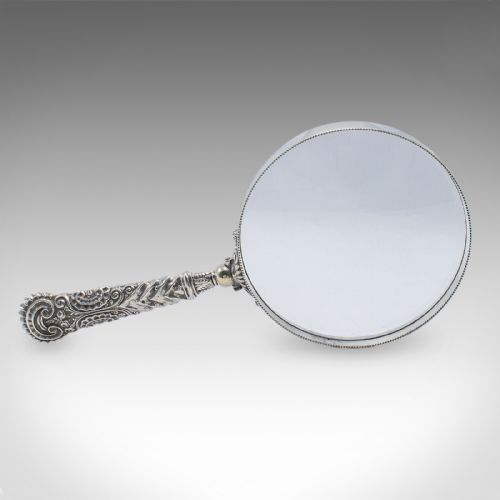
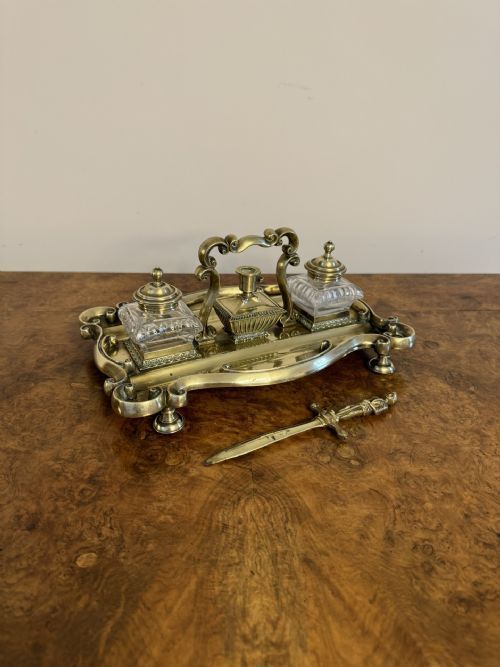
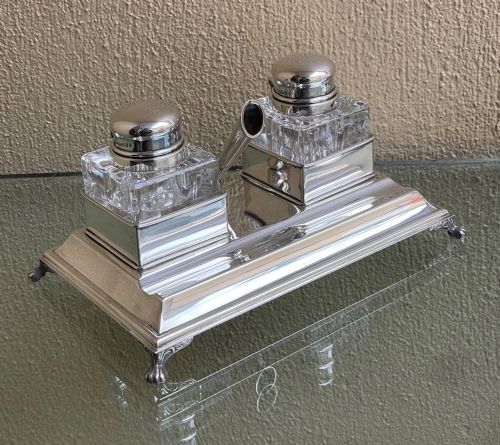
The selections span from heavy magnifying glasses and cut glass rulers to elaborate inkstands fitted with glass inkwells and silver mountings. Pieces originate from workshops across Britain, France, Italy, and beyond, utilising regional decorative styles.
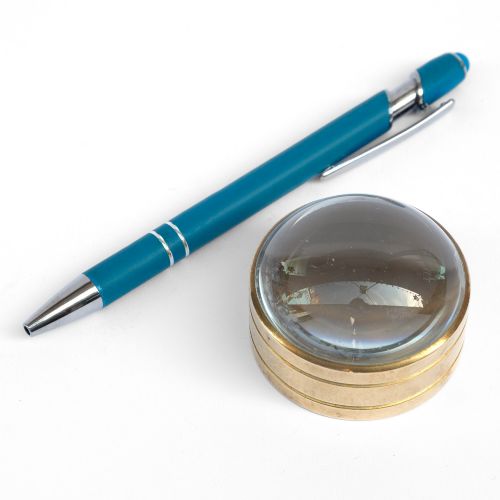
Inkstands and inkwells appear frequently alongside magnifying lenses and paperweights, reflecting the paper-heavy administrative tasks of nineteenth and early twentieth-century offices and libraries.
How they were made
Makers shaped glass through cutting, moulding, and paperweight techniques like millefiori and scrambled glass, creating heavy, transparent, or frosted forms. These glass elements combined with brass, sterling silver, silver plate, or carved wood bases to form stable desk equipment.
Metal components involved casting, brass mounting, and ormolu work, often secured to wooden or stone trays with fitted collars. Enamel work, such as guilloche, added decorative colour to silver frames and handles.
Object forms range from desk sets and magnifying glasses to matched pairs of animal bookends and glass paperweights.
What varies in quality
Quality rests in the weight and clarity of the glass, the crispness of facet cuts, and the integration between glass bodies and their metal mounts. Finer examples display heavier metal castings, substantial silver or brass mounts, and robust hinges that withstand regular handling.
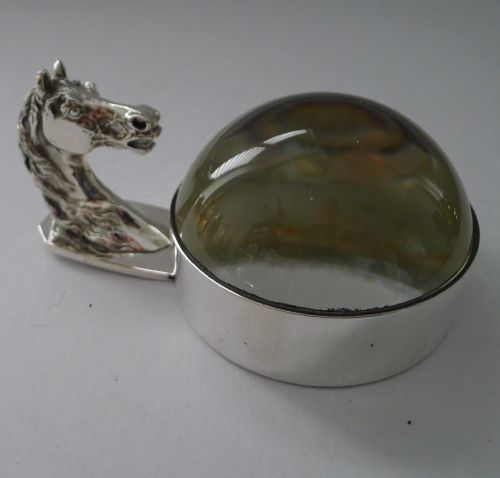
The distinction between standard office supplies and high-end library pieces lies in artistic execution, such as detailed animal carvings, signed French glassworks, or matched silver components across a complete desk set.
Hermes Paris·Elkington·Wilkinson Co·Walker And Hall·Rene Lalique·Broadway Co
The Glass Desk Accessory Glossary
- Inkstand
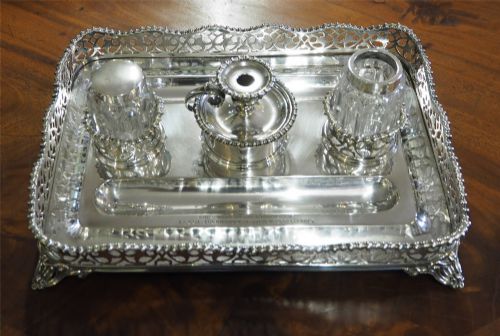
- A complete desk tray holding inkwells, pen rests, and sometimes a sander or taper stick. These assemblages served as the centrepiece of a nineteenth-century writing table.
- Match striker
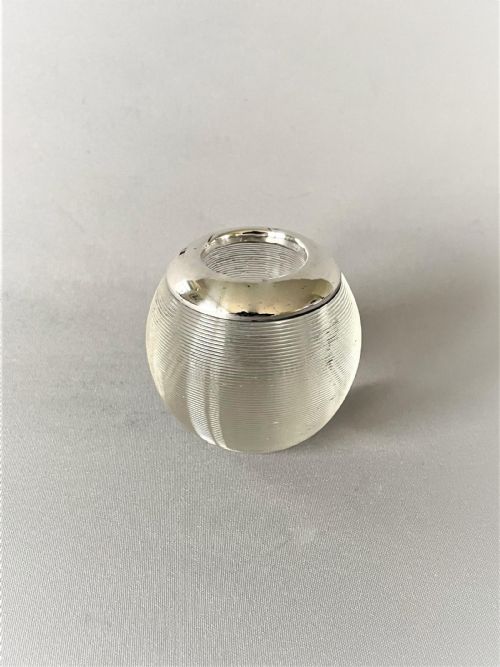
- A heavy container, often featuring a textured glass or ceramic striking surface, designed to hold and ignite matches safely on a desk. They frequently feature silver rims or collars.
- Guilloche
- A decorative technique where a precise, intricate pattern is mechanically engraved beneath a translucent layer of enamel. It frequently appears on Edwardian and Art Deco magnifying glass handles and inkwell lids.
- Millefiori
- A glasswork technique involving multiple coloured glass rods fused together and sliced to reveal intricate floral patterns. It is commonly found in decorative paperweights.
Glass Desk Accessory: Frequently Asked Questions
How were glass desk accessories used?
These items were utilitarian fixtures on writing desks, libraries, and counting houses. Inkwells and inkstands held liquid ink for steel nib pens, while magnifying glasses aided in reading fine print or maps.
Paperweights secured loose correspondence against drafts, and match strikers kept flames ready for lighting desk lamps or cigars.
How do I clean and care for them?
Glass components benefit from gentle washing with warm water and mild soap, keeping moisture away from metal mounts, wood bases, and paper elements. Silver and brass parts require occasional polishing with a soft cloth to maintain their finish without abrasive cleaners.
Wooden frames and stands should be kept away from direct heat sources and damp environments to protect the polished surface.
How do I date an antique desk accessory?
Dating relies on a combination of material styles, manufacturing techniques, and maker marks or hallmarks stamped into the silver or metal mounts. Victorian pieces often display heavy brass casting and ornate detailing, while Art Deco items favour geometric lines and frosted glass.
Assay office marks on silver components provide precise years of manufacture for British pieces.
What is the difference between an inkwell and an inkstand?
An inkwell is a single standalone vessel designed to hold a supply of liquid ink, often fitted with a hinged lid to prevent evaporation. An inkstand, or standish, is a larger tray that incorporates one or more inkwells alongside compartments for pens, stamps, or sealing wax.
Inkstands represent more comprehensive desk setups intended for formal correspondence.