


Glass Champagne Glasses
Glass champagne glasses bring sparkle to a table, spanning Georgian twists, Victorian bowls, and Art Deco crystal coolers.
Glass Champagne Glasses
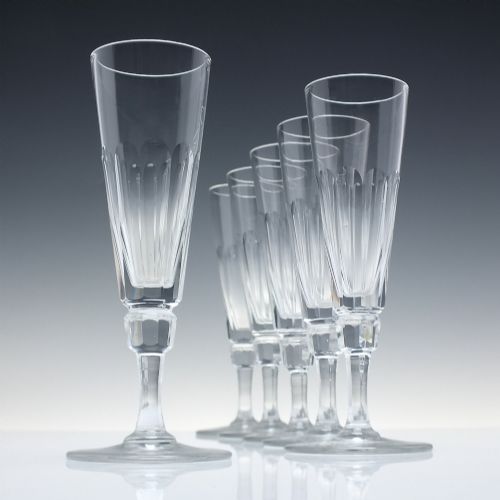
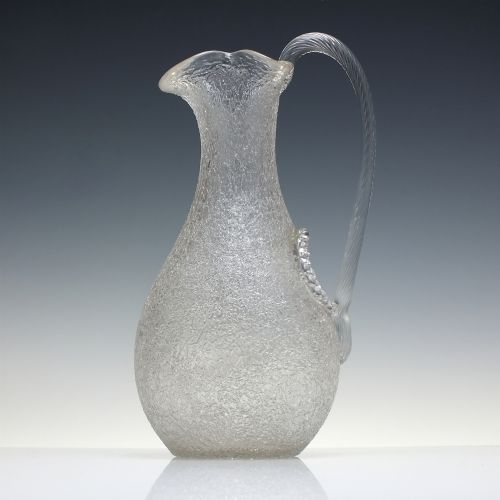
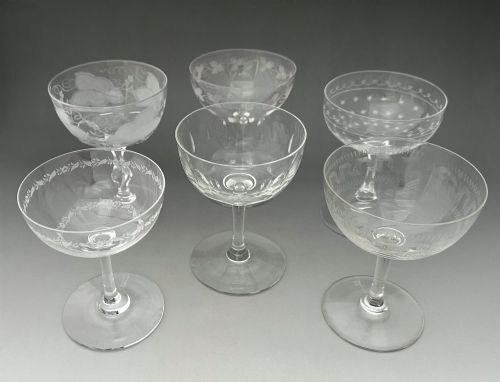
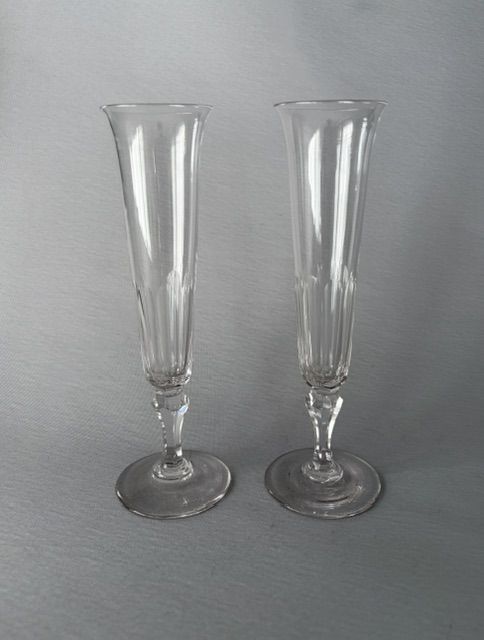
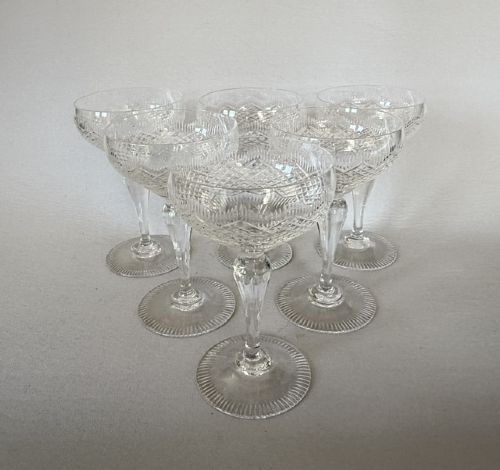
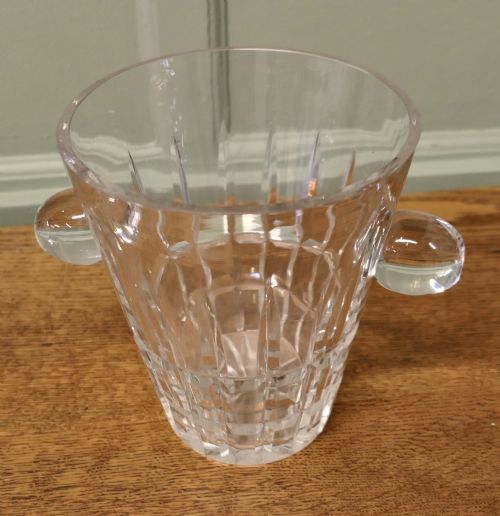
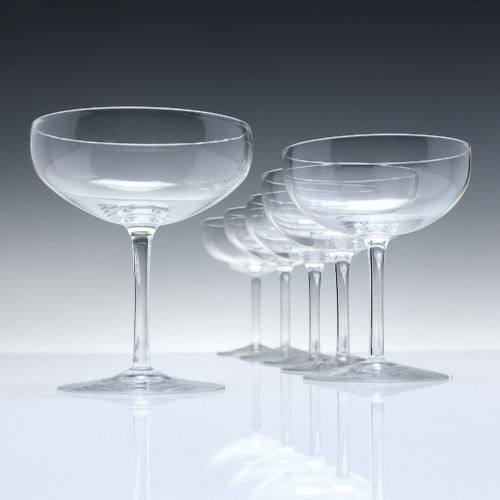
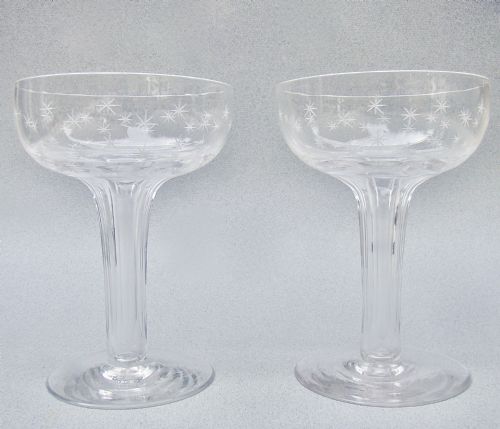
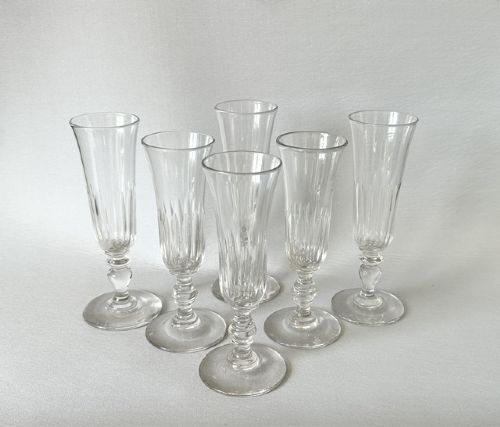
When you search for glass champagne glasses, you encounter everything from shallow coupes and tall flutes to heavy crystal ice buckets and jugs, spanning the Georgian, Victorian, Edwardian, and Art Deco periods.
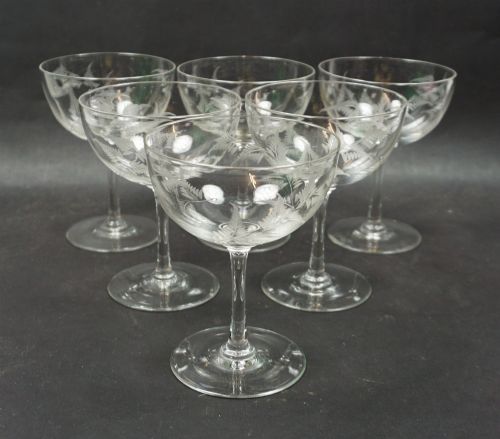
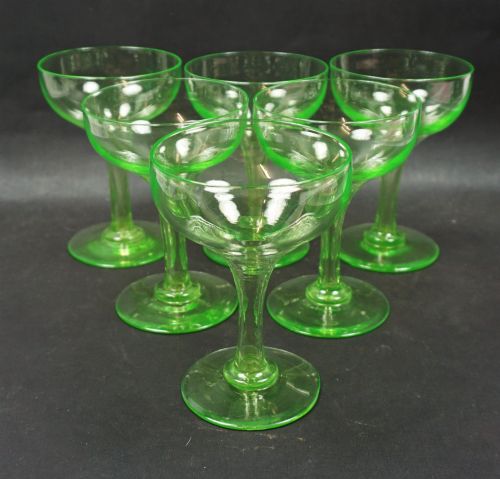
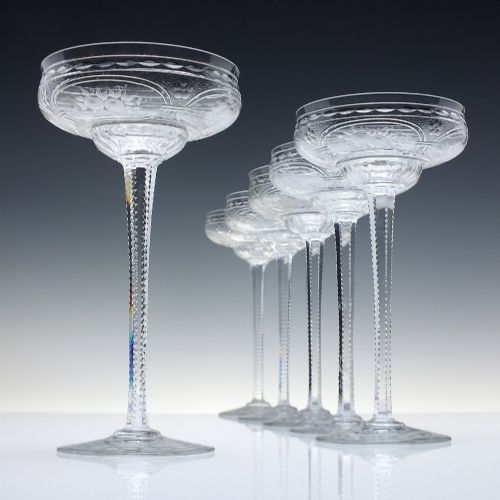
The most frequent form on this page is the stemmed drinking vessel, often appearing in matched sets of six, alongside occasional single display pieces and serving coolers.
Origins stretch across English, French, and Austrian workshops, encompassing cut crystal, coloured overlay, and delicate enamel decoration.
How they were made
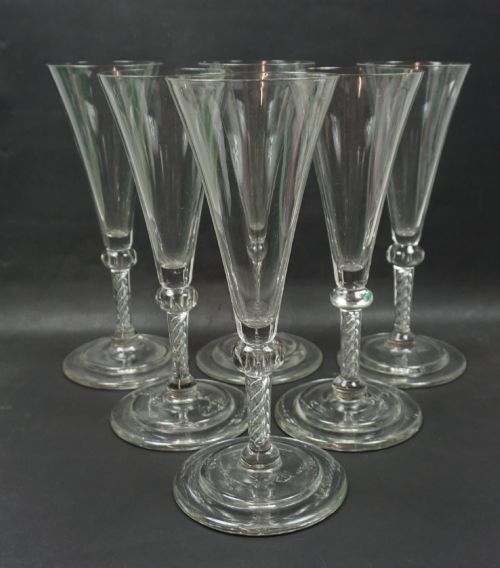
Makers utilised free-blowing and mould-blowing techniques to form the base vessel, frequently adding air twists or opaque twists inside the stems during the eighteenth century.
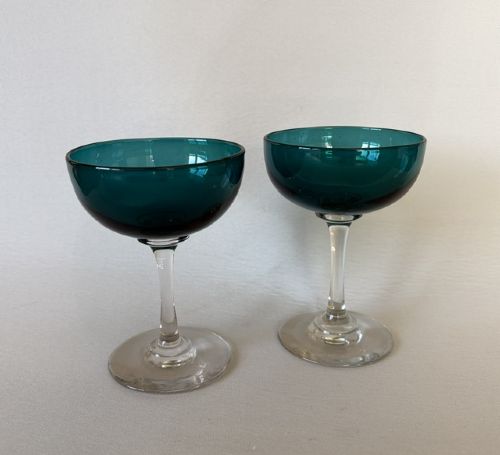
Surface decoration relied heavily on wheel-cutting, star-etching, and vine-engraving, while coloured pieces employed an overlay method where a thin layer of tinted glass coated a clear crystal body.
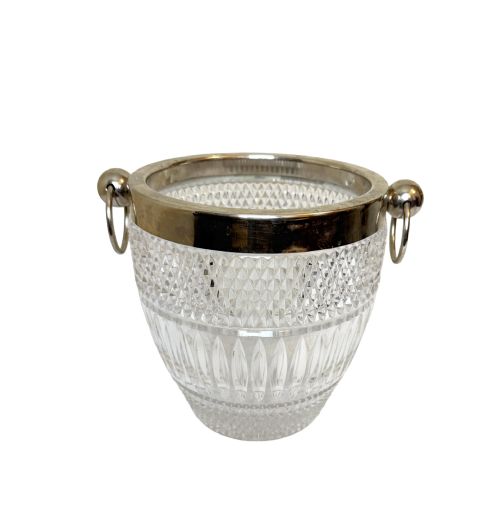
Mounts in silver-plate, gilt bronze, and solid silver were added to ice buckets and coolers to provide structural weight and decorative handles.
Glass Champagne Glasses Retail Price Guide 2026
Typical asking prices for glass champagne glasses among the pieces listed under this phrase on Sellingantiques today, from the lower quarter to the upper quarter. They describe what is for sale here now, not the wider market.
Several items double the celebration, including a novelty champagne bottle decanter and an oversized advertising bottle ready for a grand party.
What varies in quality
The distinction between ordinary and exceptional work rests on the crispness of the wheel-cut facets and the depth of the hand-engraved motifs.
Consistency across a matched set elevates the standing of drinking vessels, particularly in harlequin groups or extensive collections where stem heights and bowl proportions must align.
The clarity and weight of lead crystal, combined with the precision of specialised techniques like air twists and coloured overlays, separate standard tableware from masterworks by notable designers.
Baccarat Vallee·Richardsons Birmingham·Fritz Heckert·Moser Crystal·Riihimaki·Wiener Werkstatte
The Glass Champagne Glasses Glossary
- Air twist
- A decorative stem enclosing elongated bubbles drawn into spiral threads within the glass.
- Coupe
- A broad, shallow bowl on a short stem historically used for serving sparkling wine.
- Flute
- A tall, narrow vessel designed to retain carbonation and direct the bubbles upward.
- Overlay
- A technique fusing a coloured layer of glass over a clear crystal body before cutting through the top layer.
- Sweetmeat glass
- An eighteenth-century vessel with a shallow bowl, frequently utilised interchangeably for sparkling wines.
Glass Champagne Glasses: Frequently Asked Questions
How do I clean antique glass champagne glasses?
Wash these delicate pieces by hand in warm water using a mild detergent, avoiding sudden temperature changes that can crack historical material.
Place a towel at the bottom of the sink to cushion the bowl and stem during washing, and dry immediately with a lint-free cloth.
Can I use antique champagne coupes today?
These historical vessels function well for modern dining, provided you handle them with the care due to fragile eighteenth- and nineteenth-century glass.
Hand-wash them gently after use and store them securely on stable shelving away from the edge of the cupboard.
How do I tell an air twist stem from a plain stem?
Examine the interior of the stem under good lighting to locate the delicate spiral threads of trapped air running through the transparent glass.
Plain stems present solid, clear material without internal patterns, whereas air twists reveal intricate optical channels formed by the glassmaker.
What is the difference between a champagne flute and a coupe?
Flutes feature tall, narrow bowls designed to preserve the effervescence and direct bubbles upward, suiting modern preferences for sparkling wine.
Coupes offer a shallow, wide basin inherited from earlier serving traditions, allowing aromas to disperse more quickly across the broader surface.