


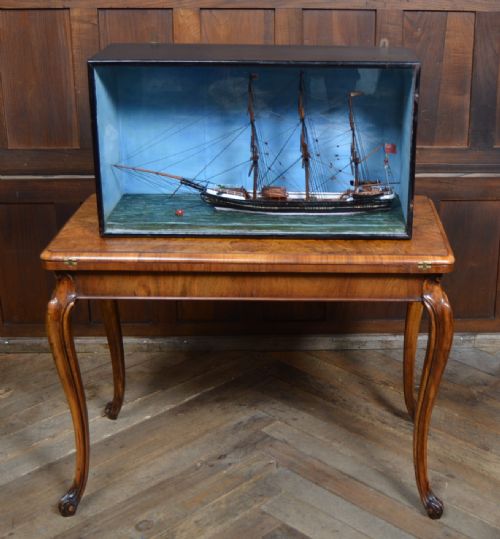

Glass Case Diorama
These glass case diorama pieces bring miniature worlds of taxidermy, ships and folk art into protected wooden frames.
Glass Case Diorama
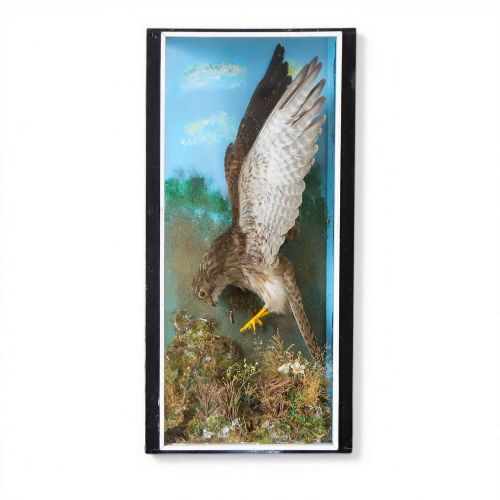
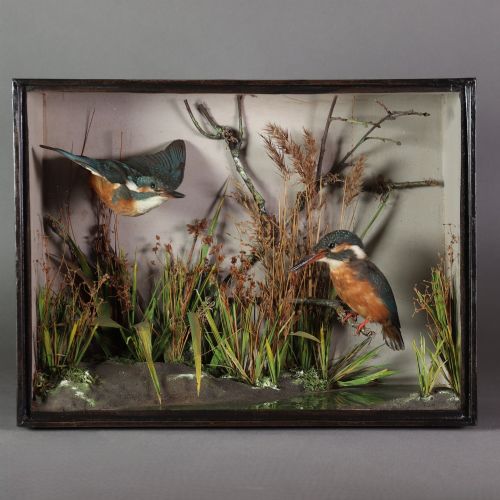
A glass case diorama captures a complete scene behind glass, bringing together elements of taxidermy, maritime folk art and architectural models. These pieces draw the eye because they freeze a specific moment, whether a pair of kingfishers in winter or sailing vessels racing at sea.
You are most likely to meet Victorian and Edwardian examples on this page, spanning the nineteenth century and into the early twentieth century. These range from shadow box dioramas and taxidermy display cases to oval glass dome displays and detailed grocery store models.
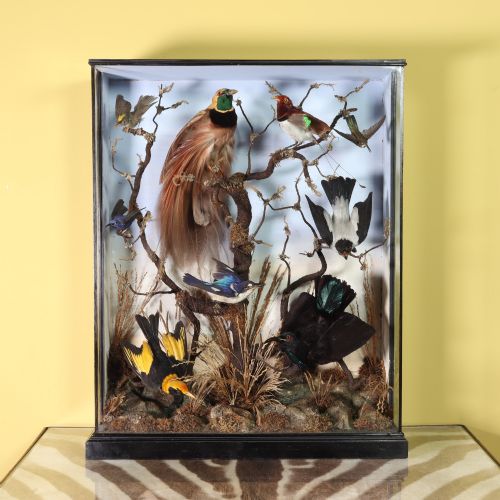
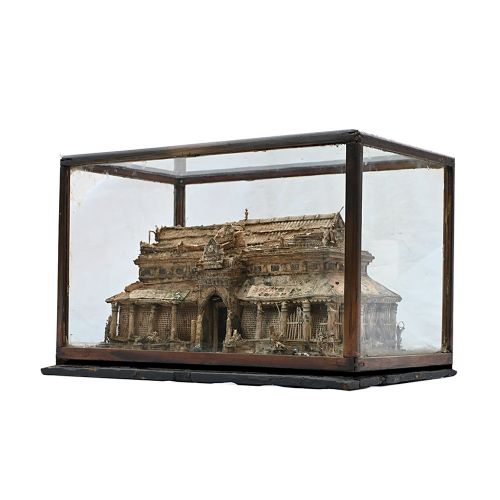
The subjects vary widely across the selection, encompassing mixed birds from distant regions, local wildlife like otters and herons, and human creations such as copper smelting furnace foundries. Each piece relies on its wooden housing to keep the painted and paper elements intact over generations.
How they were made
Makers built these displays using timber for the outer framework and fitted glass panels to protect the delicate contents within. Paint and paper formed the background scenes, creating depth behind physical specimens and carved models.
Taxidermy specimens, feathers and natural specimens were arranged alongside painted backdrops, while plaster added structure to terrain and architectural models. Maritime pieces incorporated wood and painted canvas to simulate waves and hulls under sail.
Materials recorded across these pieces include wood, glass, paint, paper, plaster, taxidermy specimens, feathers and natural specimens.
What varies in quality
Quality rests on the depth and realism of the internal arrangement, where skilful painting meets careful taxidermy or model making. A superior diorama creates a convincing sense of space within the confines of the wooden case.
The construction of the case itself matters greatly, with tight joinery and clean glass preserving the interior from dust and damp. Named makers and documented origins add distinction to pieces that already demonstrate superior compositional skill.
T. E. Gunn·S. King
The Glass Case Diorama Glossary
- Diorama
- A three-dimensional scene enclosed in a case, often featuring a painted background to create perspective. These displays combine taxidermy, models or folk art objects.
- Taxidermy display case
- A wooden enclosure with glass panels designed to house and protect stuffed birds, mammals or fish. These protect fragile specimens from dust and handling.
- Shadow box diorama
- A deep, box-like frame that holds a scene in relief, intended to be hung on a wall. The depth allows for layered elements and painted backdrops.
- Maritime folk art
- Handmade objects with a nautical theme created by self-taught makers, including ship models and racing dioramas. These pieces reflect the creator's direct engagement with the sea.
- Glass dome
- A blown glass cover placed over a base to display specimens or models without flat-sided framing. They offer a clear view from every angle.
Glass Case Diorama: Frequently Asked Questions
What is a glass case diorama?
A glass case diorama is a three-dimensional display enclosed in a wooden and glass frame, preserving scenes of taxidermy, ships or models behind a protective barrier.
These pieces combine painted backgrounds with physical objects to create a sense of depth and realism within a compact space.
How were these dioramas used?
They served as decorative objects in Victorian and Edwardian homes, allowing owners to display natural history specimens, travel souvenirs and patriotic ship models indoors.
By keeping the dust off delicate feathers, paper elements and painted surfaces, the glass case ensured the scene remained intact over decades of domestic life.
How do I care for a cased diorama?
Keep the piece away from direct sunlight to prevent the painted backgrounds and taxidermy specimens from fading over time. Maintain a stable indoor temperature to protect the wood and glue joints from shifting.
Clean the glass gently with a dry or slightly damp cloth, avoiding any moisture near the wooden seams or internal paper components.
How do I tell Victorian pieces apart from later ones?
Victorian examples often feature elaborate wooden framing and detailed natural history subjects like mixed exotic birds or local mammals in snow scenes. Later pieces from the Edwardian period or the nineteen-thirties tend to show simpler construction methods and different styles of taxidermy preparation.
Examining the materials used in the backing paper and the type of glass can also help narrow down the period of manufacture.