

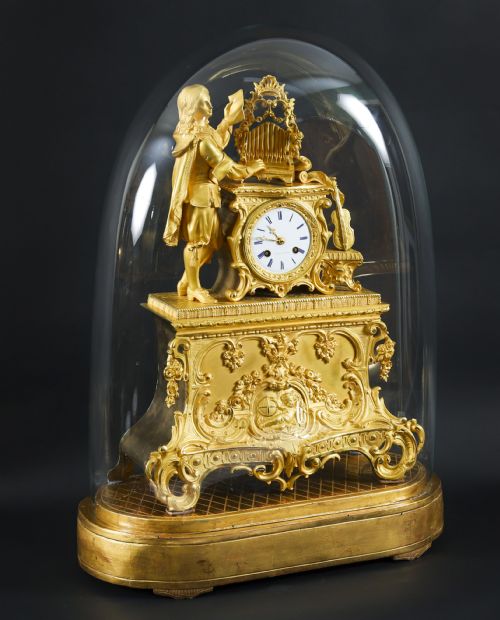


Glass Bronze Mantel Clock
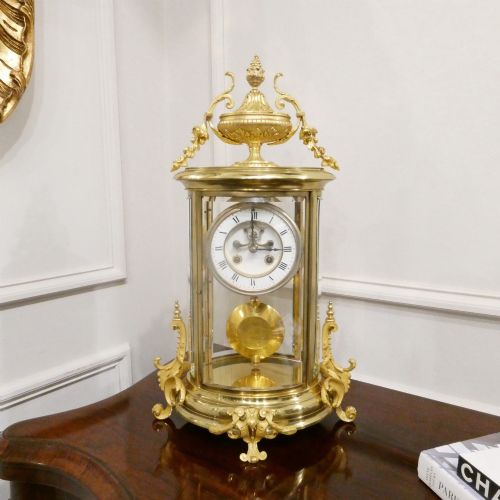
A glass bronze mantel clock brings together heavy cast metal and clear glazed panels to showcase the intricate movement within.
Glass Bronze Mantel Clock
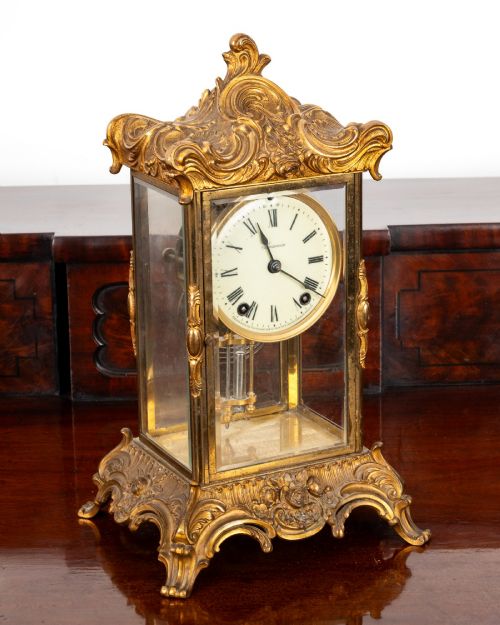
A glass bronze mantel clock combines transparent glazed panels with cast metal mounts to display the mechanical movement from multiple angles. When you search for this phrase, you encounter architectural portico forms, crystal regulators, and four-glass cases designed to sit upon a fireplace mantel or bracket shelf.
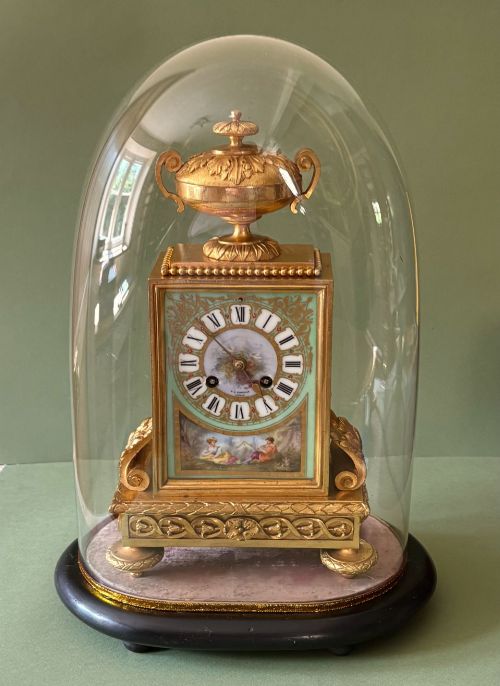
The material combination typically unites gilded or ormolu bronze frames with bevelled glass sides, sometimes resting on marble bases or accompanied by matching garniture sets. Pieces from the nineteenth century frequently adopt French Rococo Revival, Charles X, or Neo-Classical styles.
Makers such as Samuel Marti, Leroy Paris, and Breguet appear in the records, alongside unsigned pieces sharing similar French and American origins. Enamel dials and painted porcelain panels frequently accompany the gilt bronze framework.
Materials and construction methods
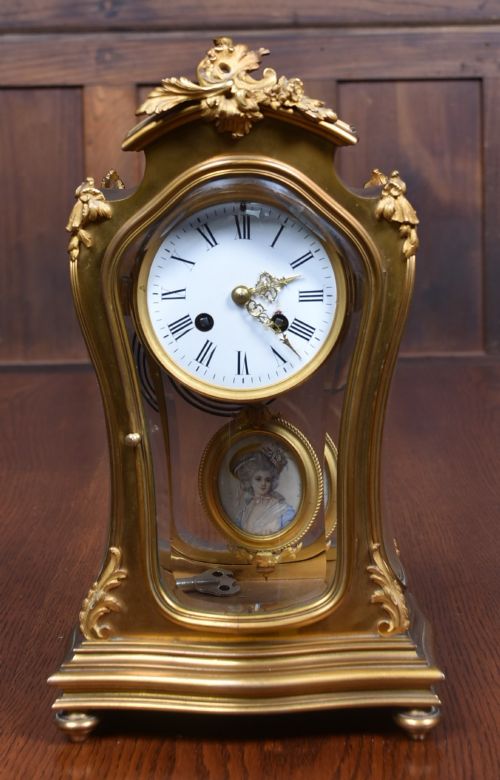
Foundries cast bronze and brass into ornate frames, mounts, and portico columns, subsequently applying fire gilding or ormolu finishes to achieve a bright golden lustre. Cut crystal and hand-blown glass form the protective domes and transparent side panels that enclose the mechanisms.
Dials employ white enamel with painted Roman numerals, while subsidiary panels utilise porcelain painted in the Sevres style. Precision brass gear trains, often featuring bell-striking mechanisms and escapements, power the movement visible through the glass casing.
Some nineteenth-century French models employ a swinging cherub whose momentum keeps the clock ticking.
Distinctions in craftsmanship
Quality rests in the crispness of the bronze casting and the depth of the gilding, where finer examples display sharp relief work and rich patination. The weight and clarity of the bevelled glass or hand-blown domes also separate superior pieces from standard production.
Signed movements by known makers and complicated gear trains, such as strike repeat mechanisms or swinging figures, elevate a piece above simpler timepieces. The integration of painted porcelain panels and matching garniture sets adds further substance to the design.
Samuel Marti·Ansonia New York·Leroy Paris·Breguet·Moser·Farcot·Ferdinand Barbedienne
The Glass Bronze Mantel Clock Glossary
- Ormolu
- Gilded bronze produced by applying a mixture of mercury and gold leaf to cast bronze and heating it. This technique creates a durable golden surface seen on nineteenth-century clock mounts.
- Four-glass clock
- A mantel clock housed in a rectangular brass or bronze frame with glass panels on all four sides. This construction allows unrestricted light to enter and illuminates the swinging pendulum.
- Crystal regulator
- A timepiece enclosed entirely within bevelled glass panels held by a brass or gilt bronze framework. The pendulum often hangs visibly without a wooden backboard.
- Portico clock
- A clock design featuring architectural columns supporting a central housing, popular during the Charles X period. Cut crystal and ormolu frequently comprise the structure.
- Garniture
- A set consisting of a central clock flanked by matching ornamental pieces such as urns or candelabra. These sets often sit beneath original glass domes on stands.
Glass Bronze Mantel Clock: Frequently Asked Questions
How do I identify a crystal regulator?
Crystal regulators utilise heavy bevelled glass held within a gilded bronze frame to enclose the movement entirely. The pendulums on these clocks often feature decorative mercurial or gridiron designs.
They emerged strongly during the late nineteenth century as decorative salon pieces.
What is a clock garniture?
A clock garniture pairs a central mantel clock with two matching decorative objects, such as urns or vases. These sets share identical materials, styles, and decorative motifs.
They were arranged symmetrically on mantelpieces during the nineteenth century.
Where were these clocks made?
The majority of these pieces originate from French workshops in Paris, alongside American manufacturers like Ansonia. French makers dominated the production of ornate ormolu and porcelain-mounted designs.
Export markets distributed these luxury items widely across the Western world.