


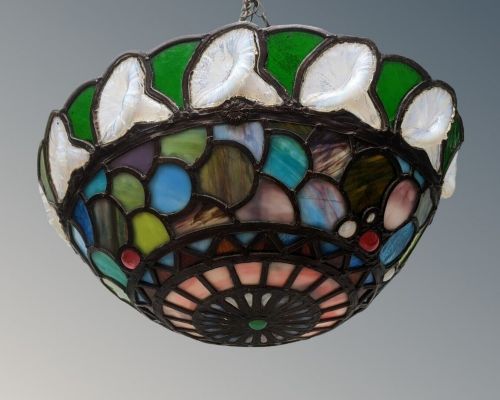


Glass Bowl Pendant Lamp
These glass bowl pendant lamp examples bring warm ceiling illumination and period character to a room through genuine antique craftsmanship.
Glass Bowl Pendant Lamp
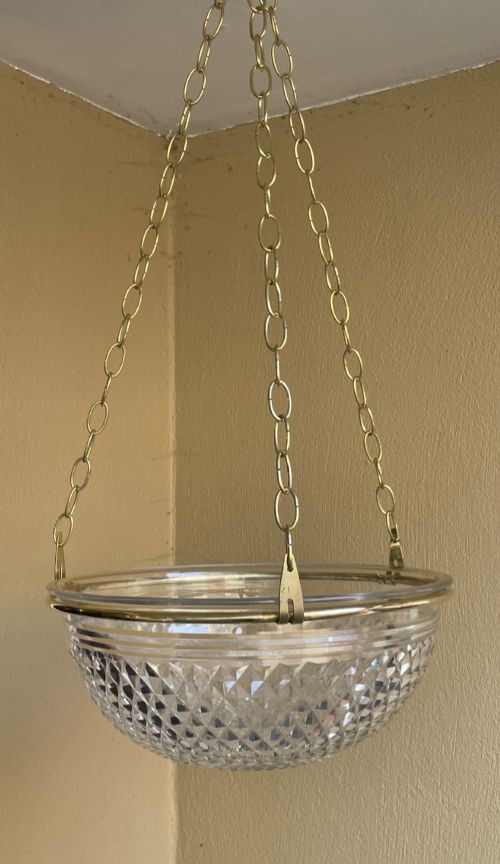
A glass bowl pendant lamp comprises suspended ceiling lighting shaped as bowls, dishes, or plafonniers dating from the nineteenth century through the 1930s. Buyers searching for a glass bowl pendant lamp encounter Edwardian, Victorian, and Art Deco ceiling fixtures designed to cast ambient light downward.
The selection ranges from early nineteenth century silver plated dish lights to Arts and Crafts crystal bowl chandeliers and 1930s Art Deco plafonniers. These pendant lights serve primarily as central ceiling illumination for hallways, reception rooms, and dining spaces.
Materials and construction
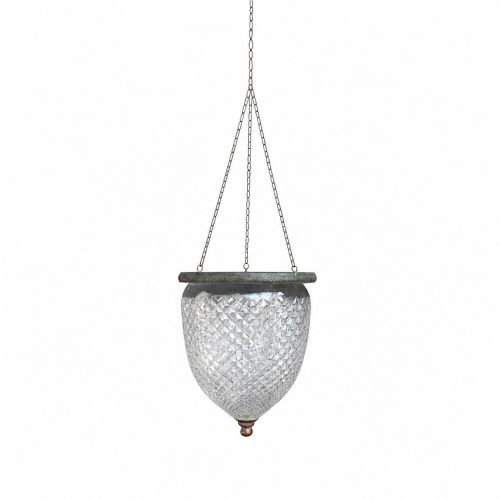
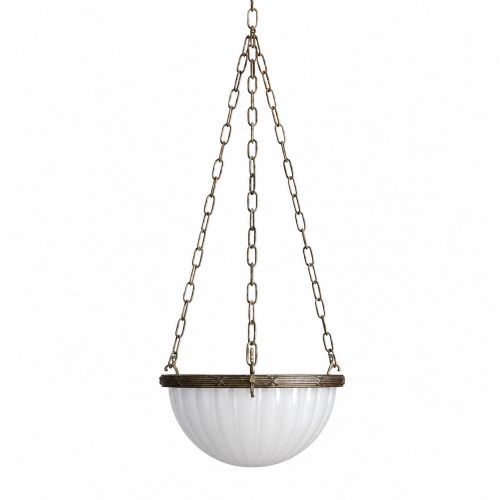
Construction relies heavily on combinations of cut glass, crystal, frosted glass, or opaline glass mounted within brass, bronze, metal, or silver plated frames. Glass bowls feature heavy cutting or opalescent properties designed to diffuse light evenly across the room.
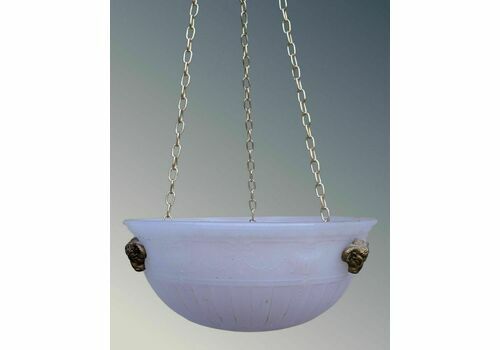
Metal mounts incorporate structural hanging chains, decorative bezels, and cast elements such as rams head motifs or acorn details that secure the heavy glass shades safely to the ceiling.
Listings span from the 1850s Victorian era through the Art Deco period of the 1930s.
Evaluating quality and merit
Quality separates fixtures by the depth and crispness of glass cutting, the weight of the crystal or opaline components, and the refinement of the metalwork mounts. Superior pieces display hand-cut facets that catch light sharply alongside substantial bronze or silver plated brass frames.
The integrity of the glass bowl relative to its period mounts dictates the overall standard. Examples retaining original matching suspension hardware and unblemished opalescent or mirrored glass surfaces represent the better tier of surviving pieces.
Verrerie Des Vosge
The Glass Bowl Pendant Lamp Glossary
- Plafonnier
- A ceiling light featuring a bowl-shaped shade mounted close to the ceiling or suspended by short chains. This French term appears frequently among Edwardian and Art Deco lighting.
- Opaline glass
- An opaque or translucent pale glass popular in nineteenth and early twentieth century lighting. It diffuses bulb glare into a soft, milky glow.
- Dish light
- A shallow bowl pendant form often suspended by multiple chains from a central canopy. These frequently incorporate silver plated or brass rims.
- Opalescent
- Glass that displays milky, iridescent, or pearlescent colour effects when lit. Arts and Crafts makers utilised this property to soften interior illumination.
Glass Bowl Pendant Lamp: Frequently Asked Questions
How do I hang a heavy glass bowl pendant lamp safely?
Suspension requires adequate ceiling joist fixing to support the combined weight of the thick glass bowl and metal framework. Professional electrical installation ensures the hanging chains and ceiling canopy bear the load securely.
Matching the drop length to the room height prevents the fixture from hanging too low in standard hallways or living spaces.
What rooms suit a glass bowl pendant lamp best?
Ceiling bowl pendants suit entrance halls, dining rooms, and bedrooms where downward, diffused illumination creates a welcoming atmosphere. Their shallow profile fits medium height ceilings effectively.
Choosing an opaline or frosted glass variant reduces harsh glare in intimate living areas.
How do I distinguish Edwardian from Art Deco glass bowls?
Edwardian glass bowl pendant lamp designs typically feature delicate cut crystal patterns, silver plated mounts, and formal Edwardian or neoclassical motifs. Art Deco examples lean towards geometric simplicity, streamlined plafonnier shapes, and frosted or mirrored glass surfaces from the 1930s.
Examining the metalwork casting style and glass cutting depth clarifies the period of manufacture.
Can I clean the antique glass bowls easily?
Removable glass bowls lift safely from their brass or bronze mounting frames for gentle hand washing in warm soapy water. Avoiding harsh chemical cleaners preserves the original silver plating and metal patination.
Careful handling protects heavy cut crystal and delicate opaline edges during routine maintenance.