


Glass Bottle Condiment Stand
Glass bottle condiment stands gather the dining table's essential seasonings into a single transportable frame.
Glass Bottle Condiment Stand
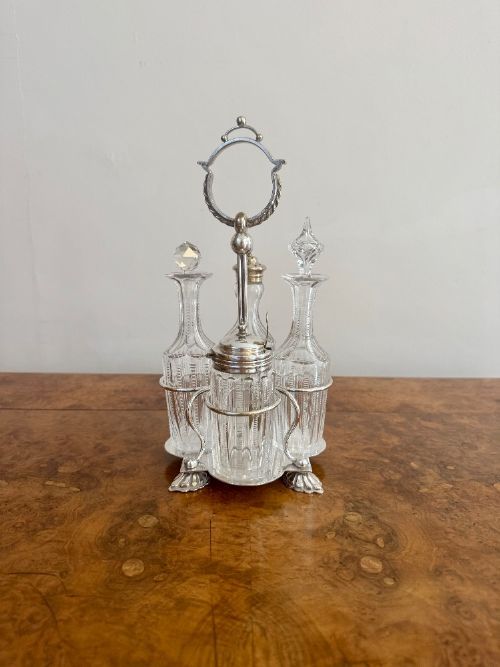
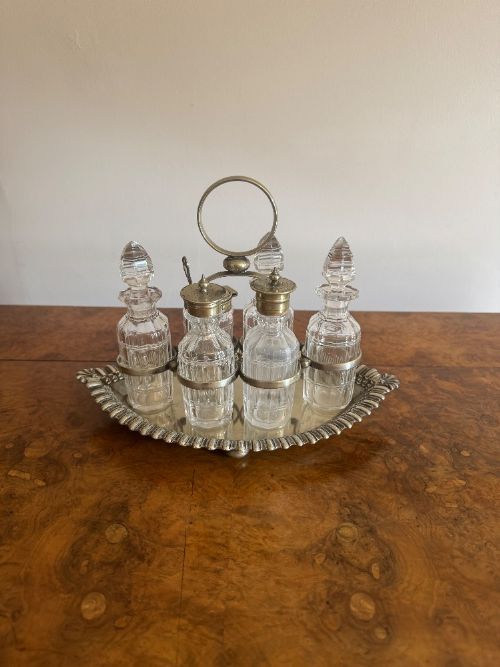
A glass bottle condiment stand holds cruets, casters and bottles within a fitted metal, silver plated or wooden frame designed for the dining table. Buyers browsing this selection encounter pieces spanning the Georgian, Victorian and Edwardian periods, alongside Art Deco examples.
Cruet sets and stands appear in formats ranging from small three bottle arrangements up to large seven or eight piece settings. Edwardian silver plated stands holding six bottles represent the most frequent finds on this page.
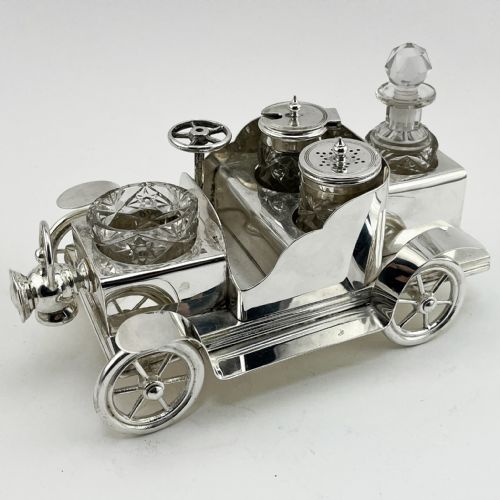
Originating as practical dining accessories, these stands integrate cut glass or crystal containers with frames shaped as ovals, oblongs or novelty designs. Surviving examples demonstrate how dining customs evolved from the eighteenth century into the twentieth.
Materials and Construction
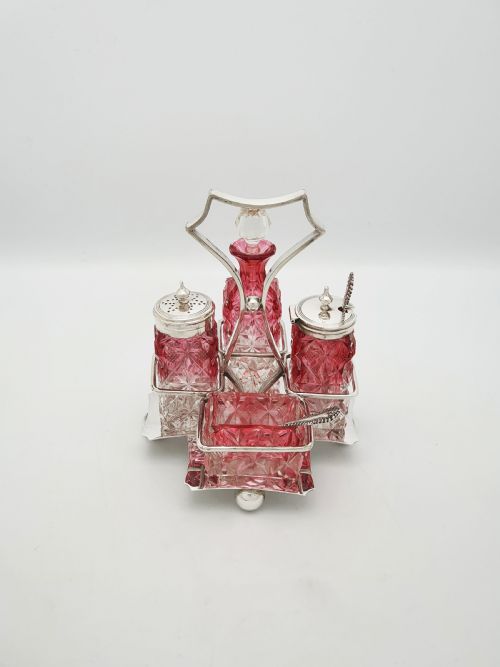
Maker workshops combined cut glass, lead crystal and cranberry glass with silver plate, sterling silver, Sheffield plate and ebonised wood. Metal frames were cast, stamped or plated, then fitted with glass bottles shaped by hand cutting or moulding.
The bottles and casters required precise grinding to fit securely into the individual rings or wells of the metal stand. Silver components frequently received hallmarks denoting the assay office and year of production.
Listings feature periods spanning from the 18th Century through to Art Deco designs of the 1920s and 1930s.
Distinctions in Quality
Quality rests upon the matching integrity of the bottles and the weight of the metal frame. Stands retaining their original complete set of matching cut glass or crystal bottles command greater regard than those assembled with replacement components.
Thick silver plating or solid sterling silver construction, combined with crisp hand cutting on the glass, separates standard utilitarian pieces from exceptional table wares. The architectural stability of the handle and the precision of the bottle collars demonstrate maker skill.
Walker & Hall·Charles Thomas Fox·Elkington & Co·Wade Wingfield Wilkins·Hester Bateman
The Glass Bottle Condiment Stand Glossary
- Cruet
- A small glass bottle or jar used for holding vinegar, oil, mustard or other condiments at the dining table. These vessels fit directly into the condiment stand.
- Caster
- A small perforated shaker used for sprinkling sugar, pepper or dry spices over food. They form part of larger multi-bottle table sets.
- Sheffield Plate
- A composite material made by fusing a thin sheet of sterling silver to a thicker copper base. This technique preceded modern electroplating.
- Cranberry Glass
- A rich red transparent glass coloured by the addition of gold chloride to the molten batch. It appears frequently in late nineteenth and Edwardian decorative table wares.
- Lead Crystal
- Glass containing lead oxide to increase brilliance, weight and clarity. This material allows deep, sharp hand cutting.
Glass Bottle Condiment Stand: Frequently Asked Questions
What is a glass bottle condiment stand?
A glass bottle condiment stand is a tabletop frame designed to hold multiple cruet bottles, casters and seasoning containers together.
These pieces keep oils, vinegars and sauces organised for easy service during meals.
How were these stands used?
Guests and dining hosts utilised the stands to pass condiments around the table during formal meals.
Each bottle contained a specific seasoning or liquid condiment required for flavouring food.
How do I date an antique cruet stand?
Dating relies upon metal hallmarks, manufacturing styles and the specific characteristics of the cut glass bottles.
Georgian and Victorian pieces display distinct decorative motifs and mounting techniques that shift by era.
Are all the bottles usually original?
Many surviving stands retain their matching original cut glass or crystal bottles, though some accumulated replacements over time.
Inspecting the matching glass patterns and neck sizes reveals whether the set remains unified.
How do I clean silver plated stands?
Silver plated frames require gentle cleaning with appropriate silver polish and a soft cloth to protect the metal surface.
Glass bottles wash safely in warm soapy water without harsh abrasives.