

Glass and Silver Tableware
Glass and silver tableware combines sparkling glass bodies with precious metal mounts, offering both decorative presence and practical utility on the dining table.
Glass and Silver Tableware
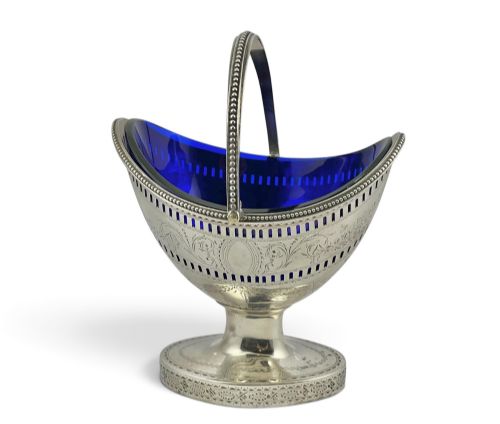
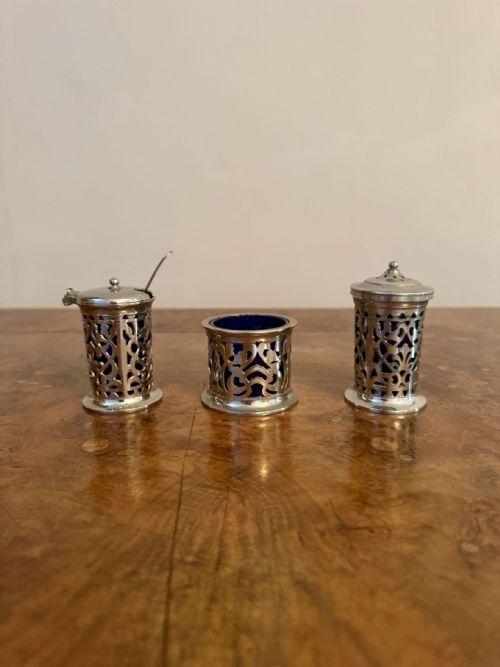
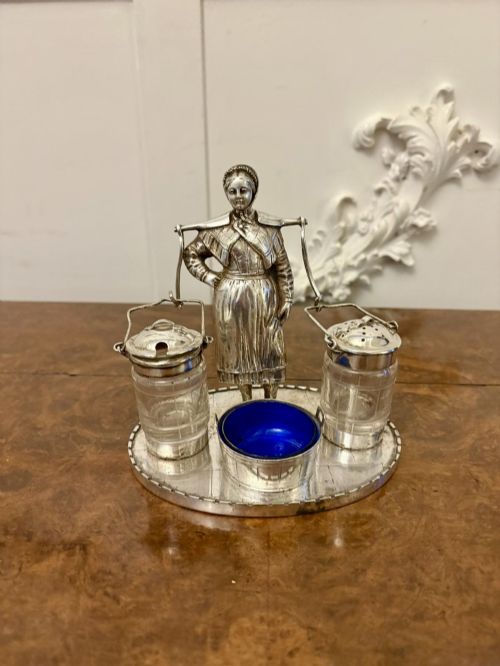
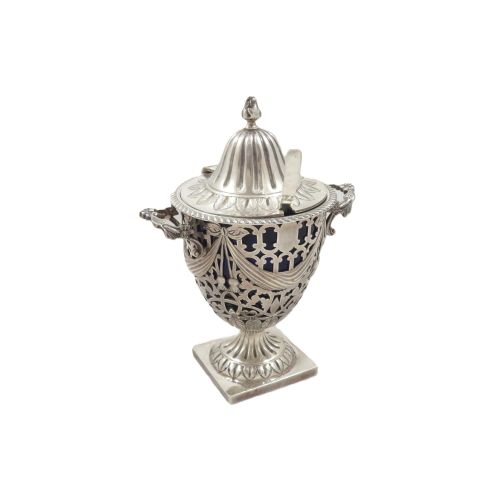
Glass and silver tableware encompasses functional dining vessels and serving pieces created primarily during the Victorian, Edwardian, and Art Deco periods. These items range from salt cellars and mustard pots to larger claret jugs, biscuit barrels, and complete cruet sets.
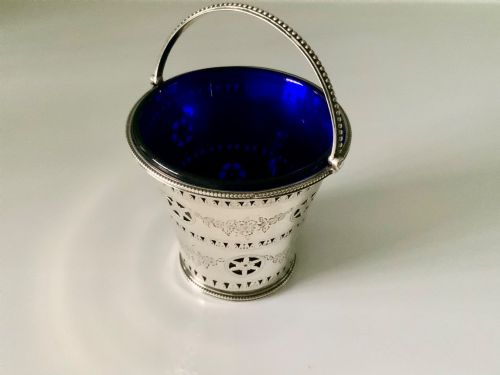
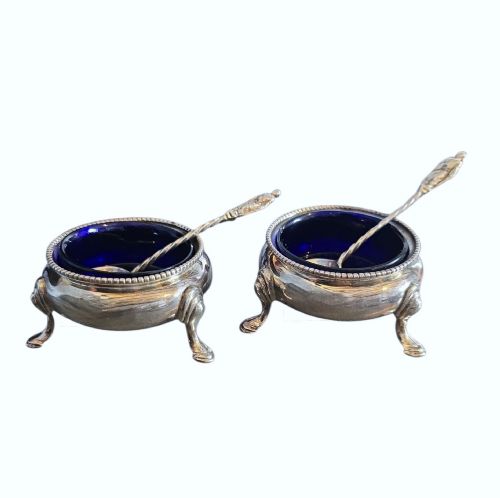
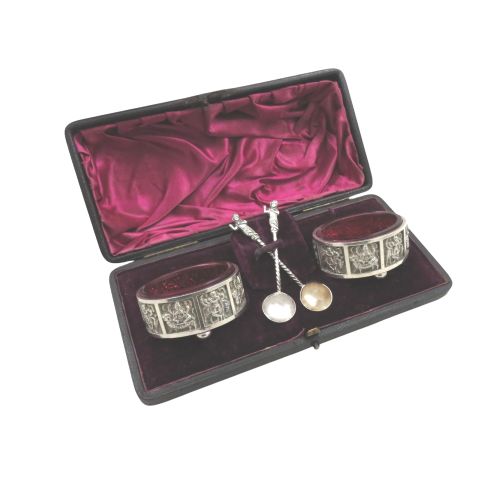
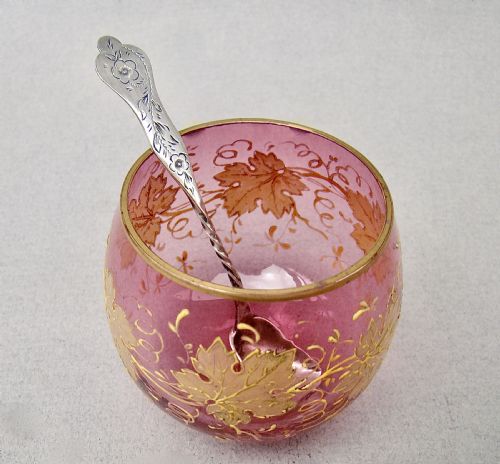
Salt cellars and condiment sets frequently appear paired with contrasting glass liners in cobalt or cranberry hues. Larger items such as water jugs and jam pots demonstrate the combination of cut crystal or glass with sterling silver or silver plate.
Materials and Techniques
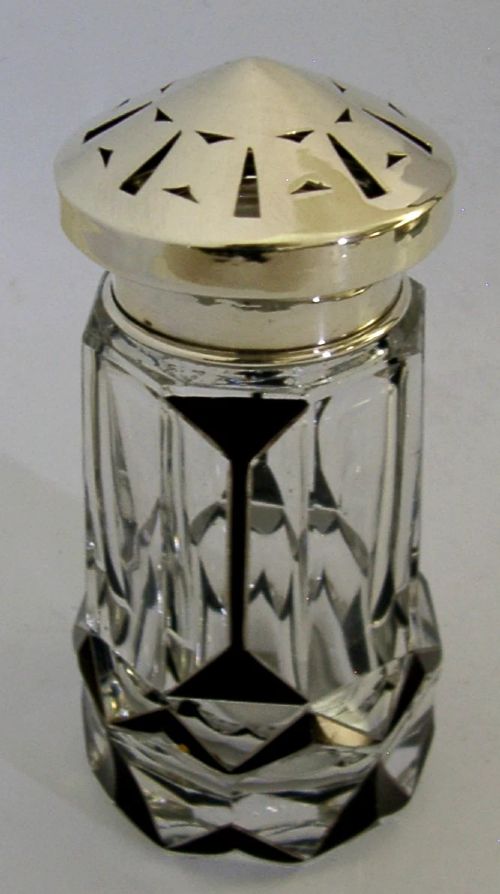
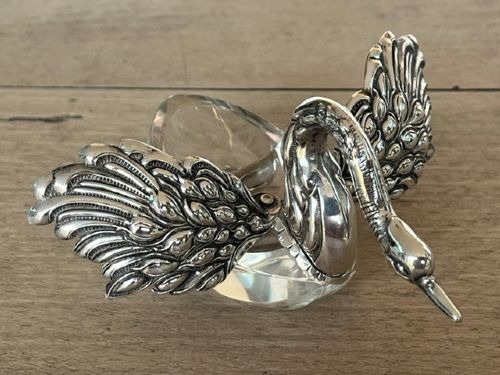
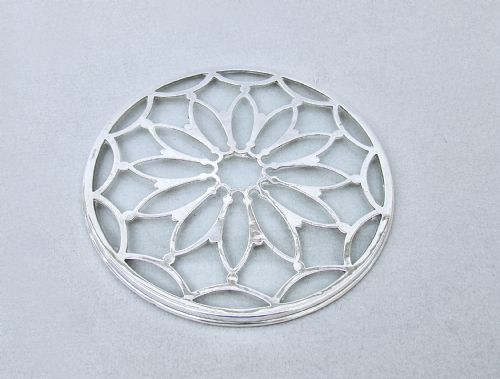
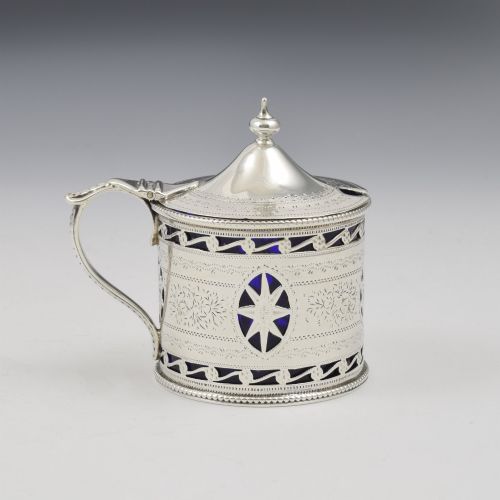
Silversmiths utilised sterling silver and silver plate to form mounts, frames, and handles, often employing piercing, chasing, and wirework techniques. Glass components were shaped through blowing, cutting, or moulding to fit securely within the metal housings.
Makers integrated materials like cobalt glass and cranberry glass alongside clear cut glass, securing them with hinged lids, swing handles, and fitted frames.
Glass and Silver Tableware Retail Price Guide 2026
Typical asking prices for glass and silver tableware among the pieces listed under this phrase on Sellingantiques today, from the lower quarter to the upper quarter. They describe what is for sale here now, not the wider market.
Current listings feature items from the Victorian, Edwardian, and Art Deco eras, combining sterling silver and silver plate with cut, cobalt, and cranberry glass.
Design and Execution
Quality rests in the weight of the metal and the precision of the fit between the glass insert and its silver mount. Heavier gauge silver and deeply hand-cut crystal distinguish finer pieces from lighter, mass-produced alternatives.
The sophistication of the piercing work and the presence of makers' marks indicate the level of craftsmanship invested in each piece.
Beare Falcke·Harrods Ltd·Christofle·Nathan and Hayes·Elkington·William Comyns·William Neale·Hukin and Heath
The Glass and Silver Tableware Glossary
- Cruet set
- A matched collection of small containers for holding condiments such as oil, vinegar, salt, and pepper, typically held within a metal frame. These sets sit centrally on the dining table during meals.
- Salt cellar
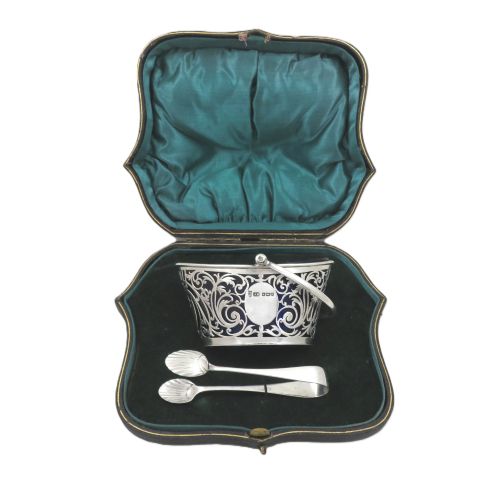
- A small open bowl or vessel designed to hold salt for individual diners before the widespread use of table shakers. They frequently incorporate removable blue or cobalt glass liners.
- Biscuit barrel
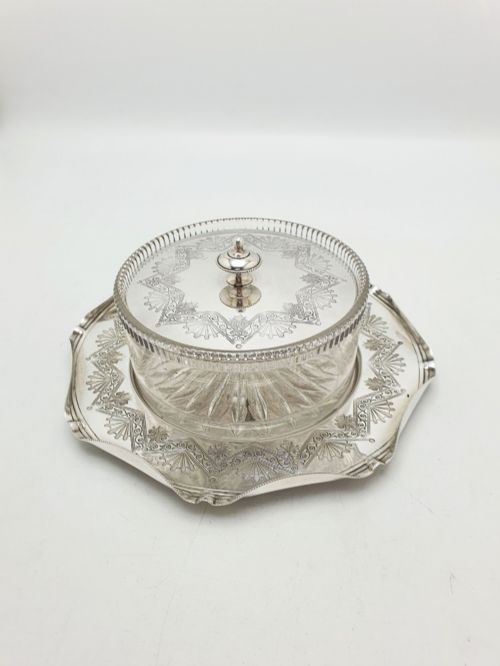
- A covered ceramic or glass jar with a metal mount and lid, used for serving biscuits or dry baked goods. They often feature swing handles for easy transport.
- Claret jug
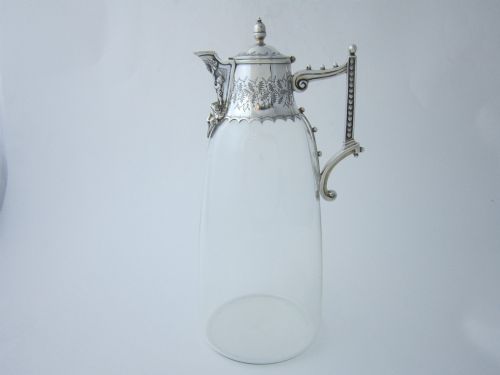
- A large pouring vessel made of glass or crystal with a silver handle, spout, and hinged lid. They were specifically designed for serving claret and red wine at the table.
- Mustard pot
- A small lidded jar designed to hold prepared mustard, usually supplied with a matching spoon. Pierced metalwork often decorates the outer silver body.
Glass and Silver Tableware: Frequently Asked Questions
What is a glass and silver cruet set used for?
Cruet sets held various condiments and seasonings within easy reach of diners at the formal dining table. They organised individual bottles and pots into a unified metal frame.
Over time, these sets evolved in style from Victorian complexity to cleaner Art Deco geometric lines while retaining their fundamental purpose.
Why do salt cellars have coloured glass liners?
Coloured glass liners, particularly in cobalt or cranberry shades, protected the silver metal from corrosive salts placed inside. They also added a vibrant decorative contrast to the pierced silver exterior.
These liners were removable to allow for thorough cleaning after use.
How can I identify an Edwardian silver and glass piece?
Edwardian items often display lighter, more restrained neoclassical or floral motifs compared to heavier Victorian designs. Hallmarks stamped into the silver mounts provide exact assay office and date letter information.
Matching the date marks on the metal to known production years confirms the period of manufacture.
How do I care for antique glass and silver tableware?
Wash glass components gently in warm soapy water and dry them thoroughly with a soft cloth to maintain clarity. Polish the silver mounts using a dedicated cloth, avoiding direct contact between polish and the glass surface.
Store pieces in a dry environment to prevent tarnishing of the metal mounts.