


Glass and Silver Stand
Glass and silver stands combine heavy cut crystal with polished metal frames to serve drinks, condiments, and writing desks with period weight.
Glass and Silver Stand
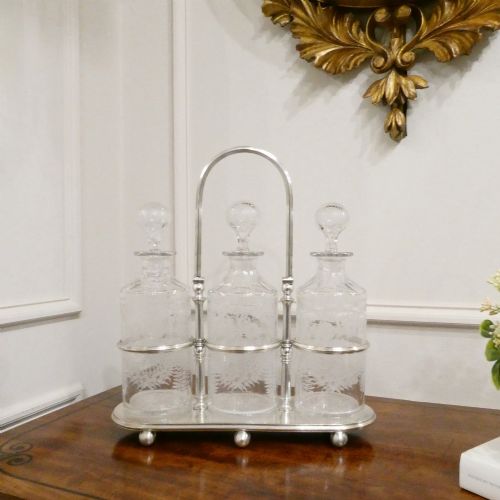
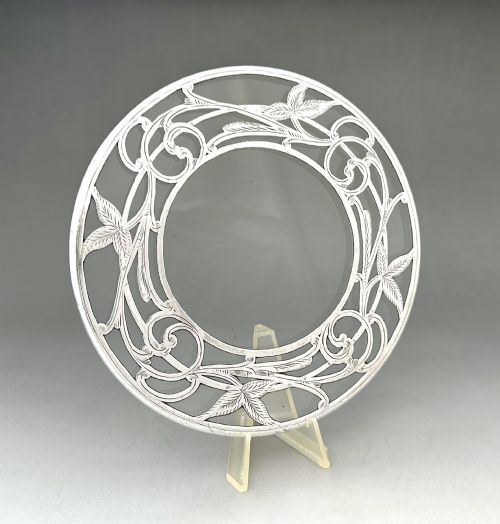
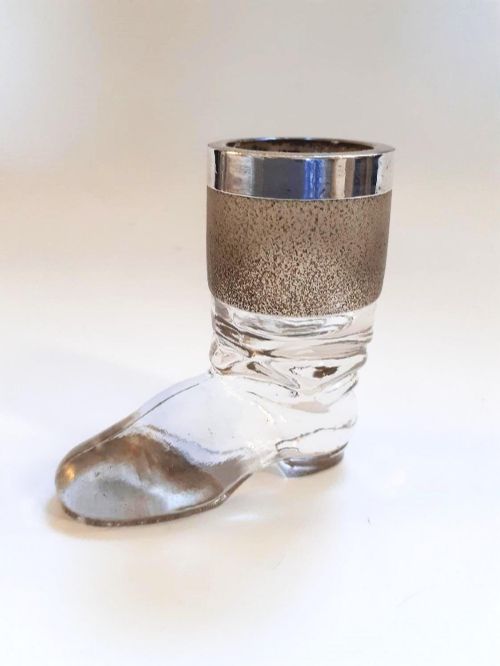
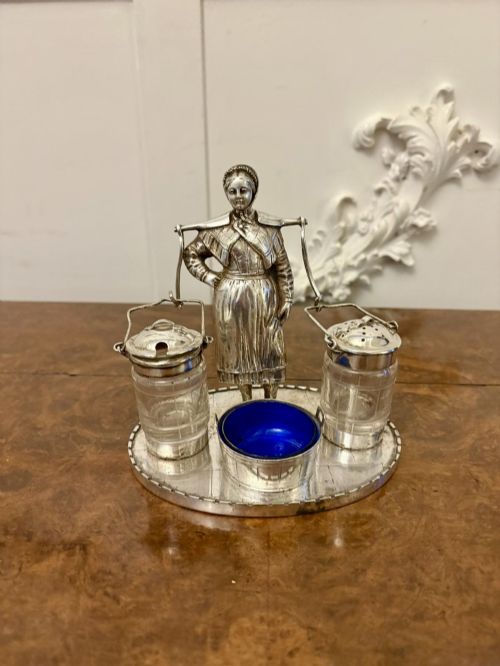
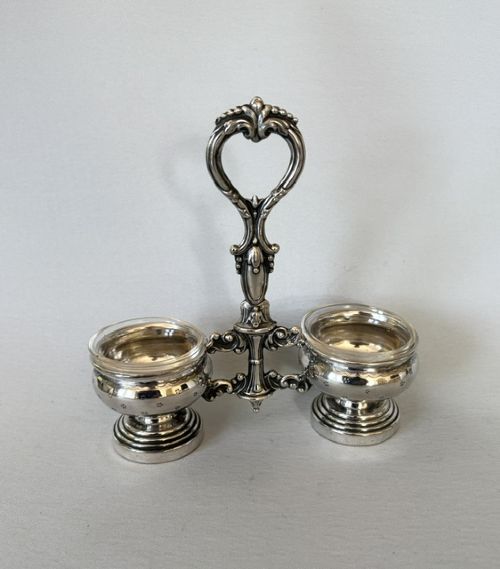
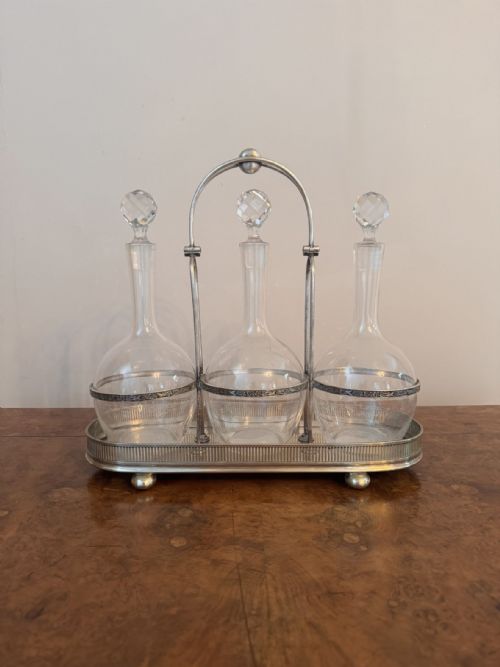
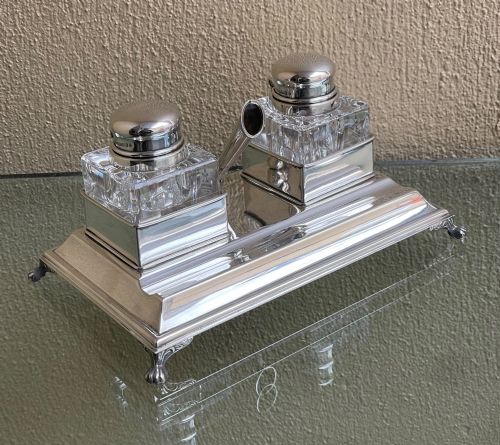
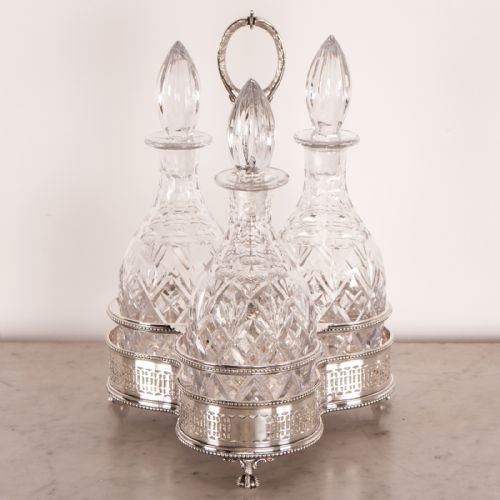
A glass and silver stand brings together metal mounts and glass vessels for domestic use, spanning dining tables and writing desks. Buyers seeking these items encounter forms ranging from cruet sets and decanter stands to inkstands and centrepieces.
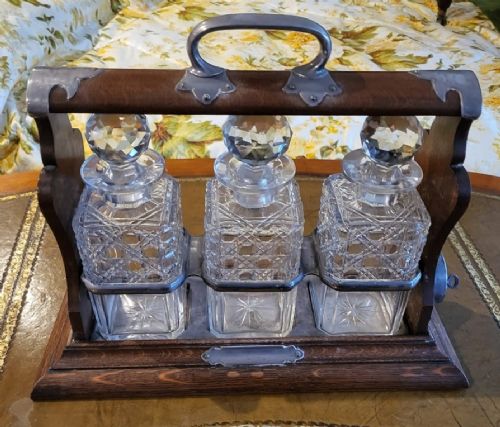
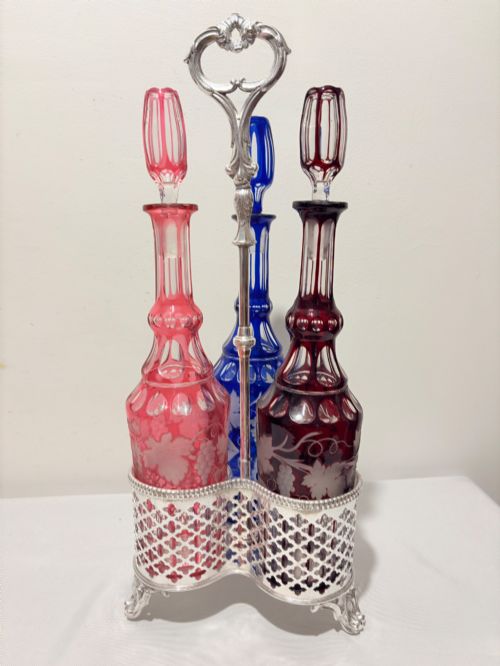
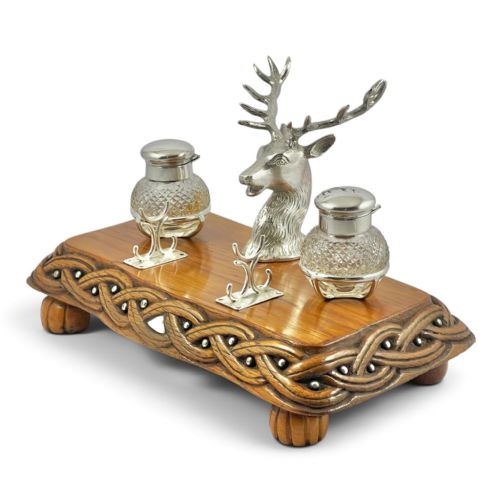
The material combination takes distinct shapes according to its period of origin. Victorian examples often utilise figured oak and silver plate to hold heavy decanters, while Edwardian pieces lean toward multi-bottle cruet sets with cranberry or amber glass inserts.
Georgian items present sterling silver alongside ebony or clear glass, whereas later twentieth-century pieces incorporate chrome and solid silver mountings. Each form reflects the dining and writing habits of its specific decade.
How they were made
Metal frames are cast or stamped from sterling silver or silver plate over a base metal, frequently fitted with carrying handles or secure locking mechanisms for tantalus frames. Frames sometimes incorporate timber such as oak, coromandel, or ebony to anchor the metal mounts.
Glass components are mouth-blown and finished with deep wheel-cut patterns, flash-crayons, or moulded flutes to catch the light. Skilled artisans combined these independent media so that the glass vessels drop precisely into tailored silver or plated rings.
Glass and Silver Stand Retail Price Guide 2026
Typical asking prices for glass and silver stand among the pieces listed under this phrase on Sellingantiques today, from the lower quarter to the upper quarter. They describe what is for sale here now, not the wider market.
Victorian motorists could take tea on the move using surprisingly elaborate fitted car cruet sets designed to defy bumpy rural roads.
What varies in quality
The weight of the metal plating and the thickness of the glass vessel dictate the baseline standard of a piece. Substantial gauge silver plate resists wear down to the base metal, whilst deeper wheel-cutting on heavy crystal signifies greater workshop investment.
Design complexity and maker reputation separate standard production items from elite pieces. Fitted locks on tantalus frames, matched sets of cut glass bottles, and hallmarked sterling mountings by known makers distinguish the upper tier of surviving examples.
Harrods Ltd·Walker & Hall·Elkington·Mappin Brothers·Betjemann·Charles Thomas Fox·Crisford & Norris
The Glass and Silver Stand Glossary
- Cruet set
- A matched collection of glass bottles or jars mounted in a metal frame for holding vinegar, oil, mustard, and pepper at the dining table.
- Tantalus
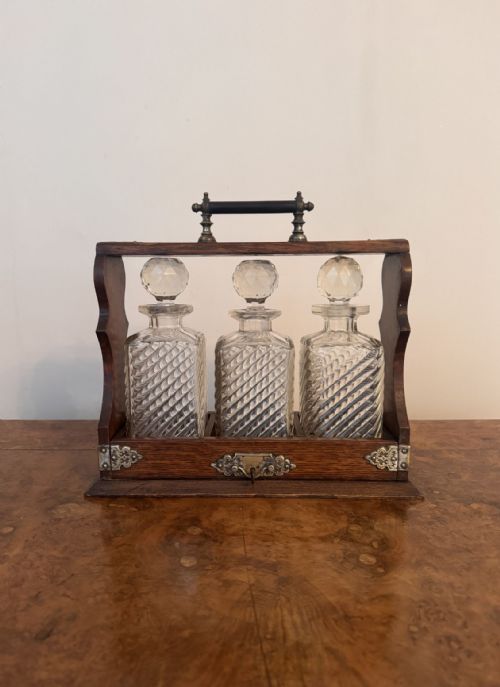
- A locked wooden or metal stand securing decanters of spirits to prevent unauthorised access while displaying the contents through glass.
- Inkstand
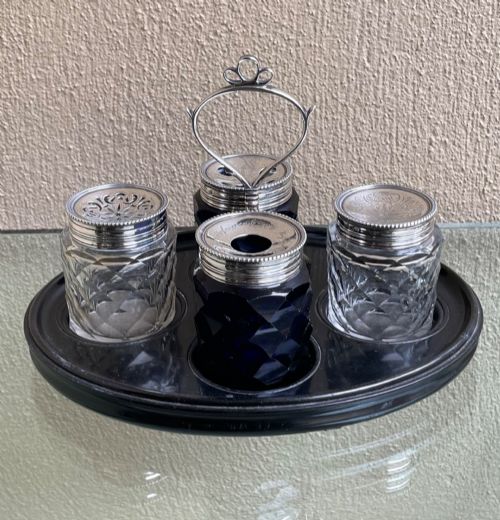
- A desk accessory holding inkwells, sanders, and pen trays mounted on a tray base made of silver, glass, or timber.
- Centrepiece
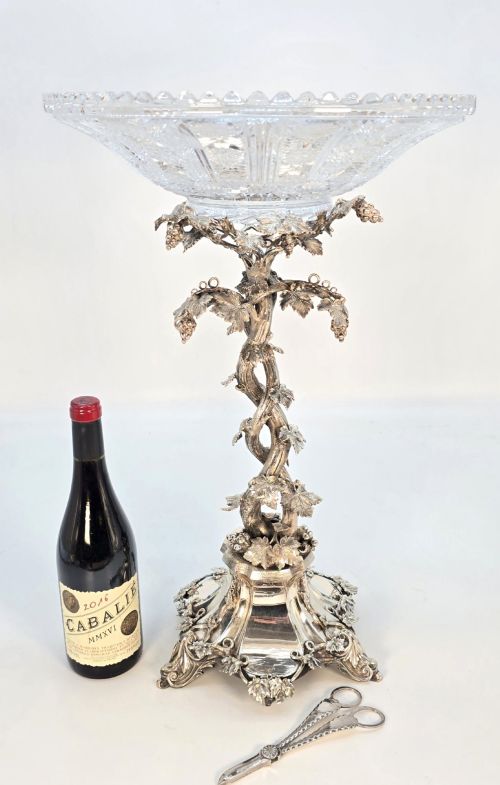
- A large decorative stand placed in the middle of a dining table, combining glass bowls and silver plating for fruit or floral displays.
- Silver plate
- A thin layer of sterling silver bonded to a base metal such as copper or nickel brass, common in nineteenth-century manufacturing.
Glass and Silver Stand: Frequently Asked Questions
What is a tantalus?
A tantalus is a locked frame holding glass decanters so that the bottles remain visible yet impossible to remove without a key. This mechanism kept expensive spirits secure from domestic staff in nineteenth-century households.
Most examples use a wooden base like oak or coromandel fitted with a metal bar that swings down over the glass stoppers. The design earned its name from the mythological figure punished by eternal thirst and sight of water.
How do I clean the glass?
Glass inserts and decanters require gentle hand washing in warm water with mild detergent to preserve the clarity of the material. A soft bottle brush helps reach the interior base of deep cut crystal vessels.
Harsh chemical abrasives and modern dishwashers must be avoided because they damage historical glass surfaces and strip thin silver plating from associated mounts. Thorough drying prevents water spots on both the glass and the metal frames.
Are the bottles original?
Many stands survive with replacement glass vessels because individual bottles suffered breakage over decades of daily use at the dining table. Matching the exact cut pattern, collar size, and glass tint to the original metal frame requires careful inspection.
Original bottles sit flush within the plated rings and share the wear patterns visible on the base of the metal stand. Period replacements still offer historical charm even if they did not leave the workshop alongside the frame.
How do I date these stands?
Dating relies on a combination of hallmarked stamps, manufacturing techniques, and stylistic clues from the woodwork and glass design. Georgian and Victorian pieces show heavier construction and distinct hand-cut glass facets compared to Edwardian or later items.
Silver hallmarks provide the most precise year of manufacture through assay office symbols and date letters stamped into the metal mounts. Unmarked silver-plated items require style comparison against catalogue records from firms like Walker and Hall or Elkington.