
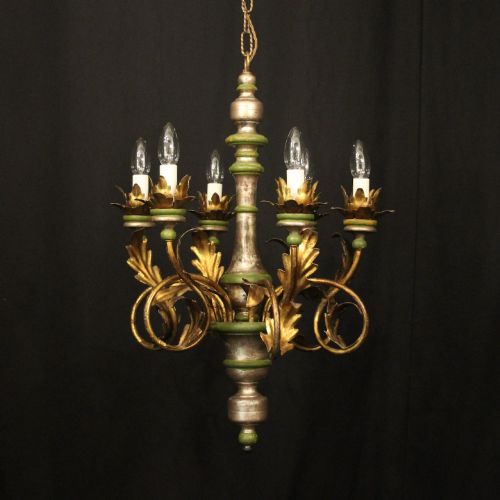
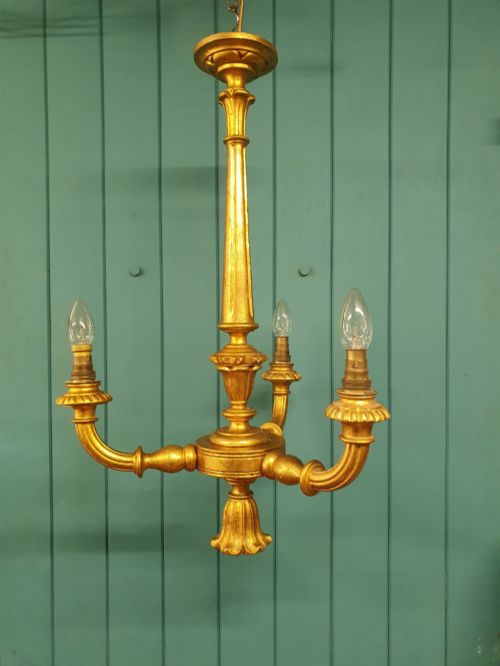
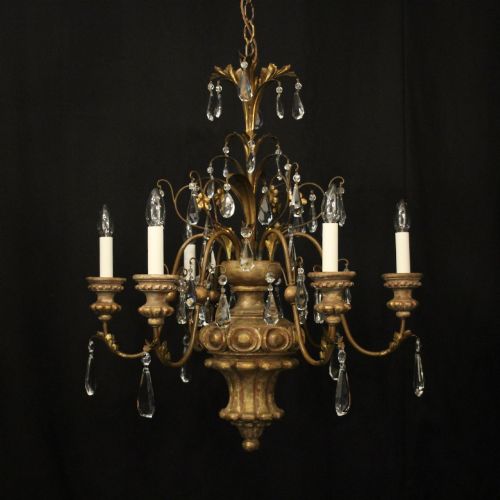
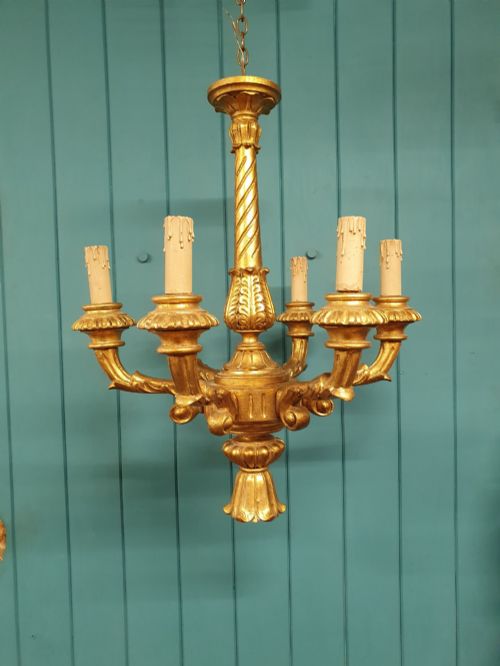


Giltwood Pendant Light
A giltwood pendant light brings warmth and old European craftsmanship to a ceiling, offering rich carved texture and softly reflected illumination.
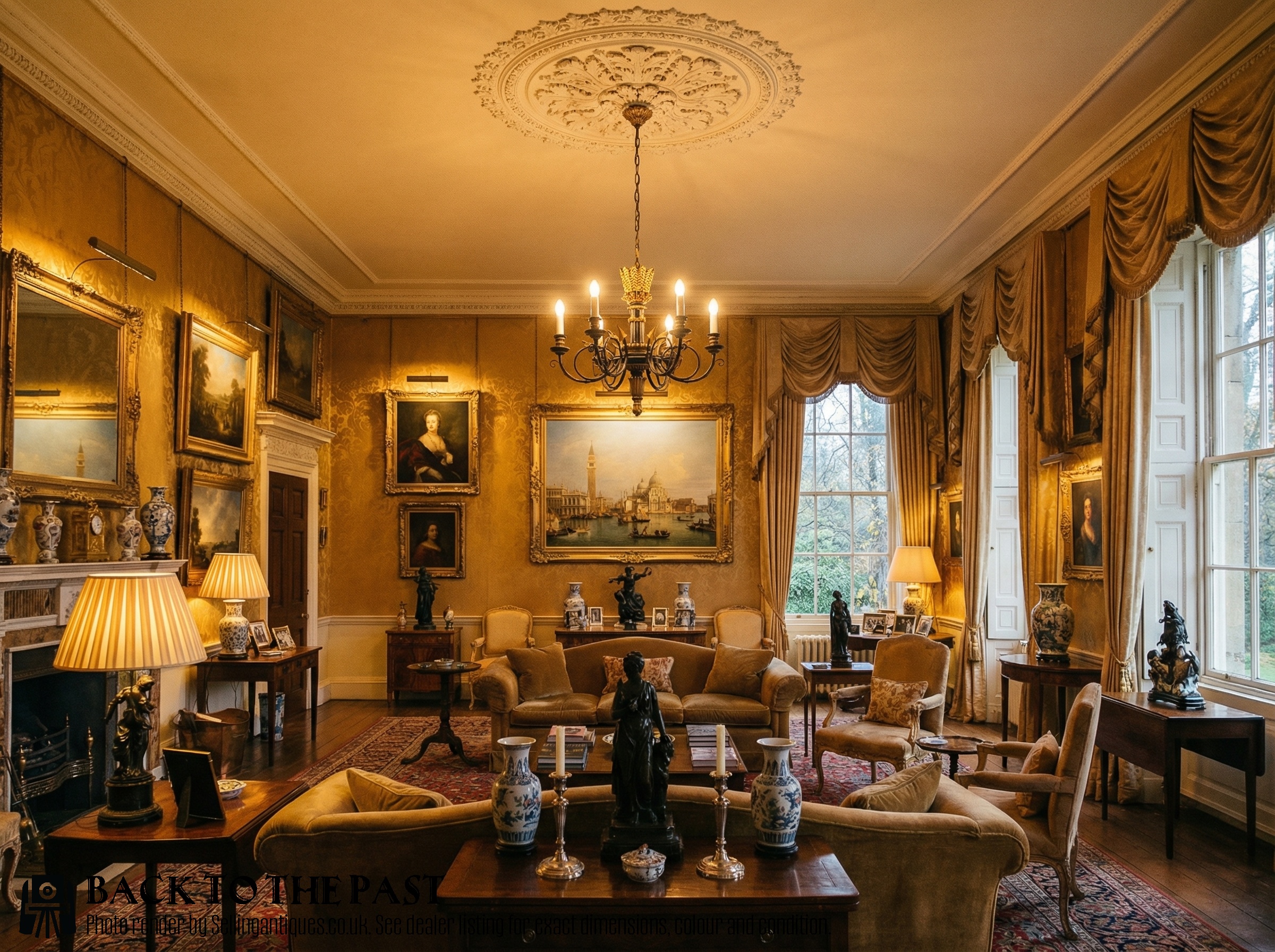
Giltwood Pendant Light
When you search for a giltwood pendant light, you are looking at overhead fixtures formed from carved wood covered in gold leaf or gesso. These pieces range from multi-arm chandeliers to hanging lanterns suspended from ceilings.
The versions you are most likely to meet on this page span several centuries, including 18th century, 19th century, Edwardian, and 1930s interpretations. Italian and French regional designs dominate the selection.
Makers drew heavily on Florentine, Venetian Baroque, Italian Rococo, and Neoclassical vocabularies. This means you encounter elaborate carving, scrolling arms, and sometimes contrasting ebonised details or toleware.
How they were made
Artisans carved the foundational body from wood, often applying a layer of gesso to create a smooth, responsive surface for fine detail work. This preparation was essential before applying thin sheets of gold leaf.
Makers finished the pieces using gold leaf, paint, and occasionally metal or fabric components to build up the reflective surfaces. Some examples integrate glass panels or bowls within hanging lantern frames.
Some lanterns quietly combine gilded wood with painted metal toleware, proving that old lighting designers loved a clever mixed-media moment.
What varies in quality
The depth and crispness of the hand-carving separate standard pieces from exceptional examples. Deeper relief work on the wooden structure indicates a more skilled hand.
The application and preservation of the gold leaf and gesso layer determine the visual richness of the surface. Finer pieces retain a warmer, more nuanced metallic patina across their scrolling arms and lanterns.
The Giltwood Pendant Light Glossary
- Giltwood
- Wood that has been coated with gold leaf. This finish provides the characteristic warm metallic sheen seen on these chandeliers and lanterns.
- Gesso
- A plaster-like mixture applied to wood as a base for gilding. It allows artisans to carve intricate details that hold gold leaf effectively.
- Toleware
- Painted metalware often incorporated into older lighting fixtures. It provides a contrasting matte texture alongside gilded surfaces.
Giltwood Pendant Light: Frequently Asked Questions
What rooms suit a giltwood pendant light?
They suit entrance halls, dining rooms, and high-ceilinged living spaces where an overhead centrepiece anchors the room. Their warm metallic finish complements traditional and eclectic interiors alike.
Consider the drop height carefully to ensure adequate clearance beneath the lowest point of the chandelier or lantern.
How should I clean a giltwood surface?
Dust the carved wooden elements gently with a soft, dry brush or feather duster. Avoid liquid cleaners or abrasive cloths that can damage delicate gold leaf.
If the piece incorporates glass panels, clean those separately with a mild glass cleaner applied to a cloth rather than sprayed directly onto the frame.
How do I tell an 18th-century piece from a 1930s reproduction?
Examine the tooling marks, wood shrinkage, and the wear patterns on the gesso and gold leaf. Older pieces show natural signs of age in the carved structure.
Style indicators also help, as 18th-century Italian designs differ in proportion and carving depth from later 20th-century revivals.