

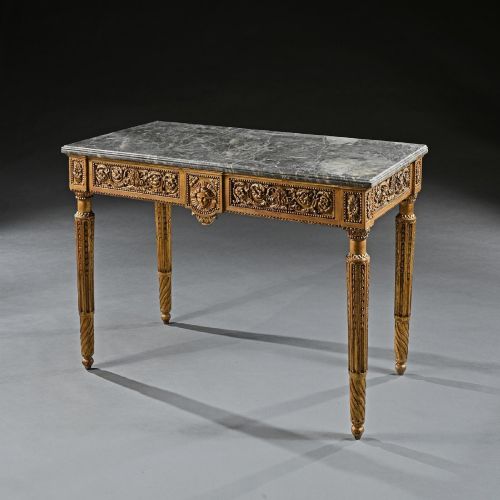
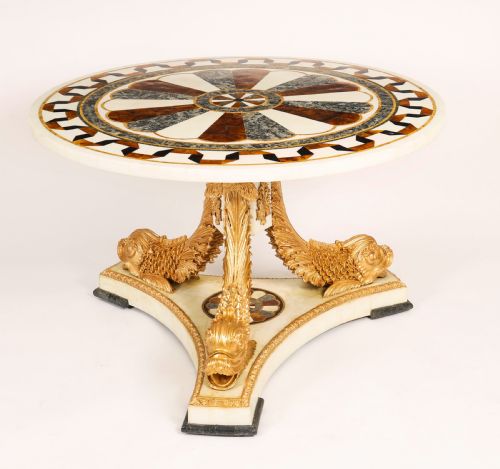

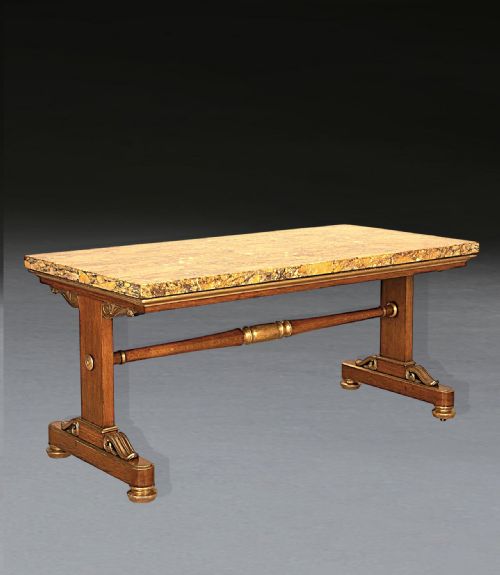


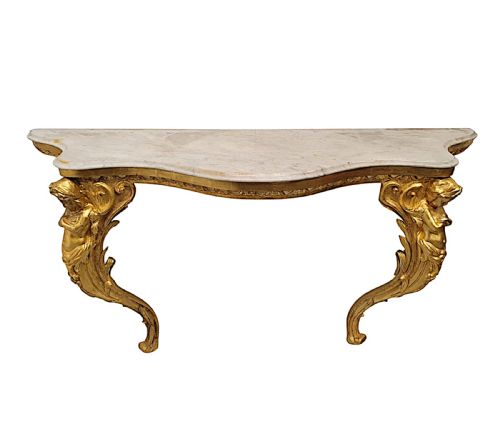


Giltwood Foyer Table
A giltwood foyer table brings instant architectural presence to an entrance hall, combining gilded surfaces with heavy stone tops.
Giltwood Foyer Table
When searching for a giltwood foyer table, you are looking at grand console tables and centre tables designed to stand against walls or anchor large entrance spaces. These pieces span from the 18th century through the 19th century and into the early 20th century, drawing on Regency, French Rococo, Louis XVI, and Italian Baroque revival styles.
You are most likely to encounter 19th-century console and centre tables featuring heavy carved wooden frames coated in gold leaf and paired with stone tops. Forms range from pier console tables with matching mirrors to freestanding centre tables designed for the middle of a room.
Origins stretch across English, French, and Italian workshops, reflecting diverse regional tastes in carving and gilding. Whether designed with lion's paw supports or dolphin motifs, each piece serves to catch the light and command attention in a hallway.
How they were made
Construction relies on timber foundations of oak, mahogany, or painted wood, heavily carved before receiving their golden finish. Artisans applied thin layers of gold leaf over preparation grounds to create the luminous giltwood surfaces characteristic of these tables.
The heavy stone surfaces set into these frames include various forms of marble, such as Siena marble, Breccia marble, and porphyry. These slabs were cut, polished, and fitted directly into the wooden or parcel-gilt structures to provide durable, decorative table tops.
Giltwood Foyer Table Retail Price Guide 2026
Typical asking prices for giltwood foyer table among the pieces listed under this phrase on Sellingantiques today, from the lower quarter to the upper quarter. They describe what is for sale here now, not the wider market.
Materials pair gilded wooden frames with heavy stone surfaces, combining oak, mahogany, and giltwood with Siena and Breccia marble.
What varies in quality
The depth and crispness of the hand-carving separate standard tables from exceptional examples, particularly in elaborate details like acanthus leaves, dolphin supports, and lion's paws. Finer tables exhibit deeply undercut woodwork where the artisan spent hours refining every contour before applying gold leaf.
The choice and thickness of the marble top also dictate the tier of the piece, with richly figured stones like Siena or Breccia elevating a console table above simpler wooden surfaces. Furthermore, the integrity of the original parcel gilding versus later repainting alters the historical authenticity and visual depth of the finish.
The Giltwood Foyer Table Glossary
- Giltwood
- Wood that has been coated with gold leaf or gold paint. This finish creates a brilliant reflective surface designed to catch candlelight and natural daylight in formal rooms.
- Console table
- A table supported by wall brackets or console legs, designed to stand flat against a wall. They frequently feature decorative mirrors hung directly above them in formal foyers.
- Centre table
- A freestanding table intended to sit in the middle of a room rather than against a wall. These pieces are finished on all sides and often feature elaborate pedestal or multi-legged supports.
- Parcel-gilt
- Woodwork where only specific carved details, highlights, or ornaments are gilded while the rest of the surface remains painted or shows natural wood grain.
- Breccia marble
- A decorative stone composed of angular rock fragments embedded in a fine-grained matrix. It provides a striking, variegated pattern highly favoured in 19th-century furniture tops.
Giltwood Foyer Table: Frequently Asked Questions
Where should I place a console table?
These tables traditionally anchor entrance halls and hallways, positioned flat against a main wall to greet visitors.
Pairing a console with a matching wall mirror creates a balanced focal point that opens up darker foyer spaces.
How do I care for giltwood?
Dust surfaces gently using a soft, dry ostrich feather duster to protect the delicate gold leaf layers.
Avoid liquid cleaners, polishes, and moisture entirely, as water reacts poorly with traditional gilding grounds.
Can I use a centre table in a hallway?
Freestanding tables work well in larger entrance halls with ample clearance around all four sides.
Ensure your foyer is wide enough to allow comfortable movement past a table standing away from the walls.
How do I identify a Regency table?
Regency pieces often display classical motifs such as carved dolphins, bold mahogany grains, and restrained Neoclassical lines.
These designs emerged during the early 19th century, favouring architectural symmetry and heavy stone tops.