


Giltwood Centre Table
A giltwood centre table commands a room with carved gold leaf and stone, built to sit proudly in the middle of a grand interior.
Giltwood Centre Table
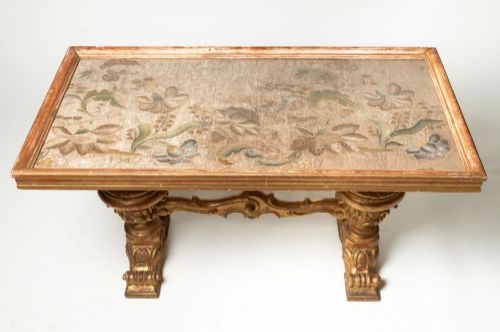
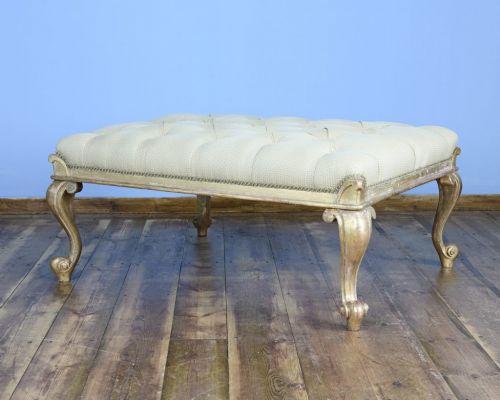
A giltwood centre table is a freestanding statement piece designed to be viewed from all sides, frequently paired with heavy stone or polished timber tops. The selections gathered here span the nineteenth century and the early twentieth century, alongside Regency, Georgian, and Victorian revivals.
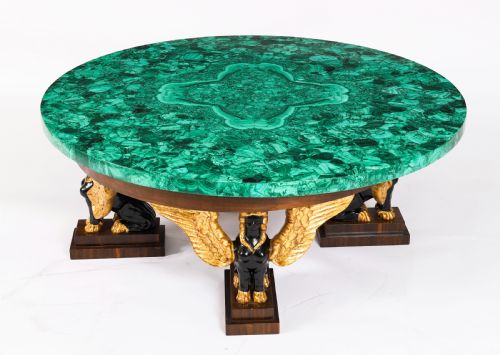
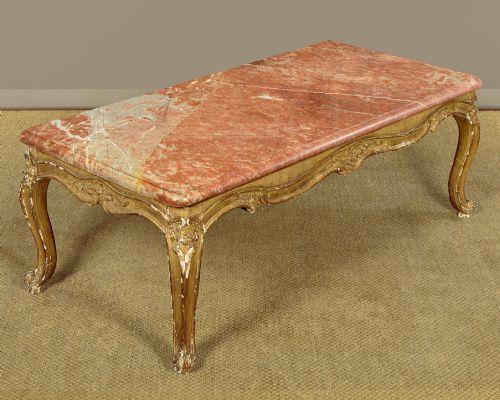
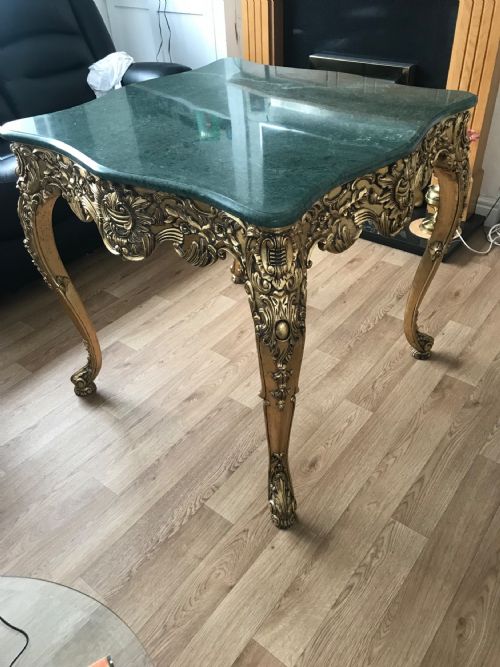
Most examples combine carved wooden frames finished in gold leaf with marble, onyx, or specimen stone tops. Alongside traditional centre tables, related forms like coffee tables, console tables, and occasional tables appear across Italian, French, and English workshops.
How they were made
Craftsmen built the structural frames using native and exotic woods such as mahogany, rosewood, oak, walnut, and ebonised wood, before applying layers of gesso to carve intricate detail. Gold leaf was then laid meticulously over the prepared surfaces to achieve a brilliant metallic sheen.
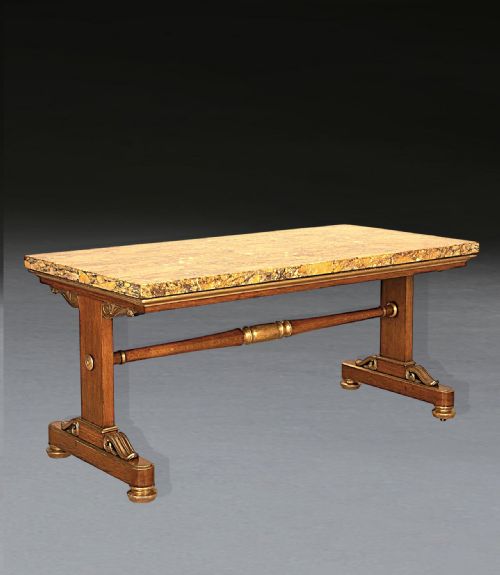
Heavy tops made from solid marble, porphyry, malachite, or specimen stone required robust joinery and sturdy underframes to bear the significant weight. Parcel-gilt highlights were frequently employed to accent specific carved motifs, contrasting the warm gold against dark woods or painted finishes.
What varies in quality
The depth and crispness of the wood carving dictate the distinction between ordinary production and master craftsmanship. Hand-carved acanthus leaves, figures, and moulded edges demonstrate an artisan's control that mechanical shaping fails to replicate.
The selection of the top surface separates standard pieces from exceptional ones. Solid polished marble, intricate specimen stone work, and heavy gauge giltwood denote high ambition and superior materials.
Holland and Son
The Giltwood Centre Table Glossary
- Giltwood
- Wood that has been coated with gold leaf or gold paint. This technique creates a luminous metallic finish often applied over a prepared gesso layer.
- Parcel-gilt
- Partially gilded woodwork where gold leaf highlights specific carved details. The remaining areas display natural or ebonised wood grain.
- Specimen marble
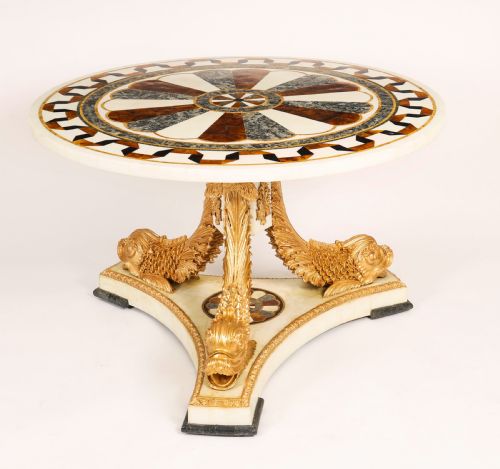
- A decorative top composed of various coloured marbles fitted together in geometric or pictorial patterns. This intricate stonework requires immense skill to assemble.
- Guéridon
- A small French table supported by one or more columns or figures. These pieces often serve as centre tables or occasional stands.
- Ebonised
- Wood treated with a dark finish to imitate expensive ebony. This dark ground provides a stark contrast against bright gilt details.
Giltwood Centre Table: Frequently Asked Questions
Where should a centre table go?
A centre table belongs in the middle of a principal room rather than pushed against a wall. Because these pieces feature finished detailing on all sides, they create a natural focal point.
They serve well in large entryways, libraries, or drawing rooms where foot traffic allows people to walk entirely around the piece.
How do I identify a Regency table?
Regency tables typically display classical architectural influences, drawing heavily on Greek, Roman, and Egyptian motifs. Look for bold carved details like dolphins, swans, or parcel-gilt accents.
Rosewood and mahogany are common primary timbers, frequently paired with contrasting marble tops or heavy pedestal bases.
Are marble tops original to these tables?
Many giltwood tables were designed specifically to carry heavy stone surfaces, particularly Italian and French revival pieces. Specimen marble, green marble, and white marble tops often date directly to the original construction.
Careful inspection of the supporting frame reveals whether it was engineered to bear the substantial weight of stone.
How do I care for giltwood?
Gold leaf requires gentle maintenance to preserve its delicate metallic surface. Dusting should be performed softly with a dry, non-abrasive cloth without applying cleaning chemicals.
Keep these tables away from direct sunlight and moisture fluctuations to protect the underlying gesso and wood from cracking.