



Gilt White Porcelain Statues
These gilt white porcelain statues bring eighteenth and nineteenth-century ceramic figures into your rooms.
Gilt White Porcelain Statues
When you search for gilt white porcelain statues, you encounter figures, groups, and busts produced across several centuries by notable European factories. The selection on this page centres on porcelain figurines and busts from the eighteenth and nineteenth centuries, including works from Derby, Bow, Sevres, and Staffordshire.
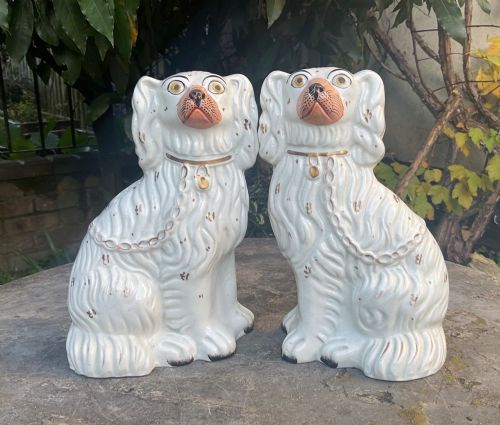
Most items take the form of modelled human figures, mythological subjects, and pairs of Staffordshire dogs finished in white glaze with gold leaf accents. You will find both early soft-paste porcelain models from the seventeen-fifties and later nineteenth-century interpretations in the Rococo and Victorian styles.
How they were made
Potters shaped these figures using soft-paste porcelain or earthenware bodies, applying white glazes before firing the pieces in kilns. Artisans then added enamel details and gold leaf highlights by hand, often referred to as gilt decoration.
Gilt White Porcelain Statues Retail Price Guide 2026
Typical asking prices for gilt white porcelain statues among the pieces listed under this phrase on Sellingantiques today, from the lower quarter to the upper quarter. They describe what is for sale here now, not the wider market.
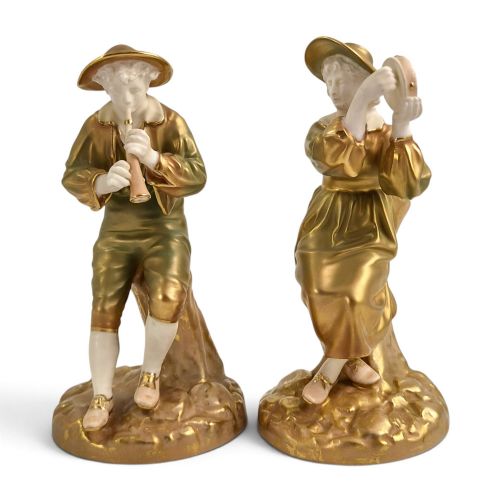
Pluto and Cerberus share shelf space with bonneted ladies and Staffordshire dogs.
What varies in quality
The preservation of the gold leaf and enamel colours distinguishes well-kept examples from heavily rubbed pieces. Early soft-paste bodies and fine biscuit porcelain display a translucency and weight that distinguish them from later earthenware production.
Bow Porcelain·Royal Worcester·Derby Porcelain·Volkstedt Richard Eckert·Samson Paris·Beswick
The Gilt White Porcelain Statues Glossary
- Soft-Paste Porcelain
- An early ceramic composition made from white clay and powdered glass rather than true china clay. It fires at lower temperatures and produces a warm, creamy texture.
- Bisque Porcelain
- Unglazed white porcelain that has been fired once, prized for its matte finish and smooth surface that resembles marble. Sculptors utilise this material for detailed portrait busts.
- Gilt
- The application of gold leaf or powdered gold to ceramic surfaces. It provides metallic highlights that contrast with the white glaze.
- Rococo Revival
- A nineteenth-century design movement that revived the ornate, asymmetrical curves of the mid-eighteenth century. It appears frequently on nineteenth-century figures and decorative bases.
Gilt White Porcelain Statues: Frequently Asked Questions
How do I date these figures?
You date them by examining the paste, the style of the base, and any factory marks stamped or painted underneath. Eighteenth-century pieces often use soft-paste porcelain with unglazed bottoms, while nineteenth-century items show harder bodies and different enamel palettes.
Comparing the modelling style to known factory output helps narrow the decade of production. Documentation from period pattern books also assists in confirming a timeline.
Where should I place them?
These figures suit tabletops, mantelpieces, and enclosed cabinets where they are protected from accidental knocks. Their white and gold surfaces reflect light well in rooms with traditional decor.
Keep them away from direct sunlight to preserve the enamel colours and gold leaf highlights. Stable humidity levels prevent any stress on older ceramic bodies.
Are these figures fragile?
Ceramic figures require careful handling due to delicate extremities such as fingers, leaves, and musical instruments. Soft-paste porcelain and earthenware can chip or crack if dropped.
Support the base and the body simultaneously when moving any statue. Dust them gently with a soft dry brush rather than liquid cleaners.
What is the difference between figures and busts?
Figures depict full-length humans, animals, or mythological characters engaged in an action or posed formally. Busts show only the head, shoulders, and upper chest, often emulating classical sculpture.
Figures frequently appear in pairs or groups, telling a narrative or representing allegorical themes. Busts focus entirely on portraiture, such as historical figures.