
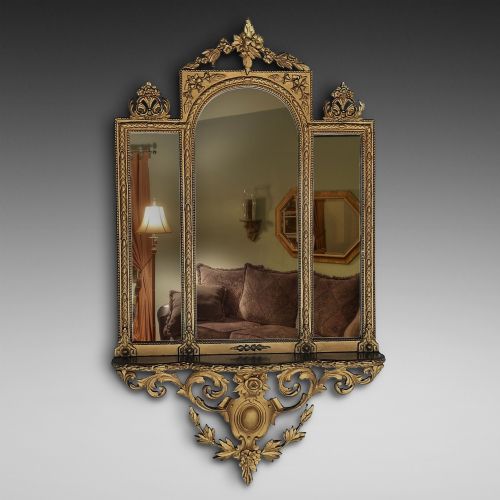
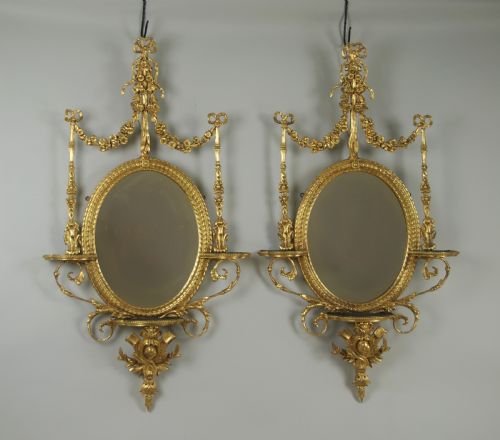
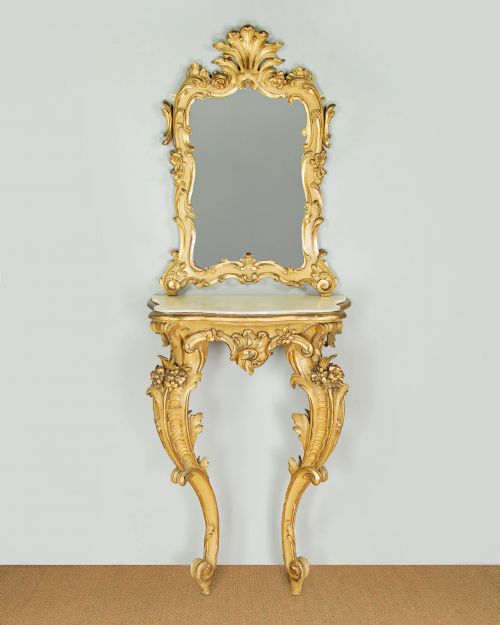


Gilt Wall Console Mirror
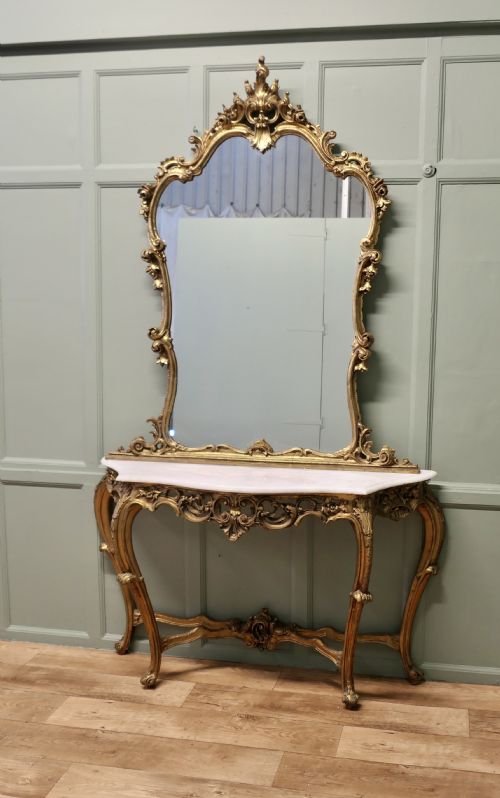
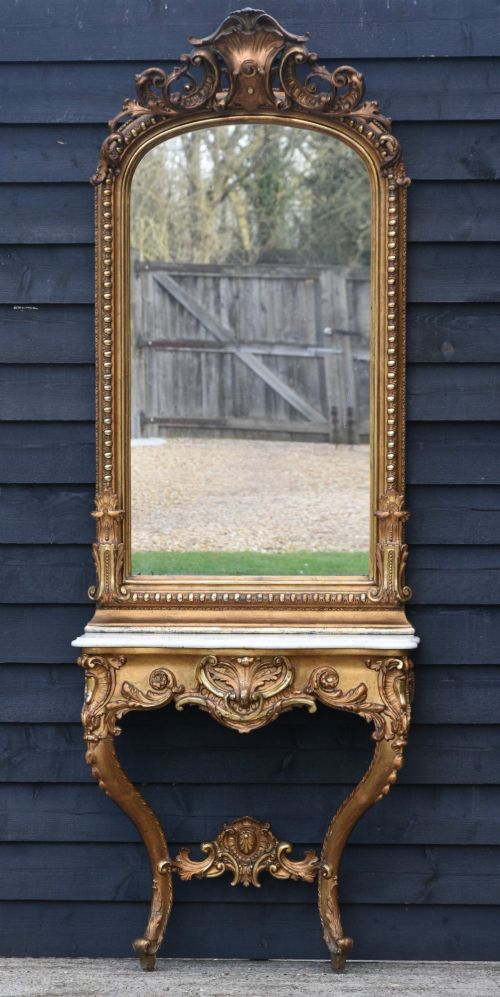
These gilt wall console mirror pieces combine reflective glass with gilded wooden frames and matching tables to anchor grand rooms.
Gilt Wall Console Mirror
A gilt wall console mirror brings together reflective glass, ornate wooden framing, and frequently a matching table designed to stand flat against a room's surface. Buyers searching this phrase meet everything from tall pier glasses and overmantel versions to dedicated console table and mirror sets.
The pieces span the nineteenth century through the early twentieth century, taking in Victorian, Regency, and various revival styles. French and Italian influences appear frequently alongside English examples, showing both neoclassical restraint and elaborate rococo curves.
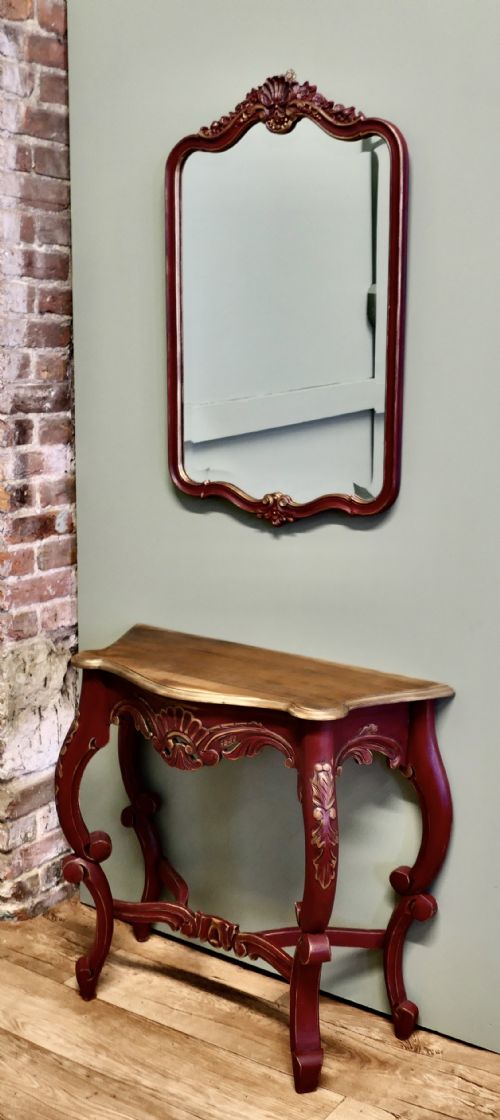
Combinations range from standalone wall mirrors with display shelves to unified console table and mirror pairings featuring marble tops and carved wood bases.
Materials and technique
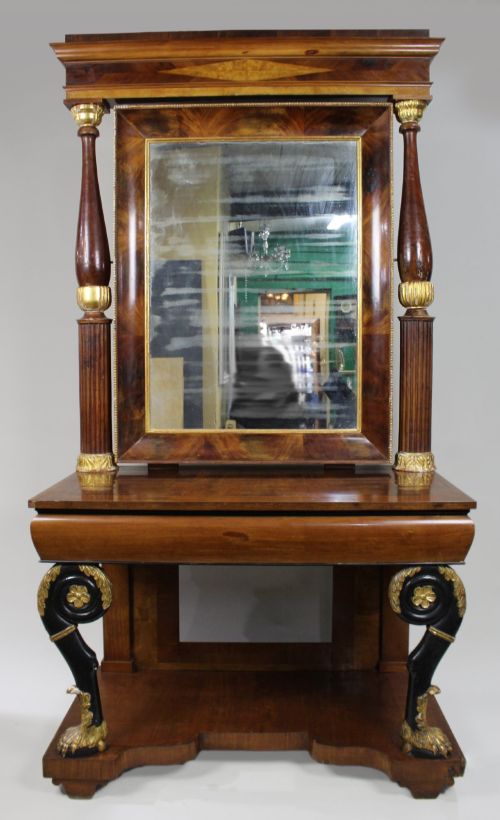
Makers shaped these frames from solid timbers including walnut, mahogany, and rosewood, applying layers of gesso to build up high-relief decorative motifs. Gilding was then applied by hand using gold leaf or metal leaf finishes to catch the light.
Mirror glass is set within heavy wooden structures, sometimes accompanied by integrated marble slabs on the console tables below. Painted wood and parcel-gilt details add contrast to the dominant gilded surfaces.
Listings feature walnut, mahogany, and rosewood timbers alongside traditional gesso and giltwood finishes.
Assessing the work
Quality rests in the crispness of the carved details within the gesso and wood, where sharp, deep relief indicates skilled handwork rather than mass production. The integration between matching console tables and their corresponding mirrors also dictates the overall architectural harmony.
The depth and consistency of the water gilding or gold leaf application distinguish finer pieces from simpler decorative items. Original marble tops and well-preserved silvering on the mirror plates further elevate a piece.
Nosotti
The Gilt Wall Console Mirror Glossary
- Giltwood
- Wood that has been coated with gold leaf or metal leaf. This finish defines the bright, reflective appearance of these frames.
- Pier glass
- A tall mirror designed specifically to hang on the narrow pier of wall between windows. These often sit directly above a matching console table.
- Gesso
- A plaster-like mixture applied to wood bases and carved before gilding. It allows for intricate, raised ornamentation on the frame.
- Overmantel mirror
- A wide mirror intended to be positioned directly above a fireplace mantel. These pieces frequently incorporate console elements or shelf brackets.
- Parcel-gilt
- A decorative treatment where only specific portions of a wooden object are gilded, leaving the underlying grain visible elsewhere.
Gilt Wall Console Mirror: Frequently Asked Questions
How do I style a gilt wall console mirror?
Position the piece at eye level in a hallway, drawing room, or above a fireplace to bounce natural light around the space. Pairing a wall mirror with its matching console table creates a unified focal point.
Keep surrounding decor restrained to let the ornate carved wood and gilded surfaces stand out without visual clutter.
What is a pier mirror?
A pier mirror is a tall, narrow glass designed to fit the specific wall space between two windows. They were traditionally paired with console tables placed underneath.
These tall formats help maximise light reflection in Victorian and Regency drawing rooms.
How do I identify a gesso frame?
Gesso is a dense mixture of chalk, binder, and pigment built up over a wooden substrate to create sculptural details. Under magnification, you see hand-modelled relief work rather than modern synthetic moulding.
Over time, this material develops a stable network of fine age cracks beneath the gilding.
Are console tables attached to the mirrors?
Some listings offer unified sets where the console table and wall mirror are designed as a single matched suite. Other examples feature a wall mirror used independently above a separate console or display shelf.
Check the structural descriptions to see if the table rests on the floor or incorporates wall-fixing brackets.