



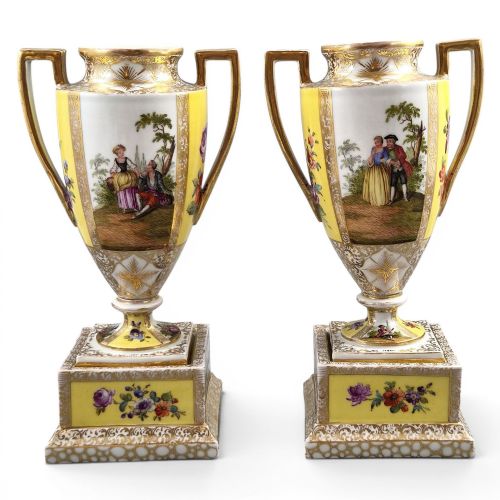


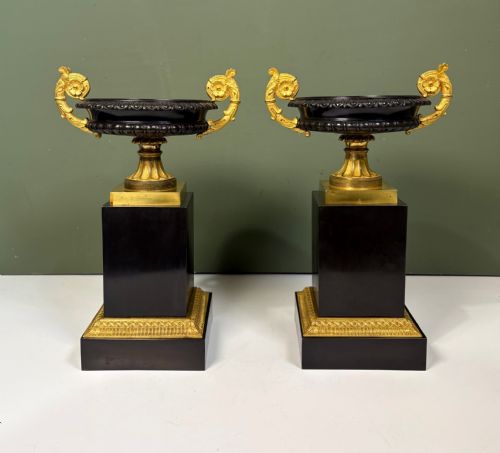


Gilt Urn Pedestal
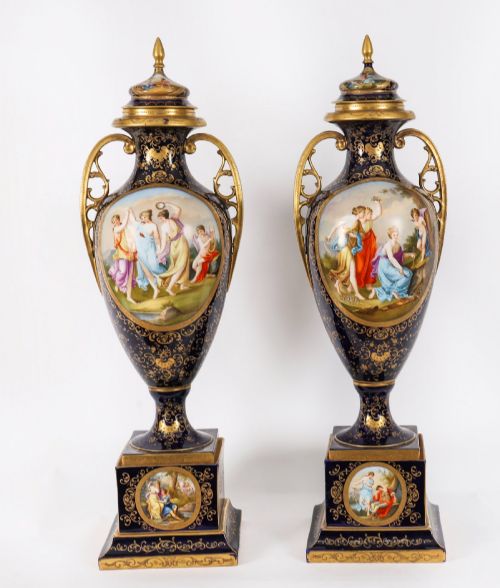
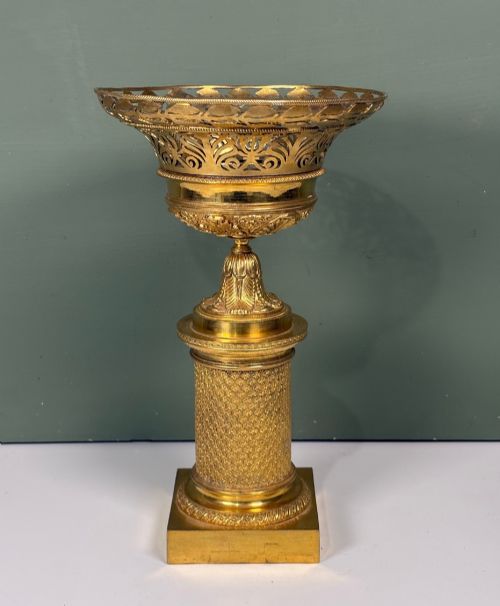
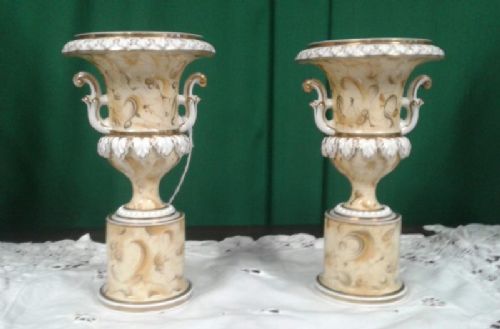
These gilt urn pedestal pieces combine classical form with gilded metal, porcelain, and marble to elevate any interior arrangement.
Gilt Urn Pedestal
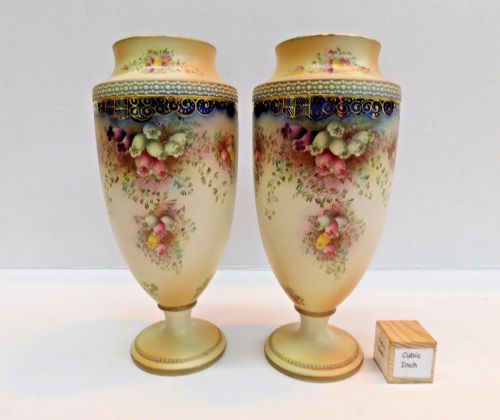
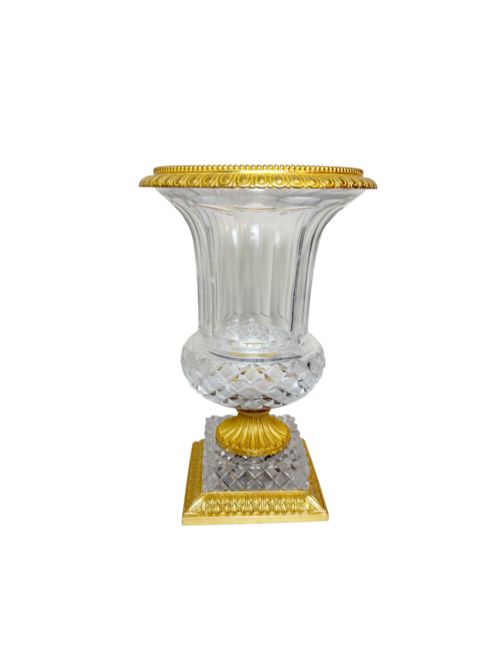
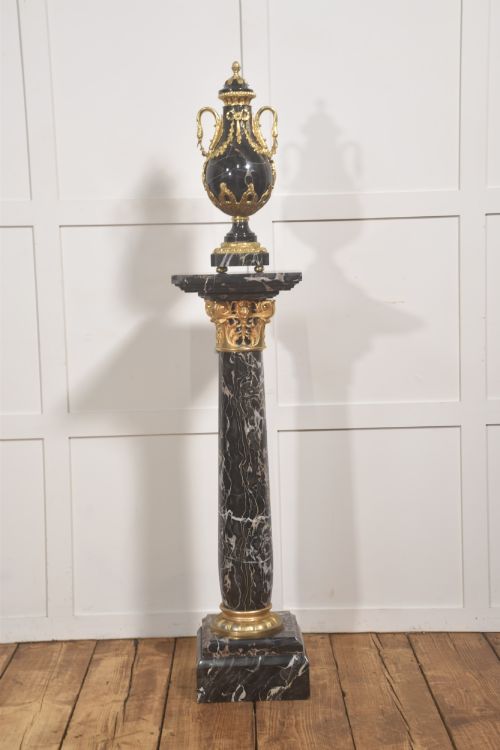
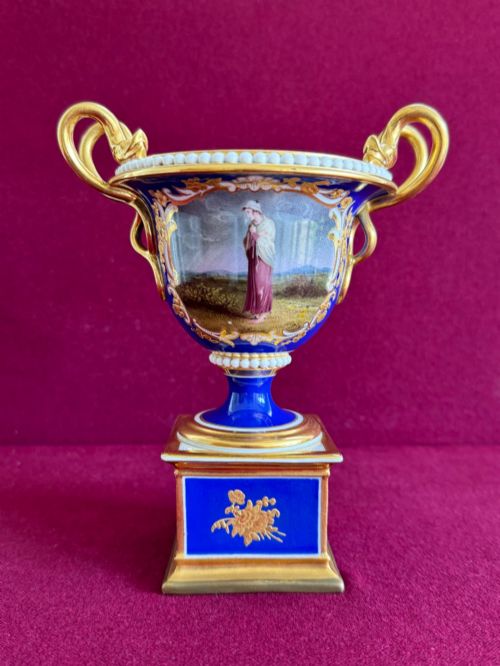
A gilt urn pedestal brings together classical display vessels and elevated column supports, frequently seen in nineteenth-century decorative arts. Buyers searching for a gilt urn pedestal will encounter campana vases, lidded vessels, and tazzas paired with marble columns or giltwood stands.
The objects span Georgian, Victorian, and Edwardian periods, with French Empire, Neoclassical Revival, and Rococo styles predominating. Many examples manifest as matched pairs intended for mantelpieces, console tables, or dedicated display columns.
Materials and construction methods
The fabrication of these pieces relies heavily on cast bronze and brass finished with mercury gilding or ormolu mounts. Ceramic bodies utilise hard-paste porcelain, earthenware, or enamel, decorated with hand-painted motifs and fired at high temperatures.
Structural supports combine dense natural marbles, such as Sienna or white varieties, with hand-carved wood elements finished in gold leaf. Ormolu mounts are meticulously chased and pinned to ceramic or stone components to create unified decorative compositions.
Gilt Urn Pedestal Retail Price Guide 2026
Typical asking prices for gilt urn pedestal among the pieces listed under this phrase on Sellingantiques today, from the lower quarter to the upper quarter. They describe what is for sale here now, not the wider market.
Grand Tour travellers packed miniature bronzes and tazzas into velvet-lined trunks to prove their cultural sophistication back home.
Assessing quality in gilt urn pedestals
Quality rests upon the crispness of the chasing on ormolu mounts and the precision with which marble and porcelain components fit together. Superior pieces display refined hand-painting on porcelain surfaces and substantial bronze castings rather than lighter stamped metals.
The integrity of the gilding indicates the grade of the piece, with well-preserved fire gilding or gold leaf showing deep, warm tones. The selection of materials, such as figured marble bases and heavy turned wood columns, further distinguishes higher-tier workshop output.
Meissen·Royal Worcester·Vienna·Limoges·François Linke
The Gilt Urn Pedestal Glossary
- Ormolu
- Gilded bronze, where finely ground gold is amalgamated with mercury and applied to a bronze base through heat. This technique produces a durable, rich metallic lustre characteristic of French decorative arts.
- Campana
- An inverted bell-shaped vessel with a flaring rim and a footed base, frequently utilised in classical urn designs. The form derives directly from ancient Roman marble garden vases.
- Tazza
- A shallow bowl or cup raised on a high foot and pedestal stem, often fashioned from bronze, marble, or silver. These items served ornamental or display functions in classical interiors.
- Cassolette
- A decorative vessel shaped like an urn, featuring a reversible lid that functions as a burner or a solid cover. They appear frequently in French Empire and Neoclassical arrangements.
- Torchere
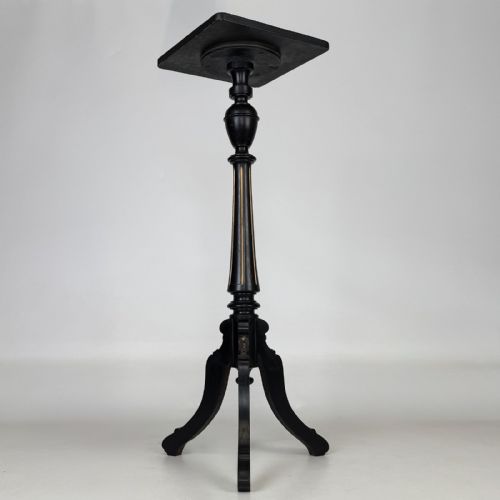
- A tall stand or pedestal designed to support a candelabrum, vase, or bust. They are constructed from carved giltwood or painted timber with marble tops.
Gilt Urn Pedestal: Frequently Asked Questions
What is a gilt urn pedestal used for?
These decorative objects serve primarily as focal points within formal reception rooms, entryways, or libraries. They elevate ornamental vessels and sculptures to enhance the vertical lines of an interior.
Historically, larger examples functioned as plant stands or torchere supports for lighting, while smaller lidded urns occupied prominent positions on mantelpieces and cabinets.
How do I style a gilt urn pedestal at home?
Pair matched sets symmetrically on sideboards, commodes, or dedicated column pedestals to maintain classical balance. Allow adequate surrounding space to let the gilded surfaces and marble details catch natural light.
Avoid overcrowding adjacent surfaces so the architectural proportions of the urn and pedestal remain distinct and visually prominent.
How can I tell nineteenth-century pieces apart?
Examine the weight and composition of the metal mounts, as nineteenth-century casting methods yielded sharp, hand-chased details in bronze and ormolu. Porcelain markings and paste characteristics help distinguish between Vienna, Limoges, and Meissen productions.
Style shifts also offer clues, moving from the restrained geometry of French Empire and Regency designs toward the more exuberant revival styles of the later Victorian era.
Are these items suitable for everyday display?
Most pieces are designed for decorative display rather than heavy functional use. Ormolu and fire-gilded surfaces require gentle dusting with a dry cloth to preserve the metallic finish without abrasion.
Placed away from direct heat sources and strong sunlight, these fragile porcelain and stone compositions remain stable and secure in domestic environments.