
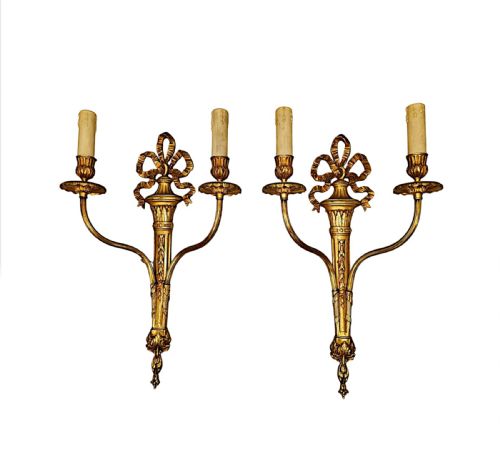
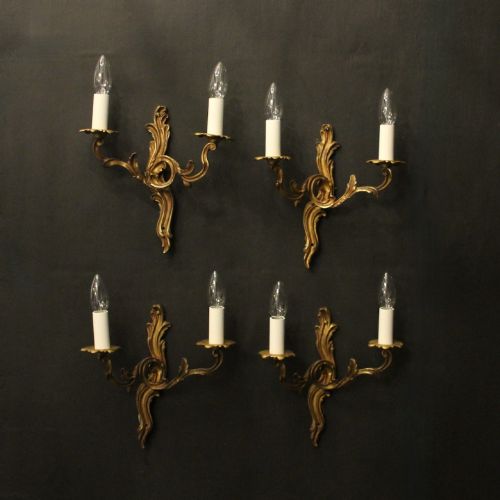
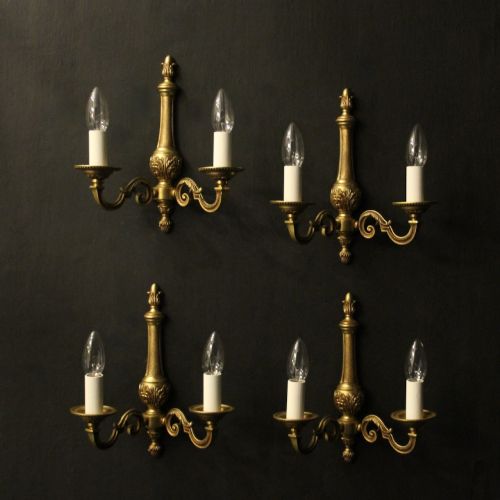
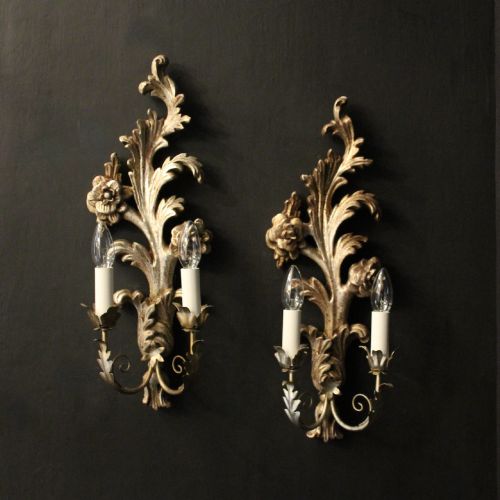
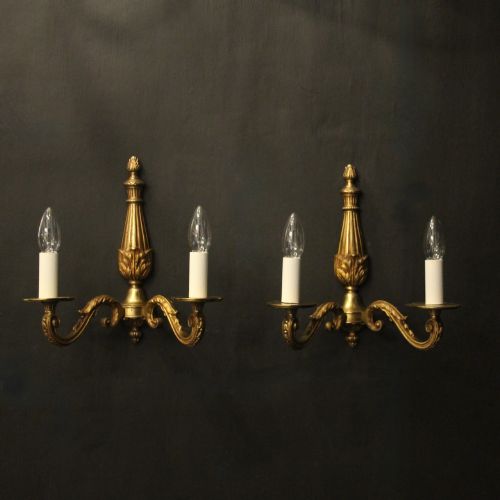
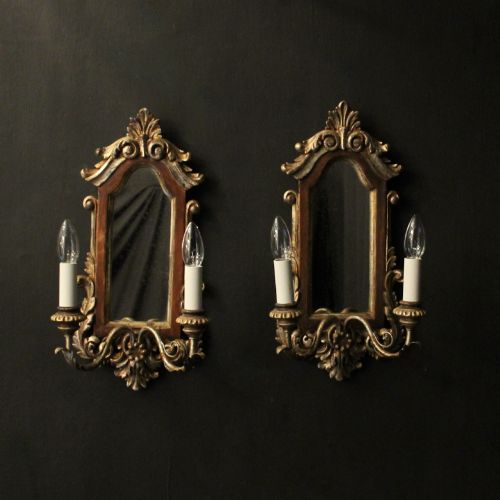
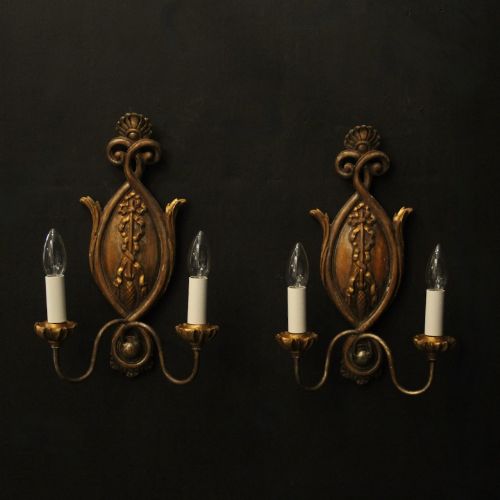
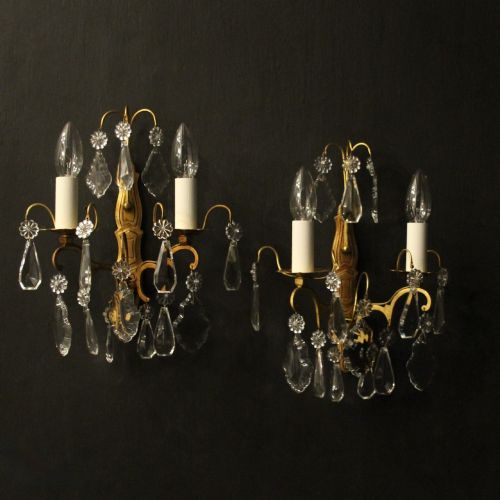
Gilt Twin Arm Sconces
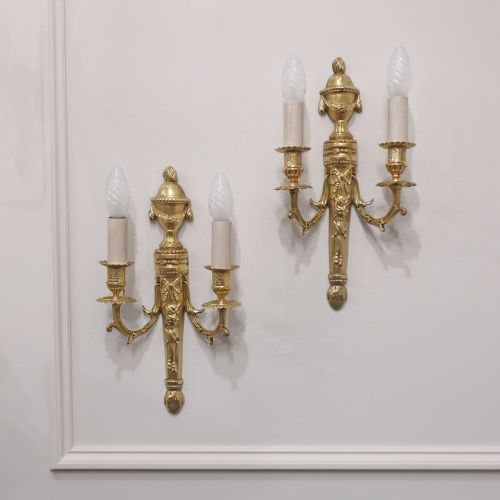
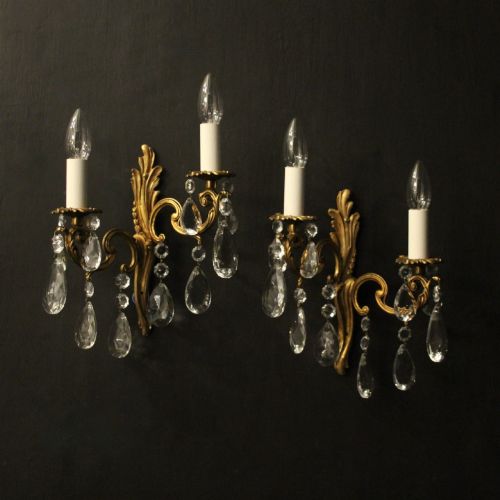
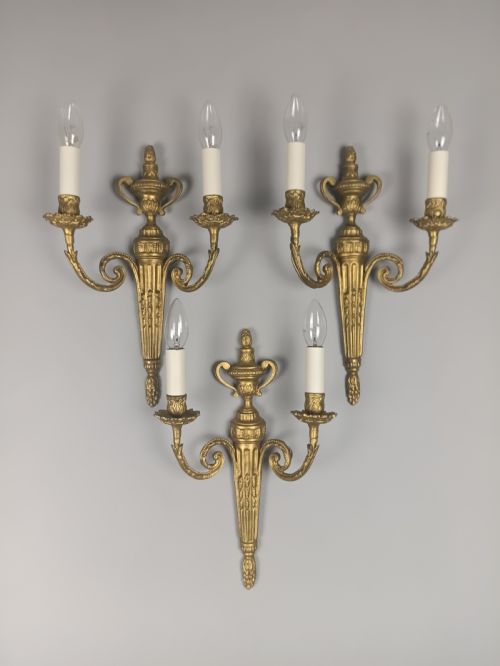
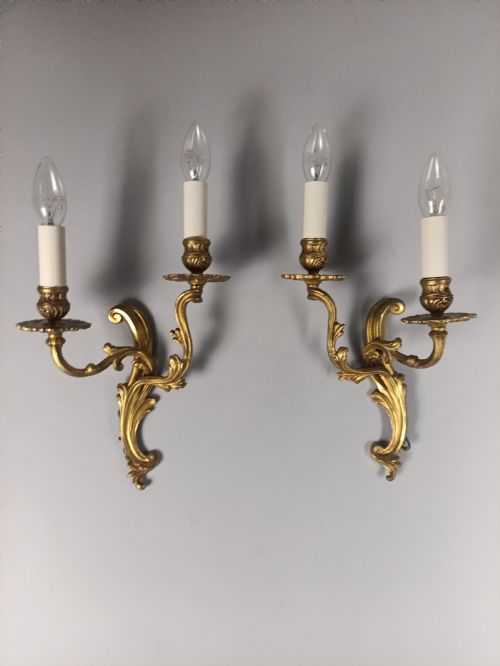
Gilt twin arm sconces bring brilliant metalwork and carved wood to a wall, offering layered illumination and period character.
Gilt Twin Arm Sconces
When you search for gilt twin arm sconces, you encounter wall lights and girandoles designed to project candlelight or electrical light across a room. These fixtures appear primarily in French and Italian designs spanning the nineteenth century up to the nineteen-thirties.
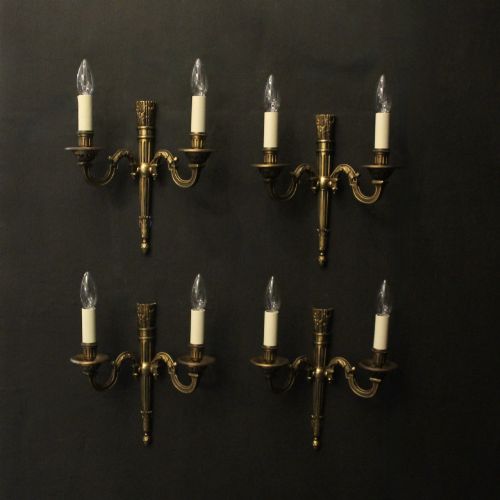
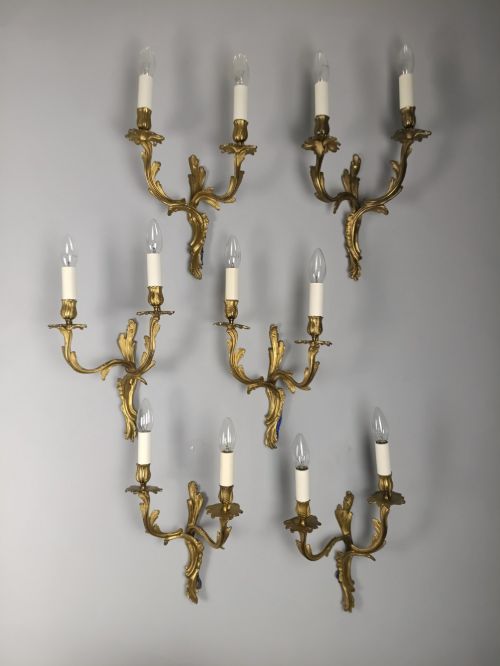
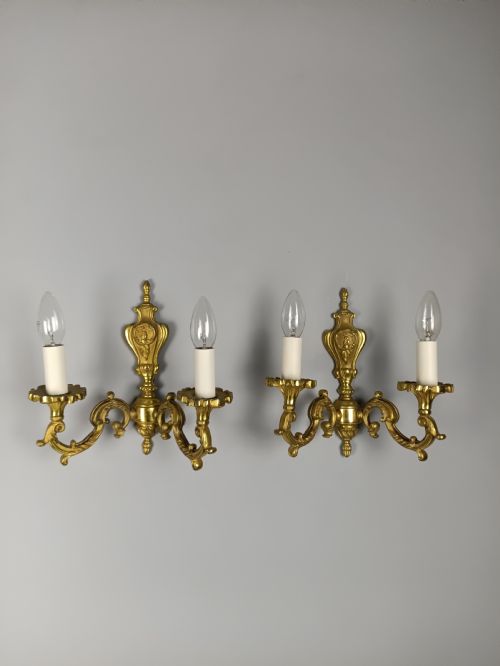
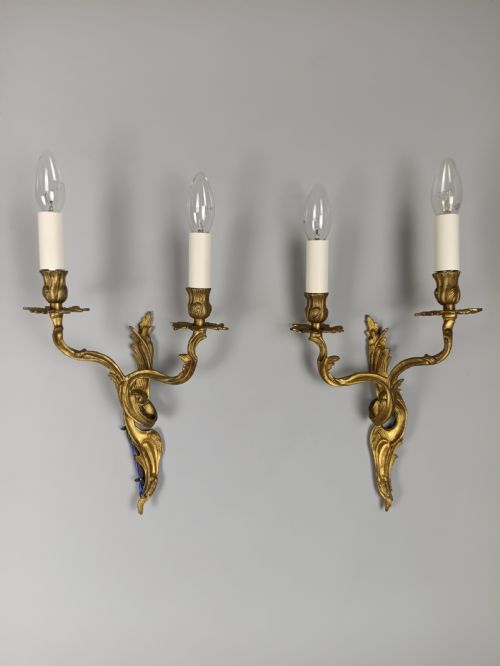
The version you meet most often on this page is a French pair or set of four in gilded brass or bronze, carrying two candle arms. Alongside these, Italian and Florentine examples in giltwood emerge frequently, often incorporating carved details like cherubs.
Forms range from compact single pairs to sets of six, taking shape as wall lights or girandoles. They draw on stylistic influences such as French Rococo, Neoclassical, Empire, and Louis XVI.
Materials and construction
The construction relies heavily on cast metals such as bronze, brass, and ormolu, which are then gilded to create a brilliant reflective surface. Many pieces employ cast metal components shaped into scrolling arms, ribbons, and rococo motifs.
Alternatively, carvers shape wood into giltwood frames and backplates, sometimes combining the wood with silver gilt or polychrome paint. Crystal elements and Murano glass details occasionally join the metal and wood structures to catch the light.
Carved wooden cherubs peek out from Italian giltwood sconces, keeping a watchful, golden eye over the room.
Quality and craftsmanship
The distinction between tiers of quality rests in the crispness of the casting or the depth of the wood carving. Finer examples display sharp, detailed relief work on the bronze or brass, whereas simpler items show softer edges in the metal.
The application and preservation of the gilding also divide the range. Intact layers of original gold leaf or fire gilding distinguish superior pieces from those with heavily faded or later repainted surfaces.
Casier
The Gilt Twin Arm Sconces Glossary
- Girandole
- A branched wall light or sconce, often incorporating a mirror to reflect the light. These fixtures frequently feature twin arms and ornate frames.
- Ormolu
- Finely chopped high-karat gold applied to a bronze base using a mercury amalgamation process. This technique yields a deep, lasting metallic lustre.
- Giltwood
- Timber, commonly carved gessoed wood, coated with gold leaf. Florentine makers utilised this method extensively for decorative wall lights.
- Rococo
- An ornate design style marked by asymmetric scrolls, C-curves, and naturalistic plant motifs. This aesthetic heavily influences many nineteenth and early twentieth-century wall lights.
Gilt Twin Arm Sconces: Frequently Asked Questions
How do I install antique wall sconces?
Most twentieth-century wall lights require professional wiring to connect safely to your domestic electrical supply. Many examples arrive adapted for modern circuits.
Position the sconces at eye level or slightly above to balance room proportions effectively.
What rooms suit twin arm wall lights?
These fixtures sit comfortably in hallways, drawing rooms, and dining spaces where paired symmetry enhances the interior. They provide gentle ambient illumination rather than direct task lighting.
Smaller pairs fit neatly beside mirrors or artwork, while larger sets distribute light evenly across longer walls.
How do I date a gilded wall light?
Dating relies on identifying stylistic markers like Rococo Revival curves or Empire symmetry, alongside material types. Brass and bronze casting techniques also shift across the nineteenth and early twentieth centuries.
Examine the backplates and screw fixings for further clues regarding the manufacturing period.
Are giltwood and gilt bronze cleaned differently?
Gilt bronze and brass tolerate gentle dusting and specialised metal care when the finish remains stable. Harsh chemical cleaners strip the historic gilt surface entirely.
Giltwood requires dry dusting only, as moisture and vigorous rubbing damage the delicate gold leaf layer on carved timber.