



Gilt Tripod Table
A gilt tripod table brings lightness and gold leaf to a corner, supporting lamps, wine or books on a single central pillar.
Gilt Tripod Table
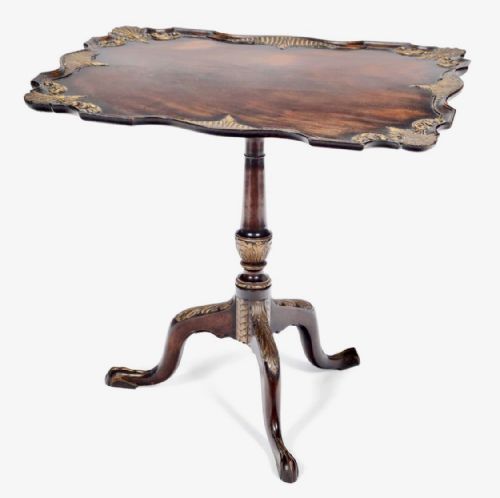
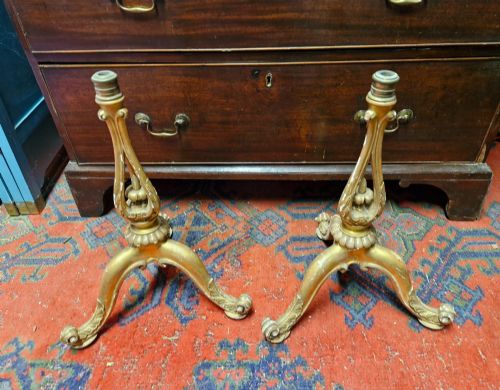
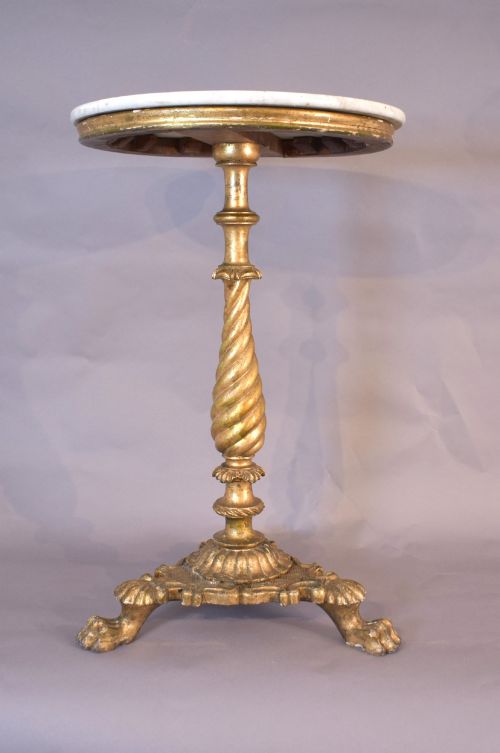
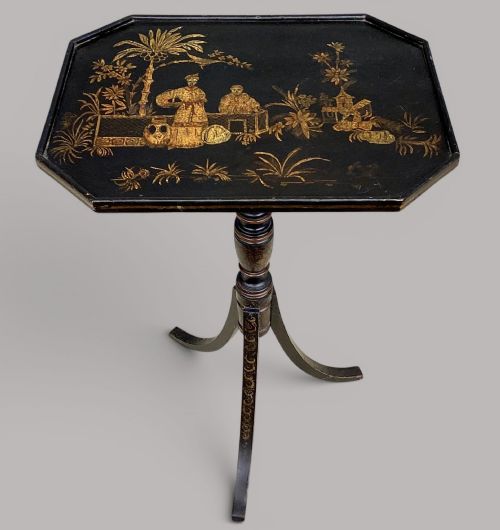
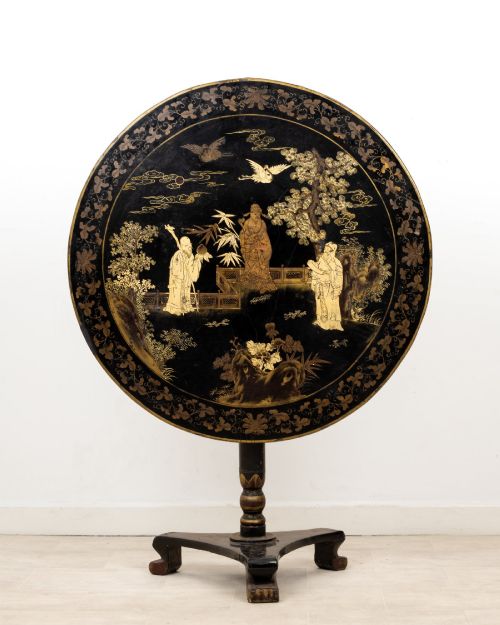
A gilt tripod table combines a three-legged base with gilded surfaces, taking forms such as wine tables, occasional tables, and tilt-top designs.
The versions met on this page span the Georgian, Regency, and Victorian periods, alongside later nineteenth and early twentieth-century revivals.
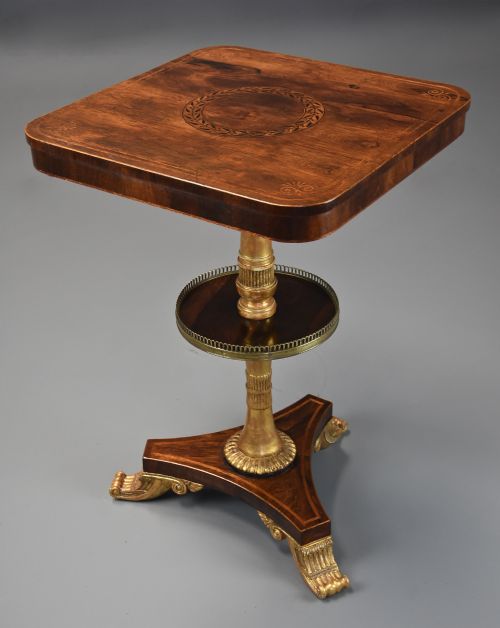
Makers utilised woods like mahogany and rosewood, applying gold leaf, paint, or lacquer to create decorative centre and side tables.
How they were made
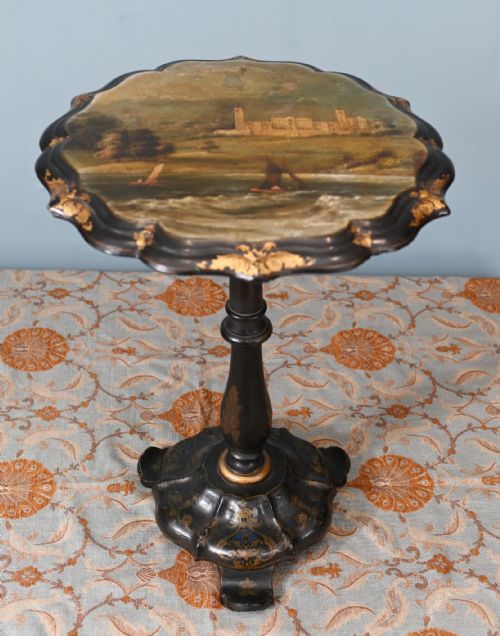
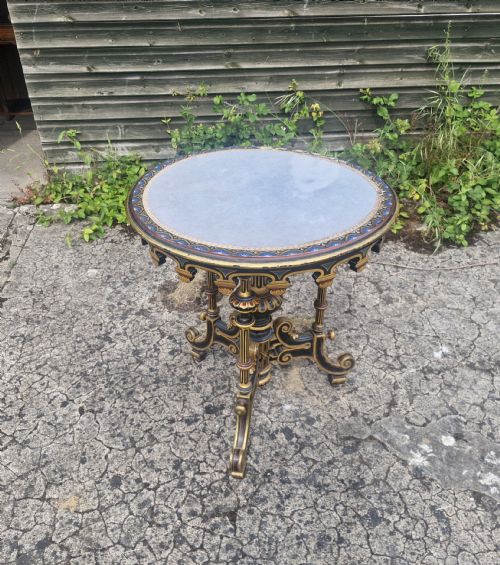
Craftsmen built these tables using timber carcases in mahogany, ebonised wood, or rosewood, often pairing them with white marble tops or inlaid papier-mâché.
Gilding was applied as gold leaf or through parcel-gilt highlights on carved wood, brass, or ormolu mounts, accompanied by hand-painted lacquer and japanning in Chinoiserie styles.
Several tables come equipped with tilt tops, ready to fold flat against the wall like obedient wooden sentries.
What varies in quality
Quality rests on the crispness of carved details in the giltwood or mahogany and the depth of the original lacquer or paint work.
Stability in the tripartite base and the precision of the tilt-top mechanism distinguish finer examples from standard production.
George Bullock·Weisweiler
The Gilt Tripod Table Glossary
- Tripod table
- A small standalone table supported by a pillar above three spreading legs. They appear frequently in wine and occasional table formats.
- Parcel gilt
- Partially gilded woodwork where gold leaf highlights specific carved motifs or edges against a painted or dark wood ground.
- Gueridon
- A small French table, often round and supported by a single column or figures, frequently topped with marble.
- Chinoiserie
- European imitation of Chinese artistic motifs, rendered in lacquer, paint, and gold on furniture.
- Japanning
- European lacquerwork imitating Japanese export items, built up with hardened varnishes and painted decorations.
Gilt Tripod Table: Frequently Asked Questions
How do I style a gilt tripod table?
Place a small tripod table beside an armchair to hold a lamp, or use a wine table for drinks. Their compact footprints suit awkward corners.
The reflective gold leaf and painted details add warmth to both traditional and modern rooms.
What is the difference between Regency and Victorian pieces?
Regency pieces often draw on classical French Empire or Chinoiserie aesthetics, utilising clean lines, lacquer, and parcel gilt. Victorian examples tend towards heavier carving, ebonised finishes, and rich painted decoration.
Both periods embrace the three-legged pedestal format with varied decorative schemes.
Where were tripod tables used in the house?
These pieces served as occasional furniture in principal reception rooms, drawing rooms, and boudoirs. They held small lamps, books, or writing equipment.
Their lightweight construction meant servants could move them around the house as required.