


Gilt Standing Cabinet
A gilt standing cabinet brings elevation and rich surface detail to a room, standing apart from standard wall furniture.
Gilt Standing Cabinet
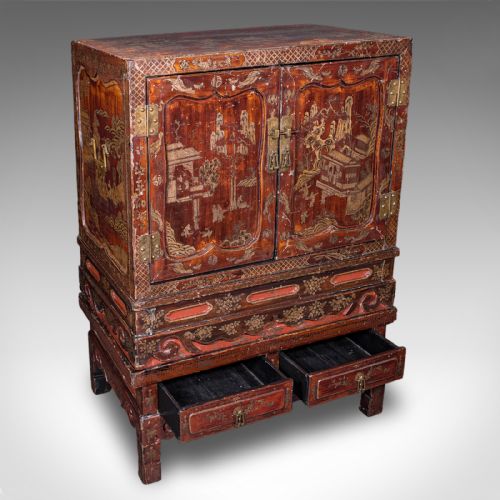
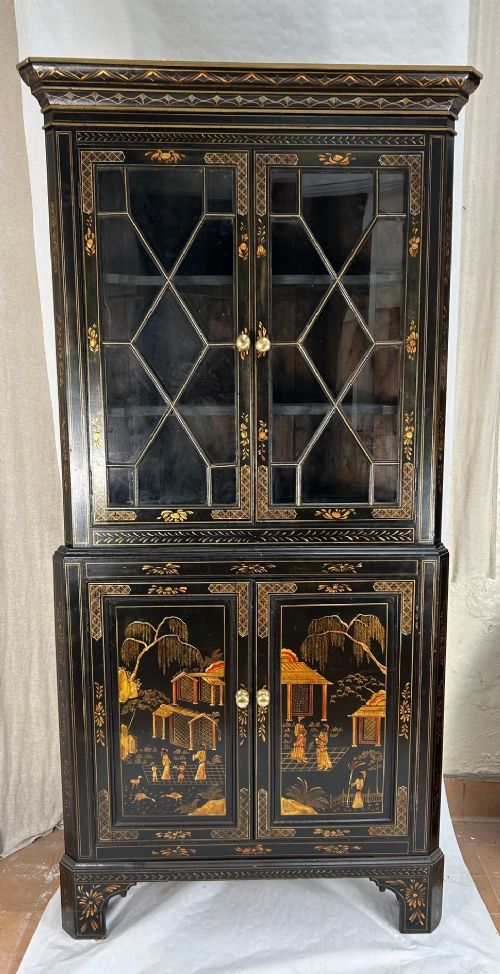
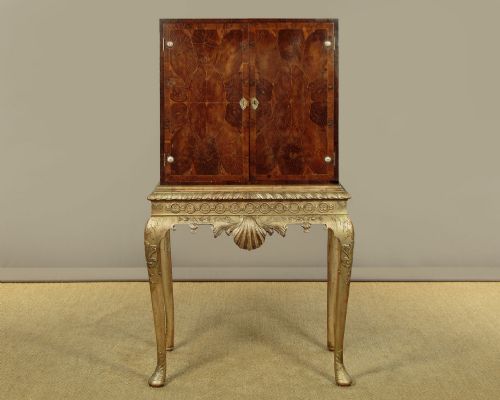
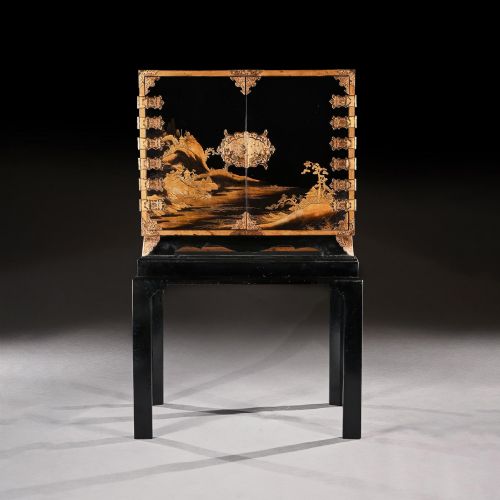
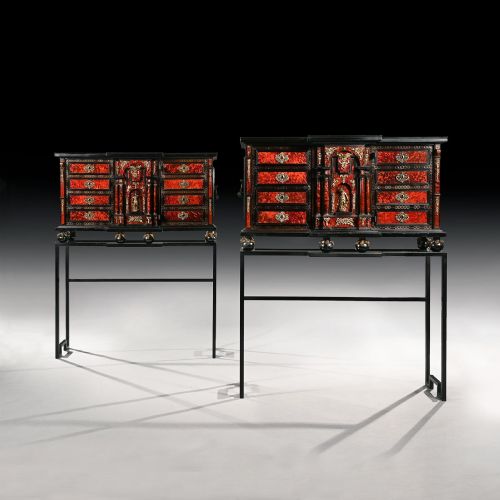
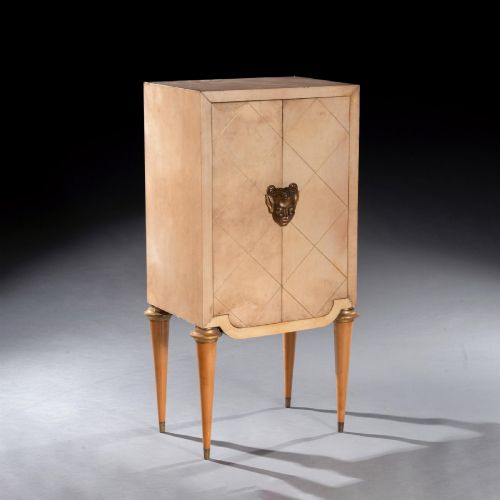
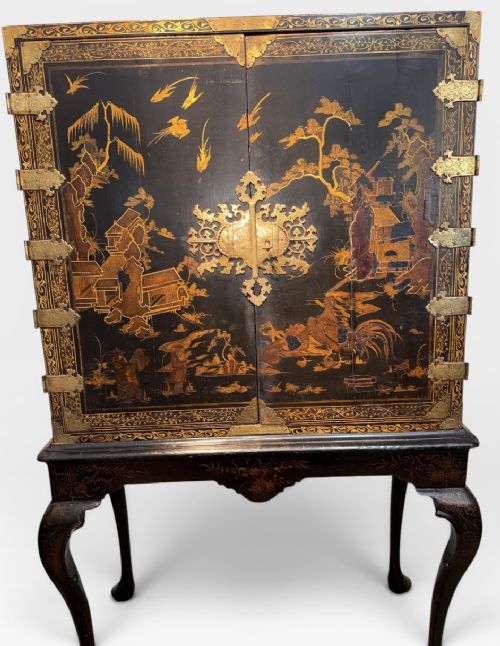
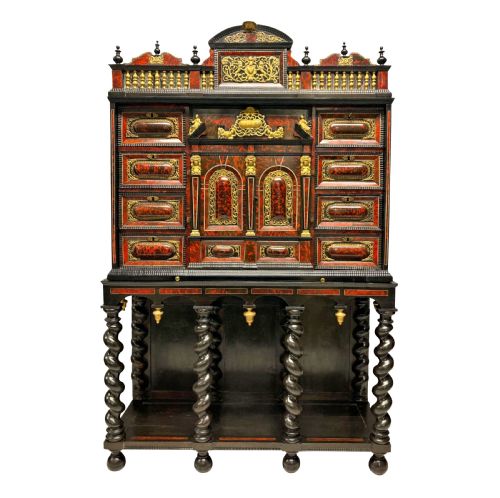
A gilt standing cabinet combines elevated storage with prominent surface gilding, creating a commanding presence in any room. These pieces range from seventeenth-century Japanese lacquer on stands to twentieth-century cocktail cabinets and decorative display units.
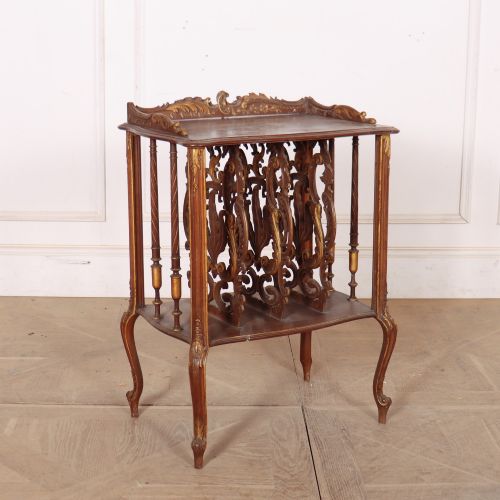
Buyers meeting this form on the page will encounter diverse styles such as Chinoiserie, Spanish Baroque, Victorian, and Rococo Revival. The underlying framework typically rests upon a dedicated stand, table, or carved base.
The integration of a cabinet with a raised stand defines the typology, lifting the primary storage compartment off the floor. This architectural arrangement originates in earlier centuries to protect precious contents and display craftsmanship at eye level.
How they were made
Cabinet makers utilised foundational timbers such as mahogany, walnut, and ebonised wood, often applying layers of lacquer, varnish, or tortoiseshell to the exterior surfaces. Panels were frequently decorated with painted motifs, parquetry, or parchment inlay.
Gilding techniques involved the application of gold leaf or parcel-gilt highlights directly onto carved gesso and giltwood frames, or onto bronze mounts. Artisans also incorporated brass and ormolu hardware to reinforce structural corners and frame glass panels.
Listings feature pieces spanning from the 17th Century through to the 1930s, utilising materials including tortoiseshell, ebonised wood, and lacquer.
What varies in quality
The refinement of the surface decoration separates standard examples from exceptional ones, particularly in the depth of the lacquer work and the crispness of the giltwood carving. Hand-applied gold leaf and intricate painted panels demonstrate superior artisan skill compared to simpler finishes.
Structural integrity and the retention of original stands determine the integrity of the piece over centuries of use. Cabinets that retain their matching contemporary bases, original bronze mounts, and uncompromised joinery command greater appreciation.
Maurice Jallot·Maison Krieger·Vernon
The Gilt Standing Cabinet Glossary
- Cabinet on stand
- A freestanding storage compartment raised upon a separate or integrated table-like support structure.
- Giltwood
- Timber that has been coated with gold leaf or gold powder over a prepared gesso ground.
- Chinoiserie
- European artistic styles reflecting Chinese motifs and decorative techniques, popular on lacquered furniture.
- Ormolu
- Finely chased and gilt bronze used for decorative mounts and hardware on furniture.
- Vitrine
- A glass-fronted cabinet designed specifically for the display of curiosities, porcelain, or objects.
Gilt Standing Cabinet: Frequently Asked Questions
What is a gilt standing cabinet?
A gilt standing cabinet is an elevated piece of furniture featuring gold leaf or parcel-gilt surface decoration. These units combine enclosed storage or display space with a raised supporting base.
They serve as focal points in interiors, offering both surface brilliance and practical compartmentalised storage for collectors and homeowners.
How do I care for lacquered surfaces?
Lacquered and gilt surfaces require gentle dusting with a soft, dry cloth to prevent abrasion. Avoid placing these pieces in direct sunlight or near heat sources to protect the finish.
Maintaining stable room humidity preserves the wood substrate and prevents cracking in the delicate lacquer or gesso layers over time.
Are these cabinets all original?
Surviving examples often span multiple centuries, meaning some pieces combine seventeenth- or eighteenth-century lacquer panels with later nineteenth-century stands. Catalogues note these details to clarify the historical composition of each item.
Examining the construction methods and material ageing helps differentiate between unified period pieces and later assembled combinations.
Where should I place a display vitrine?
A vitrine with glazed sides benefits from placement in well-lit areas where interior contents remain visible from multiple angles. Positioning them away from heavy foot traffic protects the delicate carved giltwood or ebonised frames.
Their upright proportions make them suitable for corners or blank wall spaces that require vertical architectural interest.