
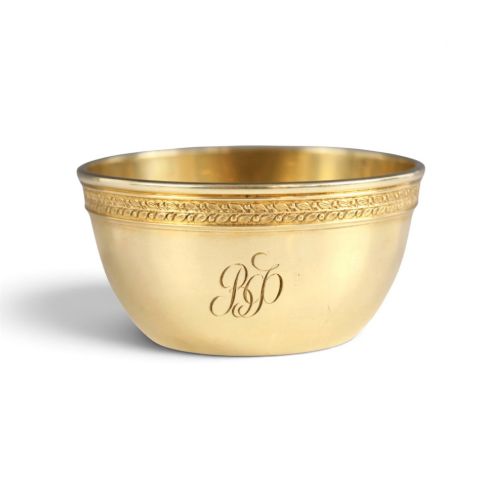
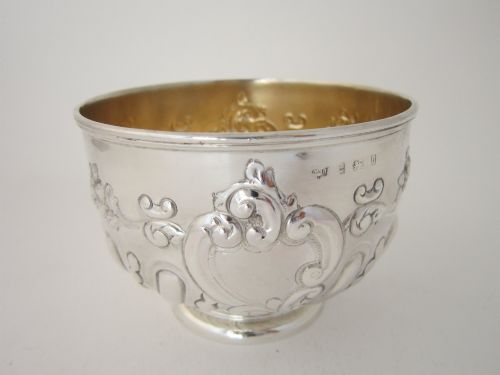
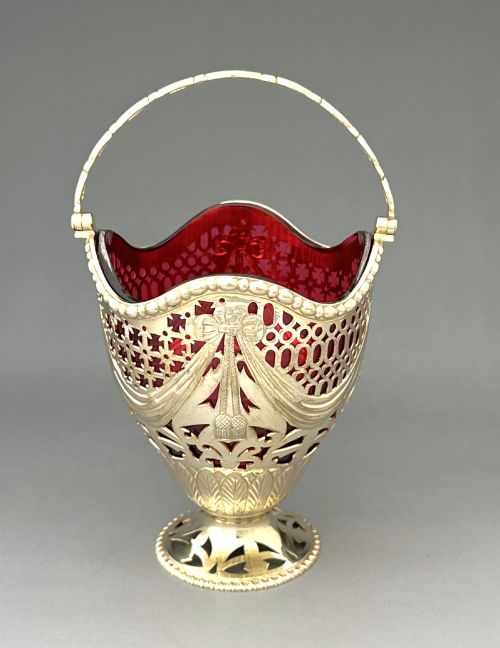
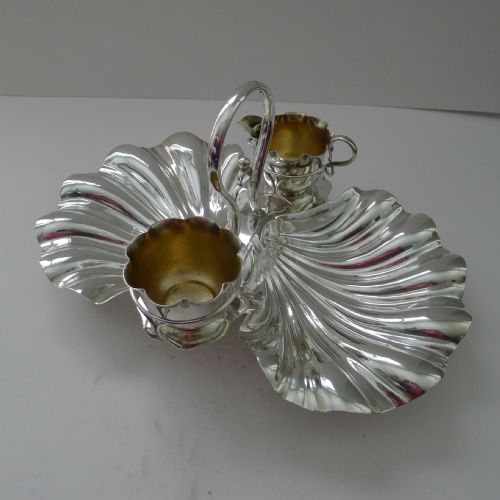




Gilt Silver Dish
A gilt silver dish brings warmth and richness to the table through its union of precious metal and golden surface.
Gilt Silver Dish
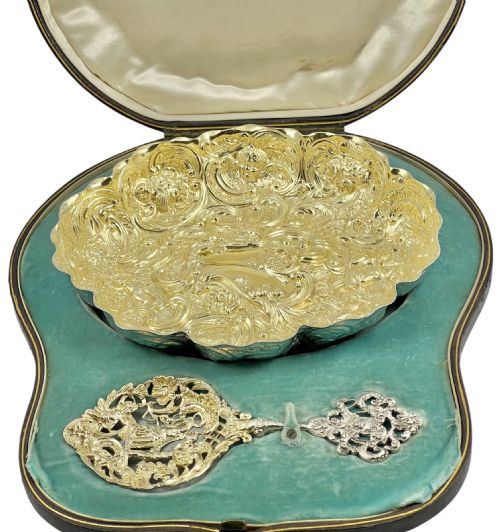
A gilt silver dish encompasses a wide variety of domestic and decorative tableware designed to hold sweetmeats, fruit, sugar, and salt. These objects appear in forms ranging from small salt cellars and bonbon dishes to large ceremonial chargers and presentation bowls.
The pieces on this page span several centuries and design traditions, including Georgian rococo work, Victorian naturalistic floral creations, Edwardian baskets, and items originating from Imperial Russia and Qing China. Many incorporate coloured glass liners or contrasting enamel work.
Buyers will encounter items intended for formal dining as well as smaller desk and dresser accessories. The selection includes individual master pieces alongside matched sets by notable silversmiths.
How they were made
Silversmiths formed these objects primarily from sterling silver or solid silver foundations before applying a layer of gold to the interior or exterior surfaces. This technique, historically known as vermeil or silver gilt, protected the silver from food acids and added a rich golden glow.
Craftsmen utilised traditional methods such as hammering, casting, and piercing to create elaborate forms like scallop shells, naturalistic flowers, and pedestal dishes. Surface decoration was often achieved through hand chasing, engraving, and the addition of enamel or glass inserts.
Some nineteenth-century silversmiths turned humble dining salt into roaring dragon ashtrays and flowering scallop shells.
What varies in quality
The distinction between standard items and exceptional examples lies in the crispness of the chased detail and the depth of the original gilding. Master silversmiths executed figural scenes, rococo scrollwork, and naturalistic flora with a precision that preserves every line.
Provenance and maker attribution elevate certain pieces significantly, particularly those bearing the marks of prominent workshops or royal silversmiths. The survival of matching fitted cases and original coloured glass liners also enhances desirability.
Stephan Wekeva·Daniel Arter·A & J Zimmerman Ltd·William Bateman·Edward Farrell·Thomas Smily·George Fox·Garrard London·Goldsmiths & Silversmiths Co Ltd·Barnard·Thomas Robbins·John Aldwinckle & Thomas Slater·George Burrows·Wakely and Wheeler
The Gilt Silver Dish Glossary
- Silver gilt
- Sterling silver that has been coated with a thin layer of gold on its surface. This finish combines the structural strength of silver with the rich appearance of gold.
- Vermeil
- A French term for high-quality silver gilt, specifically describing sterling silver plated with gold. It was widely utilised for French and international decorative tableware.
- Charger
- A large ornamental dish or plate used for display on a sideboard or as a base for other vessels. These substantial pieces often feature elaborate armorial engravings or battle scenes.
- Sweetmeat basket
- A small footed vessel or basket designed for holding confectionery, nuts, or dried fruits. They frequently feature pierced metalwork and swing handles.
- Salt cellar
- A small container used to hold salt at the dining table, often produced in matched pairs or sets. Georgian and Victorian examples frequently include bright gilt interiors to prevent corrosion from the salt.
Gilt Silver Dish: Frequently Asked Questions
What is a gilt silver dish used for?
These vessels were historically utilised for serving sweets, fruits, preserves, and condiments during formal meals. Larger chargers served a decorative role on sideboards to display wealth and family crests.
Today, collectors use them as decorative accents, desk accessories, or occasional tableware. Their rich golden surfaces bring warmth to both traditional and modern interiors.
How do I clean a gilt silver dish?
Maintenance requires gentle handling to preserve the delicate gold layer over the silver. Traditional silver dips and abrasive cloths should be avoided because they strip away the gilding.
Warm water, mild soap, and a soft cloth suffice for routine cleaning. Professional advice is recommended if the piece requires more intensive restoration.
How can I date a gilt silver dish?
Dating relies heavily upon the hallmarked stamps struck directly into the metal. These small official marks reveal the city of assay, the specific year of production, and the silversmith's mark.
Stylistic elements also provide clues to the era of manufacture. Rococo curves, Victorian floral motifs, and Edwardian pierced work each reflect the aesthetics of their time.
What is the difference between silver gilt and vermeil?
Both terms describe sterling silver that has been plated with a layer of gold. Vermeil is a traditional French descriptor often associated with Continental European pieces and specific thickness standards.
British silversmiths historically favoured the term silver gilt for domestic wares. In practice, both materials offer the same visual combination of silver structure and gold finish.