


Gilt Shelf Mirror
A gilt shelf mirror combines reflective depth with practical display, offering a functional surface alongside the warmth of gilded frames.
Gilt Shelf Mirror
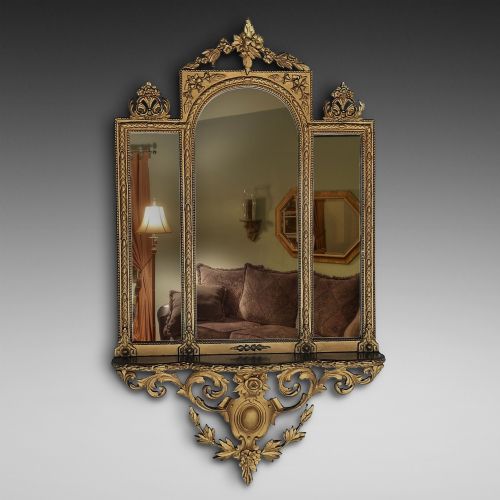
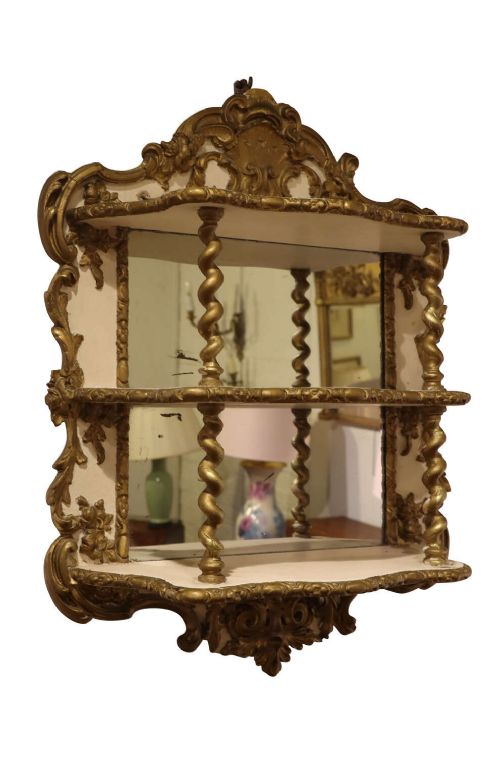
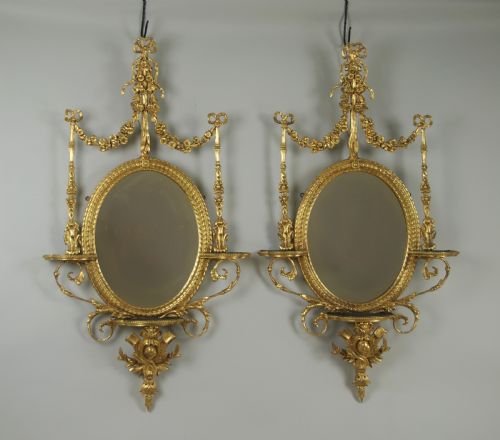
A gilt shelf mirror serves as both an optical device and a functional wall bracket, bringing together reflective glass and a small display surface. When searching for a gilt shelf mirror, buyers frequently encounter Victorian examples alongside French Rococo Revival and Edwardian interpretations.
The objects combine wall mirrors, overmantel mirrors, and wall shelves into single composite pieces. Many incorporate display brackets or small ledges directly beneath the glass, designed to hold small decorative items.
Origins stretch across the nineteenth and early twentieth centuries, spanning English workshop production and French styles. The format ranges from compact wall-hanging brackets to large architectural overmantel pieces.
How they were made
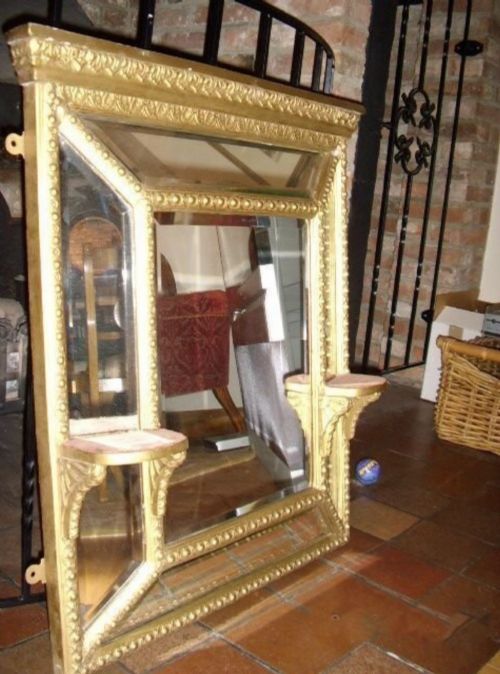
Makers constructed the primary framework using timber such as walnut, ebonised wood, or painted wood, applying gesso to create crisp relief ornament before gilding the surface. Giltwood and parcel-gilt finishes provide the characteristic metallic sheen seen across the period pieces.
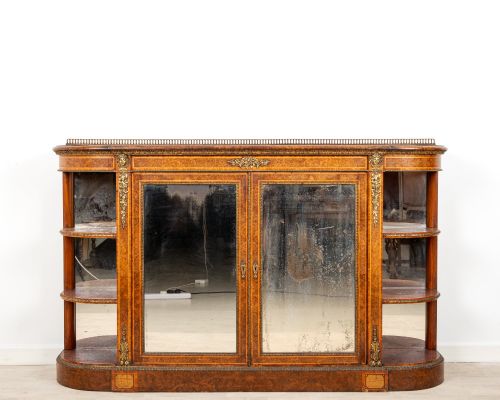
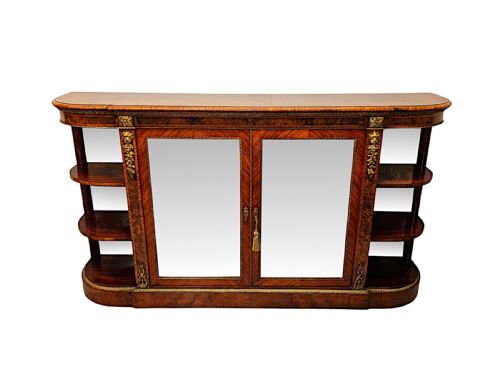
Mirror glass is set within these frames, occasionally featuring bevel cuts or older manufacturing characteristics. Ormolu mounts, brass details, and porcelain plaques appear alongside the woodwork on more elaborate examples.
Listings feature glass, giltwood, gesso, ormolu, painted wood, and burr walnut across various nineteenth-century and early twentieth-century periods.
What varies in quality
Quality rests in the crispness of the carved gesso relief and the depth of the gilding applied to the wooden substrate. Finer pieces display hand-carved details and substantial timber frames rather than moulded composition ornaments.
The integration of the shelf or display bracket with the mirror frame demonstrates the maker's structural joinery. Original mirror glass and well-preserved parcel-gilt surfaces retain higher integrity than heavily restored alternatives.
Gillows·Strahan of Dublin·Town and Emanuel
The Gilt Shelf Mirror Glossary
- Giltwood
- Timber carved and coated with gold leaf or metallic powder. This finish gives the frame its luminous appearance.
- Gesso
- A plaster-like mixture applied to wood frames and carved before gilding. It allows for intricate decorative mouldings.
- Ormolu
- Gilded bronze used for decorative mounts and furniture hardware. It adds metallic contrast to the wooden frame.
- Overmantel mirror
- A large mirror designed to hang specifically above a fireplace mantel. These often incorporate architectural proportions and display ledges.
Gilt Shelf Mirror: Frequently Asked Questions
How do I style a gilt shelf mirror?
Position the piece at eye level in an entrance hall or living space where the shelf can hold small decorative objects. Ensure the wall fixings match the substantial weight of the timber and glass structure.
Allow natural light to strike the mirror glass from an adjacent window to maximise the reflective quality of the room. Keep items placed on the attached shelf minimal to maintain the visual balance of the frame.
Were these mirrors used in bedrooms?
Smaller wall-hanging versions and étagères frequently appeared in private chambers and dressing rooms to hold small personal items. Their dual function saved valuable floor space in period interiors.
Larger overmantel variants remained primarily within reception rooms and parlours above fireplaces. The shelf provided a convenient display ledge for porcelain and miniatures.
How do I tell Victorian from Edwardian mirrors?
Victorian examples often display heavy gesso ornamentation, revival styles like Rococo, and darker ebonised or burr walnut frames. Their construction tends to be robust and heavily embellished.
Edwardian pieces generally lean towards lighter painted wood finishes and restrained decorative motifs. The frames frequently exhibit softer colour palettes such as cream with parcel-gilt highlights.
What is parcel-gilt?
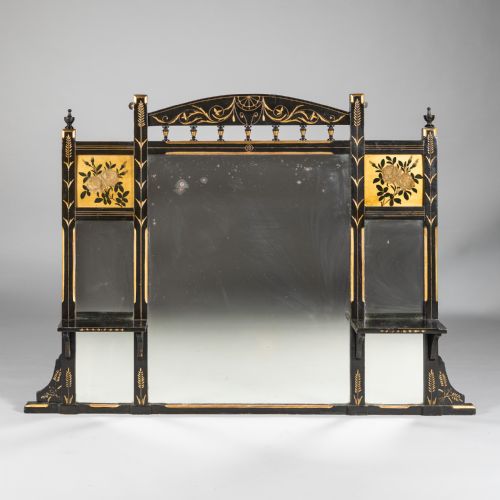
Parcel-gilt refers to a finishing technique where only specific portions of the wooden object are gilded. The remaining areas show exposed wood, such as ebonised or polished walnut.
This selective application creates visual contrast between the dark timber ground and the bright metallic sections. It appears frequently on Aesthetic Period and revival furniture.