
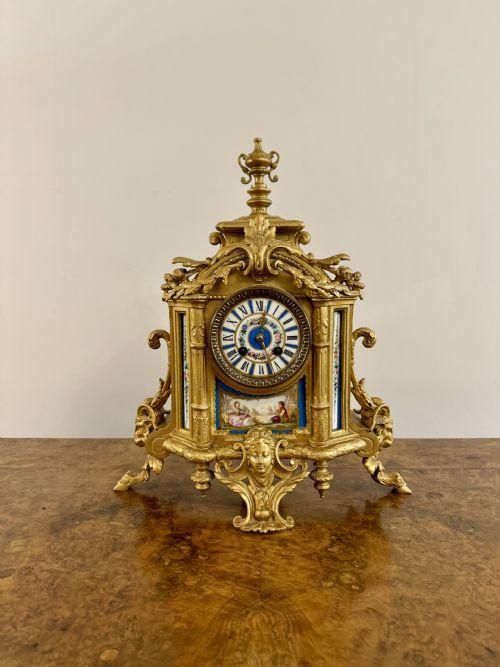


Gilt Porcelain Shelf Clock
A gilt porcelain shelf clock brings nineteenth-century French elegance and mechanical precision to a mantelpiece.
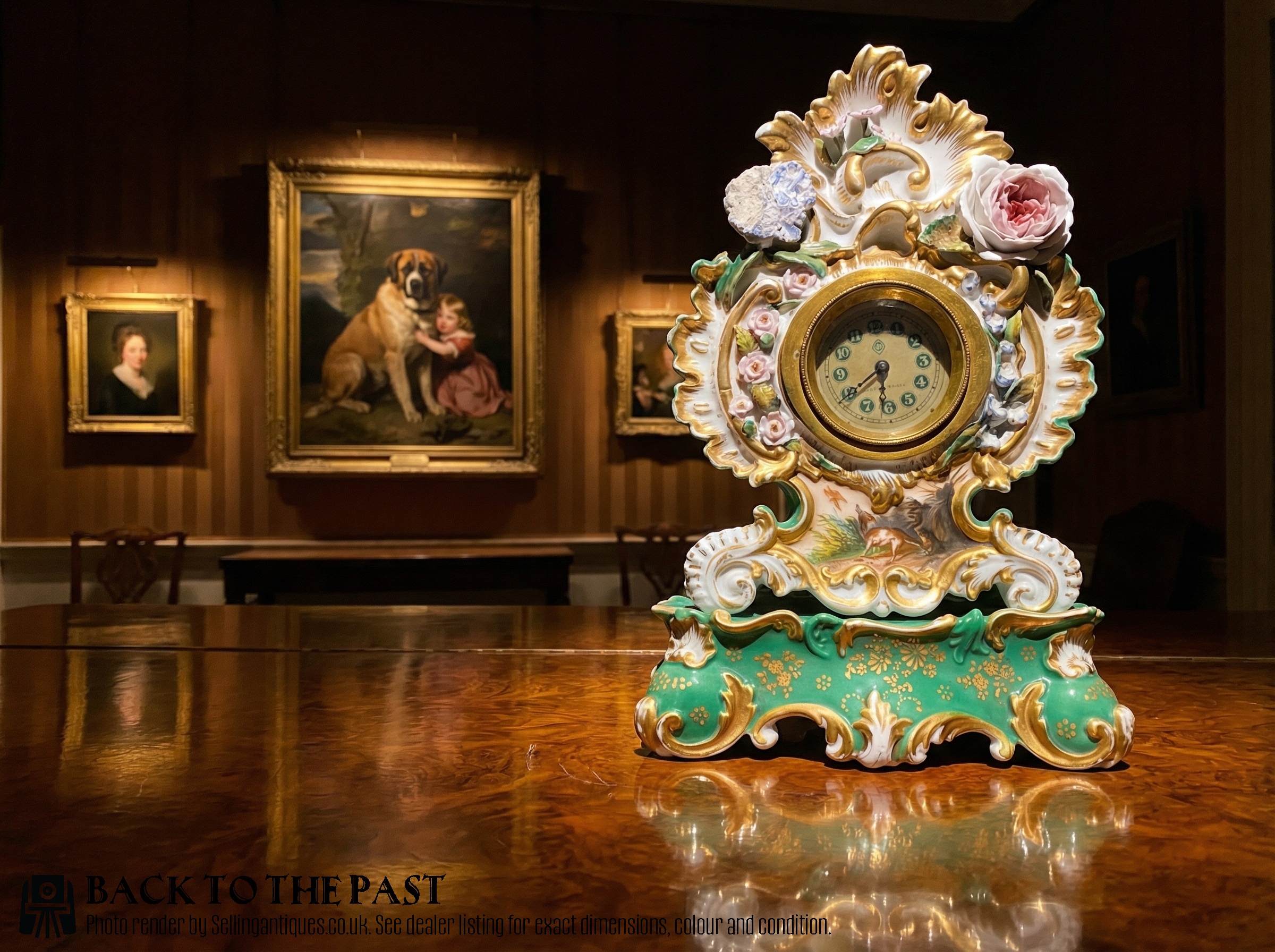
Gilt Porcelain Shelf Clock
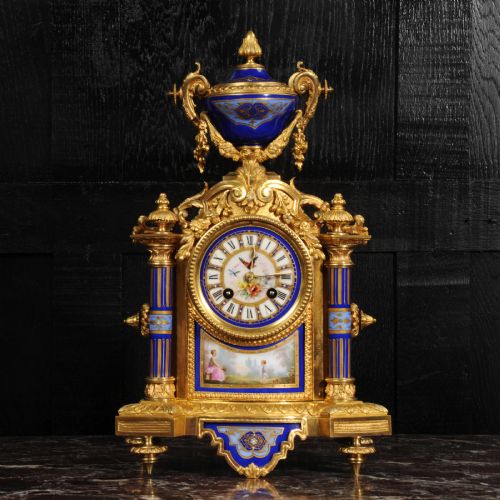
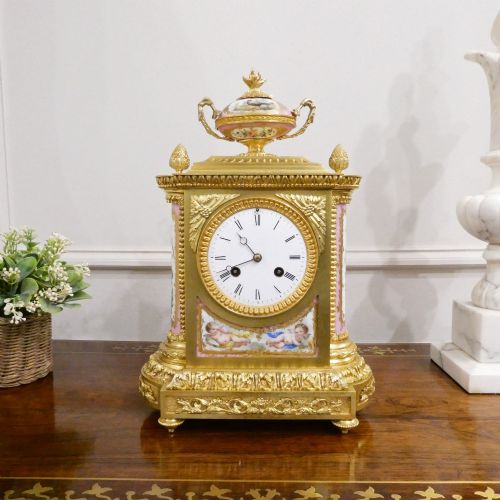
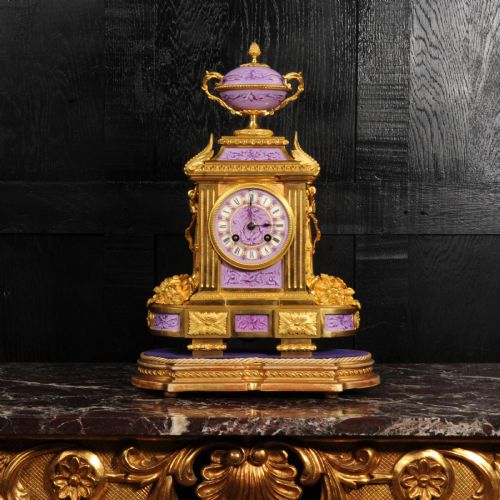
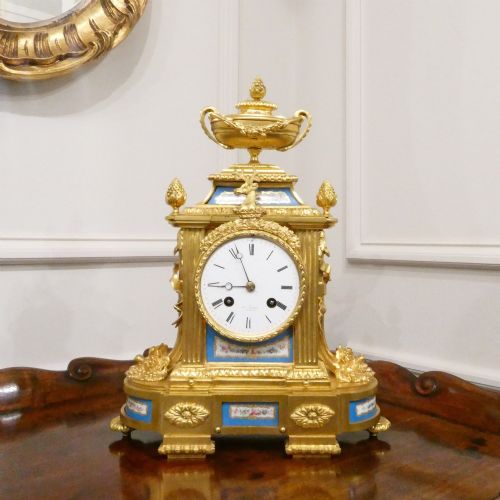
A gilt porcelain shelf clock combines decorative ceramic panels with gilded metal mounts in forms designed for interior display. These objects date across the nineteenth century, spanning periods from the eighteen-fifties through to nineteen hundred, with Victorian and mid-century French examples appearing frequently.
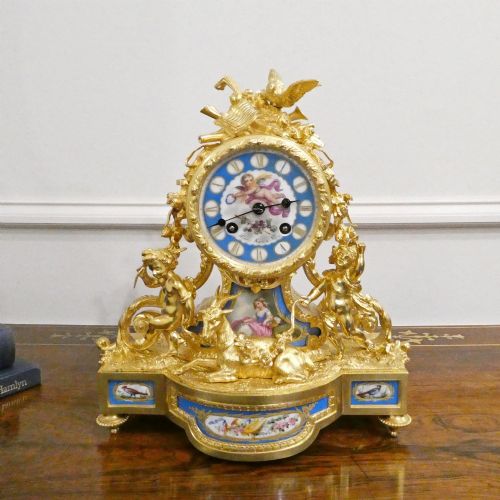
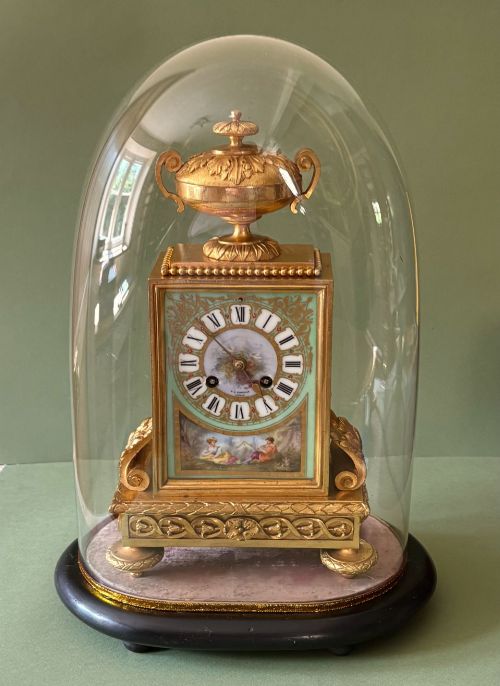
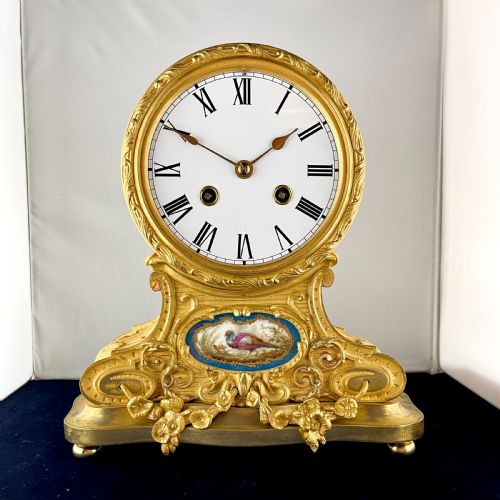
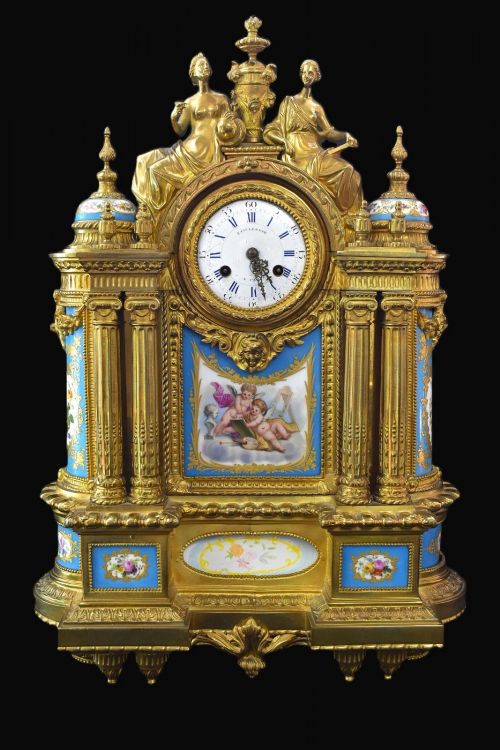
Most pieces seen here follow French Rococo Revival and Louis XVI styles, taking the form of mantel clocks housed in ormolu, gilt bronze, or gilt metal. Makers and workshops integrate hand-painted porcelain components, often styled after Sèvres, into cases featuring marble, enamel dials, and glass covers.
The format ranges from drumhead designs and architectural Louis XVI cases to figurative compositions involving putti or animals. Buyers encounter eight-day striking movements housed within ornate metallic frames that rest upon decorative feet.
How they were made
Craftsmen utilised cast bronze, ormolu, and gilt metal to form the structural cases, chasing the metal surfaces to create sharp decorative details. These metallic housings were then gilded to achieve a bright, reflective finish.
Porcelain plaques and dial faces were hand-painted and fired before being fitted into the metal frames alongside glass panels and enamel chapter rings. Mechanical movements were built to house eight-day striking trains driven by springs or weights.
What varies in quality
The refinement of the cast bronze and ormolu chasing separates standard items from exceptional pieces, where sharper relief work and deeper gilding define the surface. The quality of the hand-painted porcelain panels, particularly those imitating Sèvres work, dictates much of the visual hierarchy.
Signed movements by known makers and clockmakers demonstrate superior mechanical execution alongside decorative harmony. The integration of auxiliary materials like white marble or cast figures such as putti alters the visual weight and complexity of the piece.
Japy Freres·Jean-Baptiste Delettrez·Achille Brocot·Henry Marc·Etienne Lenoir·Japy Fils·Phillipe H. Mourey
The Gilt Porcelain Shelf Clock Glossary
- Ormolu
- A gilt bronze technique involving the application of a finely ground mercury and gold amalgam to bronze. This process creates a rich, durable golden surface on nineteenth-century clock cases.
- Sèvres porcelain
- French ceramic ware produced by the royal porcelain factory, known for fine hand-painted decoration and rich coloured grounds. Many nineteenth-century clocks incorporate plaques styled after this factory.
- Louis XVI style
- A neoclassical aesthetic characterised by symmetry, straight lines, classical urns, and foliate scrolls. It heavily influenced French mantel clock design during the second half of the nineteenth century.
- Rococo Revival
- An exuberant nineteenth-century design movement favouring asymmetrical C-scrolls, naturalistic floral motifs, and shellwork. This style appears frequently on ornate gilt bronze clock cases.
- Eight day movement
- A mechanical clock movement requiring winding once a week to maintain operation. These mechanisms often incorporate striking trains for hours and half-hours.
Gilt Porcelain Shelf Clock: Frequently Asked Questions
How do I wind an eight day clock?
Insert the winding key into the dial holes and turn gently until resistance is felt. Avoid overwinding to protect the internal springs.
Ensure the key matches the arbor size properly to prevent slipping or damage during weekly maintenance.
What styles are most common?
French Rococo Revival and Louis XVI styles dominate these selections, featuring ornate gilt bronze and decorative ceramic plaques.
These aesthetic movements reflect nineteenth-century tastes for historicism and elaborate interior ornamentation.
How should I place my clock?
Position the piece on a stable shelf or mantelpiece away from direct sunlight and draughts. A level surface ensures the pendulum swings evenly.
Allow adequate clearance around the case for safe winding and pendulum access.
How do I identify the period?
Examine the materials, case styling, and movement signatures to determine the approximate decade of manufacture. Nineteenth-century pieces often display distinct transitional traits between revival styles.
Maker stamps on the backplate provide precise clues regarding production dates.