
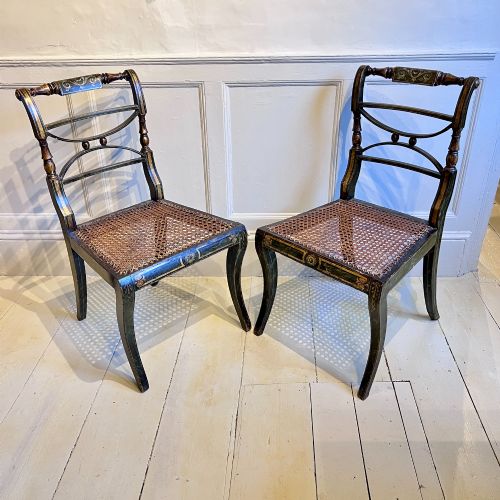
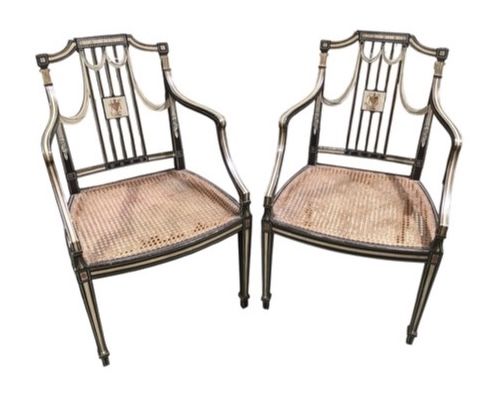


Gilt Painted Side Chairs
Gilt painted side chairs bring immediate elegance to a room, offering decorative flair alongside practical seating.
Gilt Painted Side Chairs
When you search for gilt painted side chairs, you encounter seating solutions that span several centuries of design history, from the elegance of the eighteenth century down to later revivals. Most examples on this page date from the nineteenth and twentieth centuries, incorporating revival styles such as Regency, Louis XVI, and French Rococo.
These items primarily function as decorative dining chairs, bedroom chairs, and occasional boudoir seating rather than heavy lounge furniture. The selection ranges from single pieces and pairs up to large sets numbering six, ten, or twelve matching chairs.
Forms include classic wooden frames with cane seats, fabric upholstery, and ebonised finishes enhanced by gold leaf or parcel gilt highlights. The diverse periods represented here encompass eighteenth-century Italian craftsmanship alongside Victorian and Edwardian interpretations.
How they were made
The construction relies fundamentally on seasoned wood shaped into delicate frames for dining and side seating. Artisans applied specialised paint finishes directly to the wood, frequently incorporating ebonised treatments to contrast with bright metallic details.
Gold leaf and parcel gilt application required meticulous hand-gilding techniques to highlight carved motifs and structural lines. Seat construction varied between woven cane panels and upholstered pads covered in decorative fabric.
Listings feature pieces spanning the eighteenth, nineteenth, and early twentieth centuries, utilising wood, cane, fabric, paint, and gold leaf.
What varies in quality
The distinction between ordinary and exceptional examples rests upon the precision of the hand-carved details and the preservation of the original painted and gilt surfaces. Finer pieces demonstrate superior joinery that maintains structural integrity across larger sets without excessive reinforcement.
The sophistication of the stylistic revival dictates value, with faithful interpretations of Regency and Louis XVI proportions commanding greater aesthetic interest. Original surface patination on the gold leaf and painted wood holds more visual charm than later, unsympathetic repainting.
The Gilt Painted Side Chairs Glossary
- Parcel Gilt
- Partial gilding where gold leaf highlights specific carved details, mouldings, or motifs against a painted background. This technique draws the eye to the finer decorative elements of the frame.
- Ebonised Wood
- Timber treated with a dark stain or finish to imitate expensive ebony. It provides a dramatic, dark contrast to bright gilt ornamentation.
- Cane Seat
- A seating surface woven from peeled rattan strips in an open mesh pattern. It offers a lightweight and resilient alternative to traditional upholstery.
- Louis XVI Revival
- A nineteenth-century design movement emulating the neoclassical restraint, straight tapered legs, and geometric forms of the French eighteenth-century royal court.
Gilt Painted Side Chairs: Frequently Asked Questions
Where should I place these chairs?
These chairs suit spaces where visual lightness and decorative presence matter more than heavy lounging. They work well as occasional seating in bedrooms, hallways, or formal dining rooms.
Because many examples survive as pairs or larger sets, they anchor a dining table or flank a fireplace with symmetrical polish.
How do I care for the gilt surface?
Gilt painted surfaces require gentle treatment to preserve the delicate gold leaf and underlying paint layers. Dust them regularly with a soft, dry cloth without applying harsh chemical polishes.
Keep them away from direct sunlight and excessive moisture to prevent the wood from warping and the metallic leaf from tarnishing or flaking.
Are cane seats strong enough for daily use?
Traditional cane mesh possesses surprising flexibility and strength when properly tensioned and maintained. However, these historic chairs benefit from sensible use rather than heavy daily lounging.
Avoid kneeling on the woven panels and check the tension periodically to ensure the material remains secure within the wooden frame.
How can I tell the period of a chair?
Dating relies on examining the joinery methods, tool marks, and stylistic proportions characteristic of specific eras like the Regency or Victorian periods. Revival pieces often incorporate stylistic cues from earlier centuries while utilising manufacturing methods of their own time.
Comparing the decorative vocabulary, such as neoclassical motifs versus rococo curves, helps clarify the probable era of manufacture.