


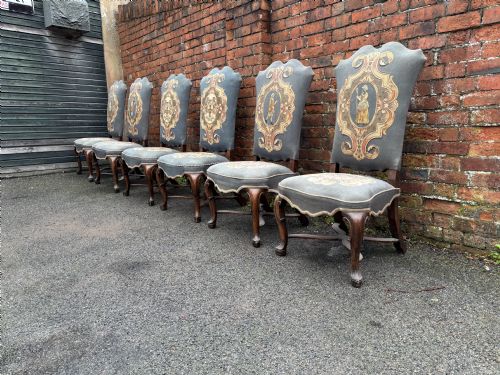


18th Century Rococo Seating
18th century rococo seating brings flamboyant carved frames and dynamic asymmetric lines into a room, offering both decorative presence and period comfort.
18th Century Rococo Seating
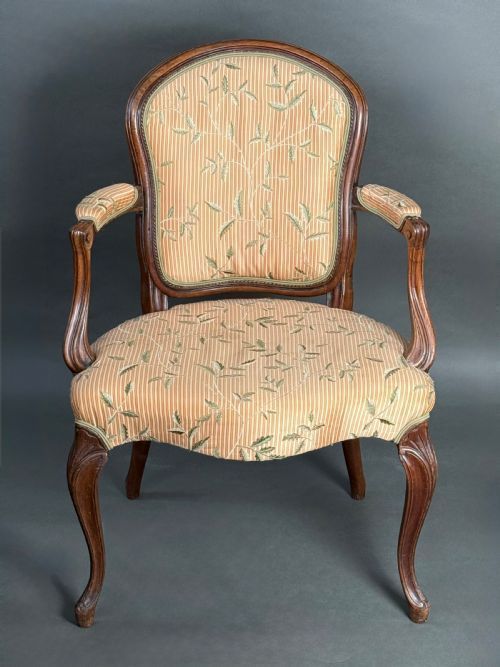
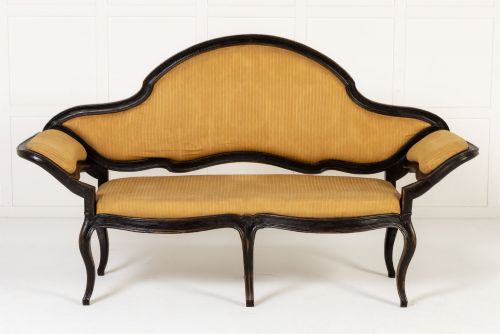
Searching for 18th century rococo seating directs attention toward ornate chairs, sofas, and benches shaped by the decorative movements of the Georgian and continental periods. The examples found here span armchairs, side chairs, dining chairs, and larger settees.
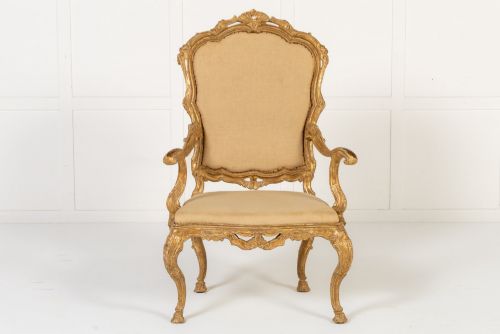
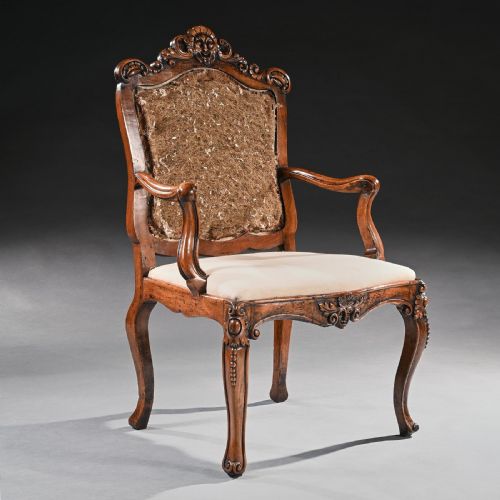
Italian iterations dominate the selection, often rendered in walnut or giltwood with high backs and carved head rails. French Louis XV and Louis XV-inspired pieces also appear alongside Dutch marquetry high back chairs and Venetian gondola forms.
Alongside actual seating furniture, the evidence includes porcelain figures and oil paintings depicting seated subjects, reflecting the broader visual culture of the era. Buyers most frequently encounter carved walnut or giltwood frames paired with traditional upholstery.
Materials and Construction
Frames rely heavily on solid timber such as walnut, alongside painted wood and ebonised surfaces shaped by hand carving. Artisans applied layers of gesso to prepare wooden substrates for intricate gilding in gold or silver leaf.
Structural joinery supports complex serpentine lines and cabriole legs characteristic of the style. Upholstery utilises traditional textiles, including silk and antique fabric, secured directly to the frame.
Listings feature walnut, giltwood, gesso, and painted wood alongside silk and textile upholstery across 18th-century Italian and French regional styles.
Variations in Quality
Quality rests upon the depth, crispness, and ambition of the carved decoration across the head rails and frame. Deeply undercut carving demonstrates superior artisanal skill compared to shallow, flat surface decoration.
The choice of primary timber and the execution of the surface finish, whether original gilding or walnut patina, dictate the visual weight and integrity of the piece. Proportion and the harmony of asymmetric curves further distinguish finer examples.
The 18th Century Rococo Seating Glossary
- Giltwood
- Wood coated with thin gold leaf over a prepared gesso ground. This finish catches candlelight and daylight alike.
- Canape
- An upholstered sofa or settee featuring an exposed wooden frame. These pieces often match larger suites of drawing room chairs.
- Cabriole leg
- A furniture leg that curves outward and then tapers inward, mimicking an animal's leg. It forms a cornerstone of mid-century seating design.
- Marquetry
- Inlaid patterns of contrasting veneers applied to a wooden surface. Dutch makers used this technique extensively on high back chairs.
- Gesso
- A plaster mixture applied to wood to create a smooth surface for gilding or painting. It allows for sharp detail in carved ornamentation.
18th Century Rococo Seating: Frequently Asked Questions
How do I identify an 18th century frame?
Examine the construction methods, tool marks, and timber ageing visible on the underside and interior joints of the piece. Hand-cut joinery and aged walnut or gesso indicate period manufacture.
Compare the carving style against documented examples from Italian and French workshops of the era. Authentic pieces display fluid, hand-carved asymmetry rather than uniform machine moulding.
Can I use these chairs for daily dining?
Many of these chairs served around dining tables originally, though their structural stability depends on the specific frame condition. Walnut and painted dining chairs offer sturdy support if joints remain tight.
Delicate giltwood armchairs and upholstered settees suit lighter use in drawing rooms or display settings. Professional conservation helps secure historical frames for modern seating.
What is a Barocchetto chair?
Barocchetto describes the Italian manifestation of the Rococo style, bridging heavy Baroque mass with lighter, curved ornamentation. These chairs feature dramatic carved details and dynamic silhouettes.
Originating primarily in mid-18th century Italy, they combine architectural presence with playful asymmetry. They stand out through extravagant head rails and sculpted arm supports.
How should I care for antique upholstery?
Protect antique textiles like silk and period fabric from direct sunlight to prevent fading and fibre degradation. Gentle vacuuming with a soft brush attachment removes surface dust safely.
Avoid chemical cleaners and consult a textile conservator for deeper cleaning. Maintaining stable room humidity preserves both the fabric and the underlying wooden frame.