


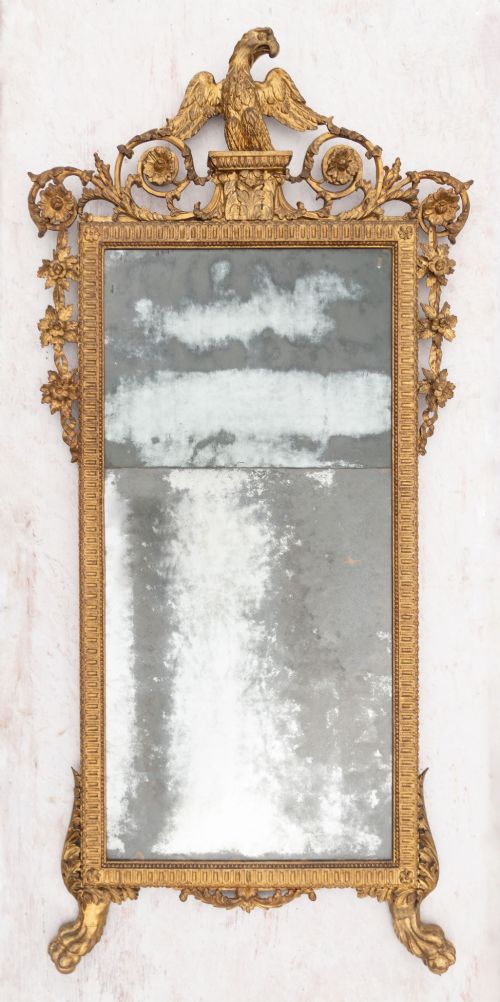
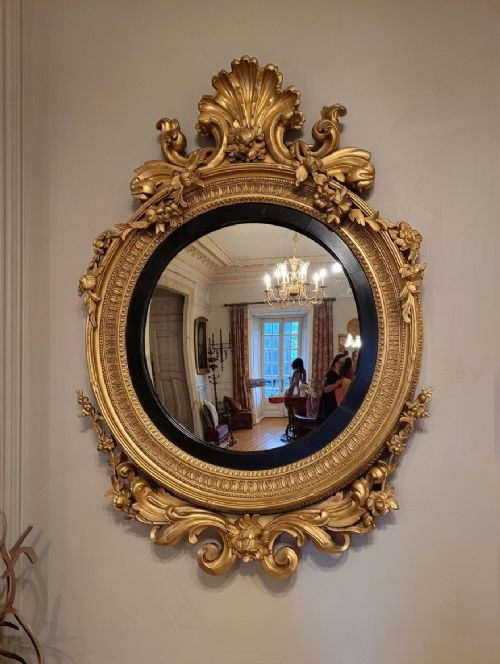
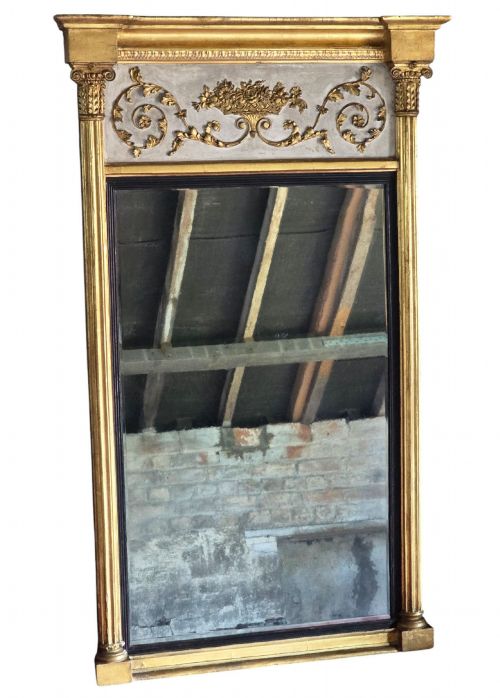
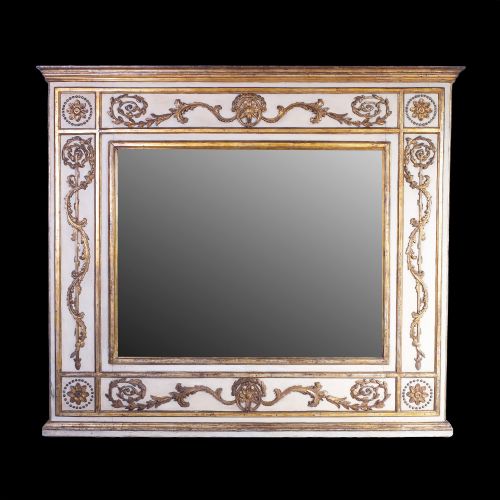
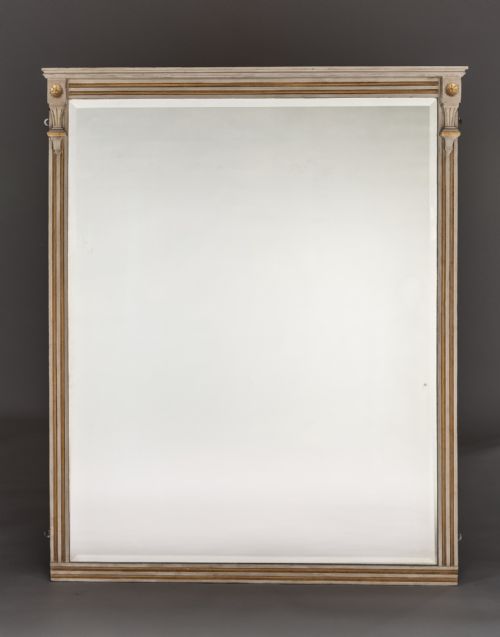
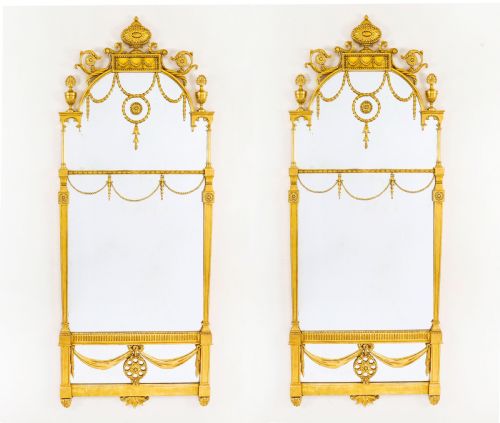
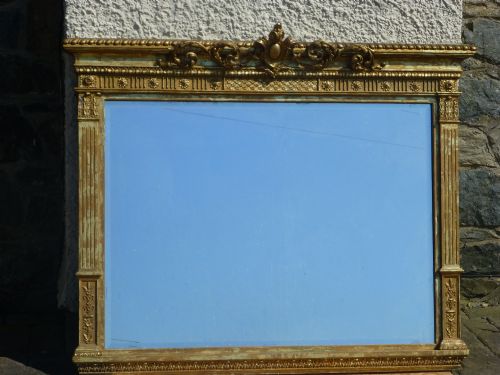
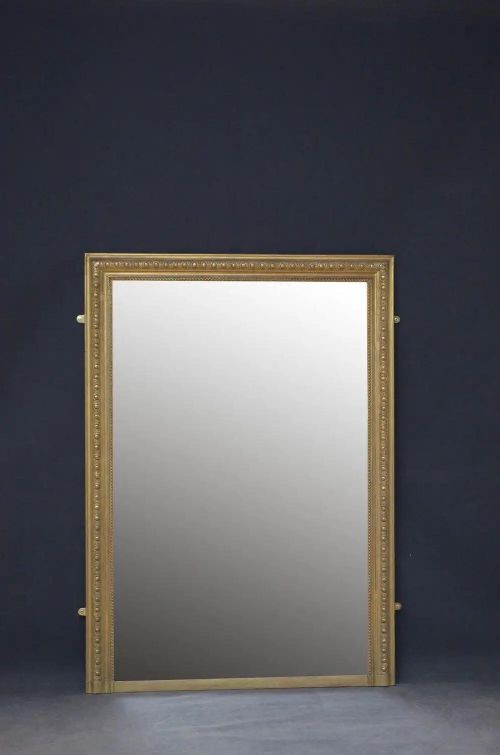


Gilt Neoclassical Overmantel Mirror
A gilt neoclassical overmantel mirror brings proportion and bright reflection to a room, designed historically to sit upon the mantelpiece.

Gilt Neoclassical Overmantel Mirror
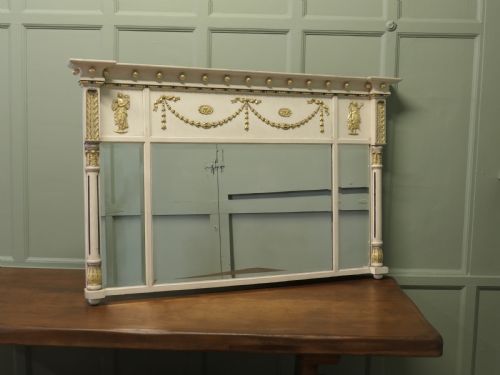
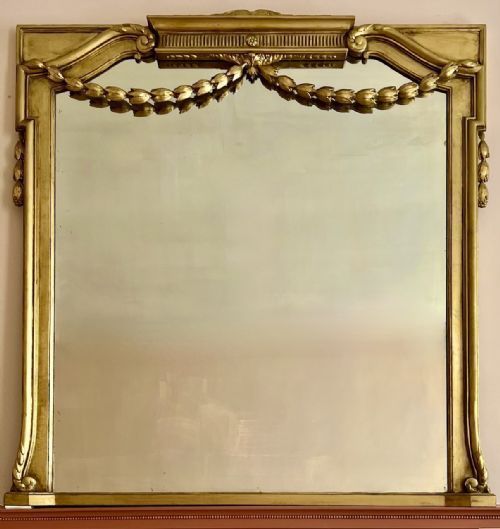
A gilt neoclassical overmantel mirror provides a commanding focal point above a fireplace, reflecting light and expanding the perceived volume of a reception room. Buyers seeking a gilt neoclassical overmantel mirror will find pieces originating primarily from the eighteenth and nineteenth centuries, spanning Regency, Victorian, and Edwardian interpretations.
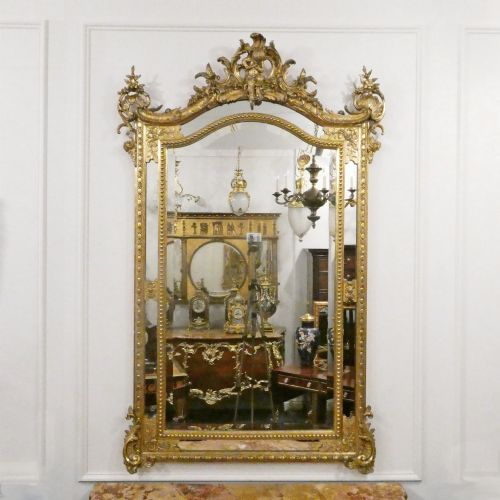
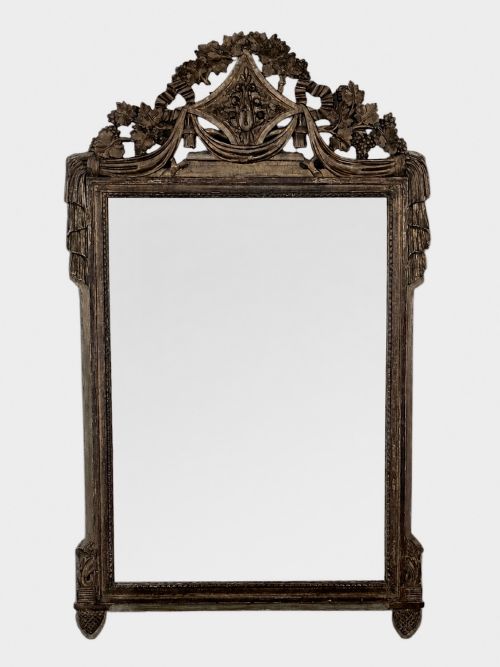
The selection here encompasses wide triple plate formats designed for expansive chimney breasts alongside taller pier configurations and oval wall formats. Makers and manufacturers drew heavily upon Adam Revival, French Neoclassical, and Louis XVI styles to shape these large frames.
How They Were Made
Craftsmen built the structural carcases of these frames from timber, such as pine or hardwood, providing a stable foundation for decorative elements. Over this wooden base, artisans applied layers of gesso - a mixture of chalk and binder - to create a smooth, responsive surface for carving and moulding.
Ornate neoclassical details, including swags, beadings, and classical reliefs, were frequently cast in composition, known as compa, and fixed onto the wooden frame. Gilders then applied thin sheets of gold leaf over a prepared bole, burnishing specific areas to achieve a brilliant metallic sheen.
Original mirrors commonly feature silvered glass or historic mercury glass plates, which display characteristic soft oxidation and depth. Frames were also finished with painted and parcel-gilt treatments, combining flat painted surfaces with highlighted gilded details.
An eighteenth-century French mirror once reflected an audience watching Anania ride past in a chariot.
What Varies in Quality
The standard of a gilt neoclassical overmantel mirror rests significantly upon the crispness and depth of the frame ornamentation. Hand-carved wooden enrichment and finely pressed composition mouldings retain sharper architectural lines than heavily worn or blunt castings.
The integrity of the gilding surface dictates much of the visual weight, with burnished gold leaf reflecting light differently than flat bronze paints applied during later restorations. Furthermore, the presence of original silvered or mercury mirror glass adds authenticity and a distinct, undulating reflection missing in modern replacement glass.
Proportion and scale also separate standard decorative pieces from exceptional examples, particularly where multi-plate triptych configurations align seamlessly with architectural symmetry.
The Gilt Neoclassical Overmantel Mirror Glossary
- Overmantel mirror
- A large looking glass specifically designed to hang or rest upon the mantelpiece above a fireplace. These pieces often span the width of the hearth and reflect natural light across the room.
- Giltwood
- Timber that has been coated with thin leaves of gold or metal leaf. This technique provides a durable, luminous metallic finish characteristic of high-status period frames.
- Gesso
- A plaster-like mixture applied to wooden frame bases to create a smooth surface for carving and gilding. It allows artisans to execute fine, delicate relief decoration.
- Composition
- A mouldable paste made from whiting, resin, linseed oil and glue, used to press ornamental details for picture and mirror frames. It offered an efficient alternative to hand-carving intricate neoclassical motifs.
- Trumeau mirror
- A decorative wall glass set into a panelled chimney breast or pier space, frequently incorporating painted scenes or carved woodwork above the glass plate. Originating in France, they bring vertical elegance to reception rooms.
- Pier glass
- A tall, narrow mirror designed to hang on the wall space between two windows, known as the pier. These mirrors maximise available daylight in historical rooms.
Gilt Neoclassical Overmantel Mirror: Frequently Asked Questions
Where should an overmantel mirror hang?
An overmantel mirror traditionally rests directly upon the mantel shelf above a fireplace, anchoring the visual weight of the hearth within the room.
Securing these heavy frames safely to the wall using appropriate fixings is essential to support their substantial timber and glass weight.
How do I identify neoclassical style?
Neoclassical design draws inspiration from classical Greek and Roman architecture, displaying symmetry, straight lines, urns, swags, and fluted columns.
Mirrors in this style avoid excessive baroque curves in favour of restrained, geometric elegance.
Can original mirror glass be cleaned safely?
Original antique glass requires gentle cleaning with a soft, dry cloth to avoid disturbing historic silvering or delicate foxing on the surface.
Avoid using harsh chemical glass cleaners that can seep behind old bevelled edges and damage the backing.