




Gilt Metal Pedestal Bowl
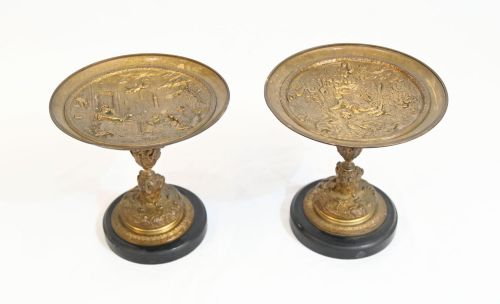
These gilt metal pedestal bowl pieces combine cast metal and stone to elevate fruit or floral displays.
Gilt Metal Pedestal Bowl
A gilt metal pedestal bowl functions as an elevated display vessel, frequently encountered in forms such as tazzas, centrepieces, and ornamental urns. When searching for a gilt metal pedestal bowl, a buyer encounters pieces primarily originating from the nineteenth century, including specific dates around eighteen eighty and eighteen ninety.
The aesthetic vocabulary spans French Empire, Grand Regency, French Neoclassical, and Victorian Gothic Revival styles alongside Aesthetic Movement and Qing Dynasty examples. The typical vessel rests upon a raised foot or column, occasionally incorporating a marble base to add physical weight and visual contrast.
Materials and construction
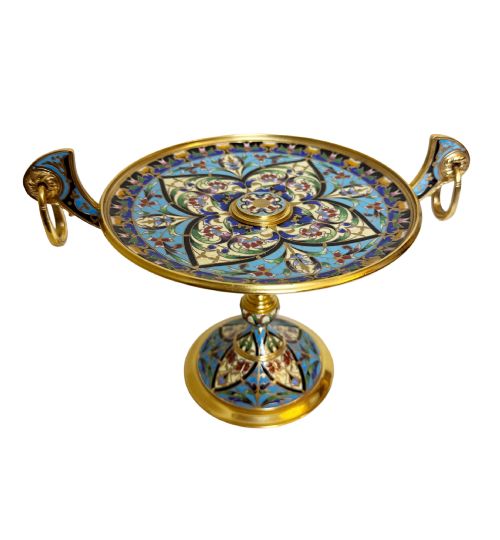
Construction relies upon metals such as gilt bronze and ormolu, often paired with contrasting structural elements like marble and red marble. Workshops combined metal casting with decorative techniques, integrating cut crystal, champleve enamel, Limoges enamel plaques, and porcelain.
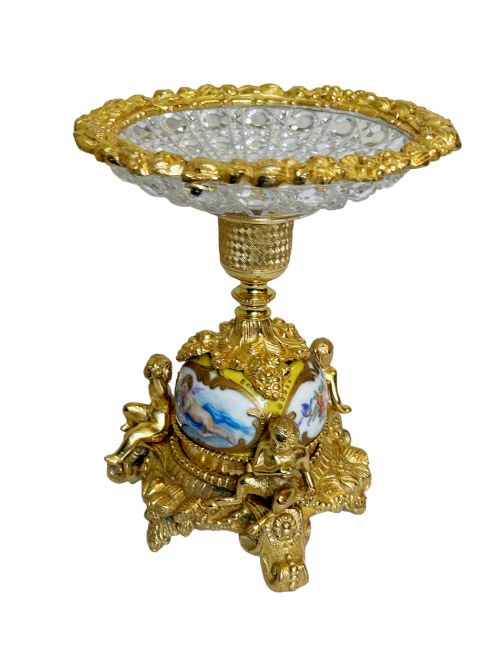
Detailing frequently incorporates cast ornaments like cherubs alongside semi-precious insertions such as agate cabochons. The combination of gilded surfaces with glass or stone required precise mechanical fitting between the metal mounts and the rigid mineral components.
Gilt Metal Pedestal Bowl Retail Price Guide 2026
Typical asking prices for gilt metal pedestal bowl among the pieces listed under this phrase on Sellingantiques today, from the lower quarter to the upper quarter. They describe what is for sale here now, not the wider market.
Several nineteenth-century tazzas feature watchful cast cherubs perched permanently beside the fruit bowl.
Evaluating craftsmanship
Quality rests in the crispness of the metal chasing and the depth of the gilding applied to the bronze or ormolu surfaces. Finer examples display meticulous articulation in cast figures and botanical motifs rather than soft or generalized contours.
The integration of secondary materials defines the upper tier of objects, such as the precision in fitting cut crystal bodies or the enamel work found on champleve and Limoges plaques. Stability in composite structures, particularly where metal meets marble or porcelain, separates robust construction from simpler assembly.
The Gilt Metal Pedestal Bowl Glossary
- Ormolu
- Gilded bronze produced through a mercury amalgamation process, yielding a durable golden finish common on nineteenth-century decorative objects. It provides the bright metallic surfaces seen on classical tazzas and centrepieces.
- Tazza
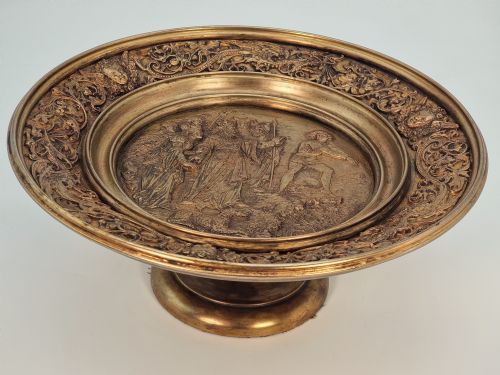
- A wide, shallow bowl mounted upon a stem and foot, designed for display on a dining table or sideboard. These vessels appear frequently in bronze, marble, and crystal across nineteenth-century European design.
- Champleve
- An enamelling technique where troughs are dug into a metal surface and filled with vitreous paste before firing. This method creates colourful geometric or figurative patterns within the metal framework.
- Grand Tour
- A traditional journey through Europe undertaken by upper-class individuals during the eighteenth and nineteenth centuries, yielding souvenirs such as classical bronze and marble tazzas. These pieces reflect an engagement with classical antiquity.
- Cabochon
- A gemstone or piece of mineral shaped and polished with a smooth, convex surface rather than faceted. Agate cabochons are sometimes set directly into bronze dishes.
Gilt Metal Pedestal Bowl: Frequently Asked Questions
What is a tazza?
A tazza is an ornamental shallow bowl raised on a central foot or pedestal, designed primarily for display rather than heavy dining use.
In nineteenth-century interiors, these vessels served as centrepieces on tables or sideboards, often holding fruit, flowers, or simply standing alone as decorative objects.
How are ormolu and gilt bronze different?
Ormolu specifically refers to high-carat gold applied to bronze using a mercury-gilding technique during the eighteenth and nineteenth centuries.
Gilt bronze is a broader term for any bronze object with a gold-coloured surface, which can encompass various modern or historical plating methods.
Where were these pieces made?
The surviving examples originate predominantly from nineteenth-century French workshops working in Empire, Neoclassical, and Rococo Revival styles.
Other origins represented include British Aesthetic Movement production and Qing Dynasty Chinese cloisonne enamel pieces.
How do you care for marble and gilt metal?
Gilt metal surfaces require gentle dusting with a soft, dry cloth to avoid wearing away the thin layer of gold leaf or ormolu.
Marble bases should be kept free of moisture and acidic substances, which can permanently etch or stain the polished stone.