



Gilt Metal Column
These gilt metal column pieces bring architectural presence and warm light to a room, ranging from grand French Empire portico clocks to slender floor lamps.
Gilt Metal Column
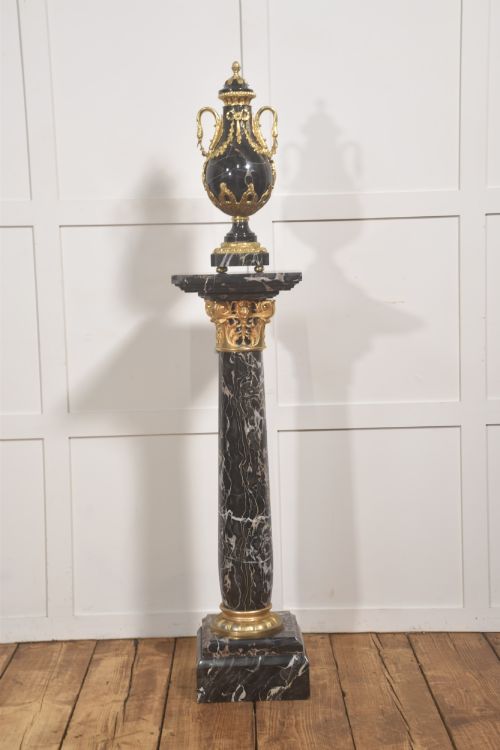
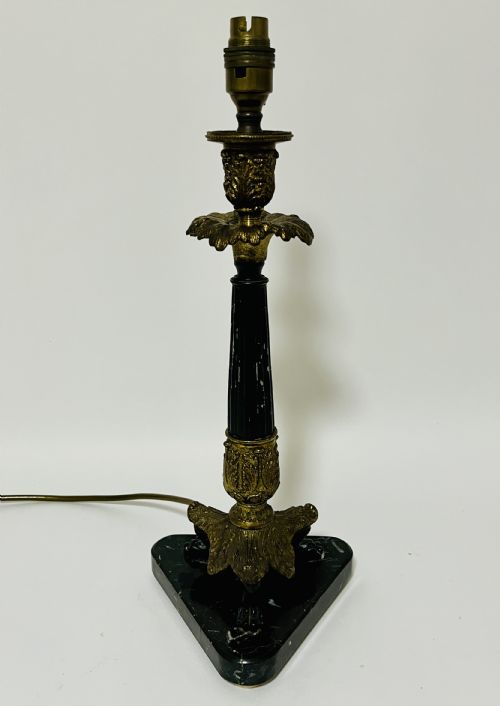
A gilt metal column search centres on structural upright supports shaped in bronze, ormolu and brass, often paired with contrasting materials like marble and toleware. These objects frequently take the form of table lamps, floor lamps, and mantel clocks influenced by French Empire, Neoclassical and Napoleon III styles.
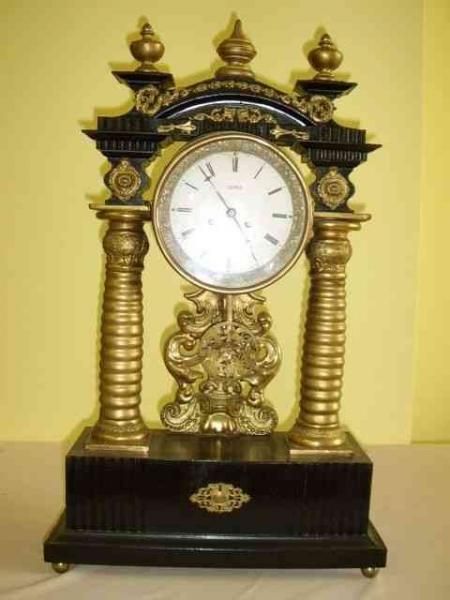
The versions most commonly met on this page span the late eighteenth century through to the early twentieth century, reflecting classical architectural orders. Buyers will regularly encounter table lamps and portico clocks where the metallic column forms the central visual element of the composition.
Materials and construction methods
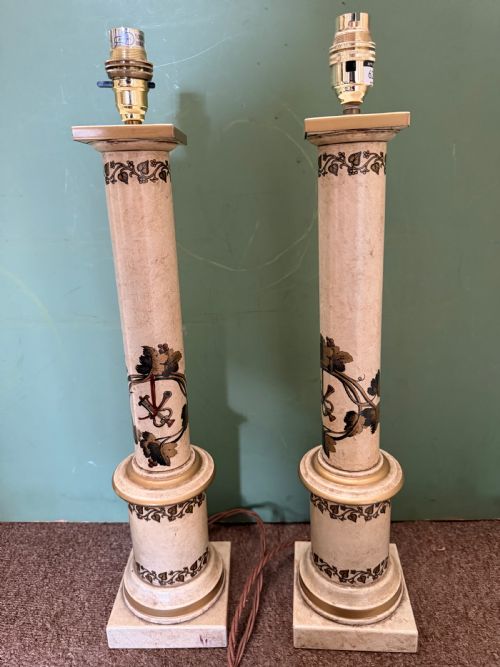
Construction relies heavily on cast bronze and brass, finished with fire gilding or ormolu to achieve a lasting metallic brilliance. These metal components are frequently combined with turned marble bases and painted toleware elements to introduce texture and weight.
Many items incorporate patinated surfaces alongside gilded details, demonstrating traditional foundry techniques characteristic of French workshops. Joinery in associated furniture pieces like bookcases utilises mahogany frames fitted with cast metal mounts.
Gilt Metal Column Retail Price Guide 2026
Typical asking prices for gilt metal column among the pieces listed under this phrase on Sellingantiques today, from the lower quarter to the upper quarter. They describe what is for sale here now, not the wider market.
Current listings feature items from the eighteenth, nineteenth, and early twentieth centuries, utilising brass, gilt bronze, toleware, and marble.
Distinctions in quality
Quality reveals itself in the crispness of the cast ornamentation and the depth of the original gilding or patination. Finer examples display sharp architectural detailing on the capitals and bases, whereas lesser pieces show softer, more generalised casting.
The integration of materials also dictates standing, with superior items combining dense marbles and finely chased ormolu rather than lighter brass alloys. Harmony of proportion across the column and its base separates standard production from exceptional decorative work.
The Gilt Metal Column Glossary
- Ormolu
- Gilt bronze produced by applying a finely ground mercury and gold amalgam to a bronze casting, then heating to drive off the mercury. This technique creates a rich, durable golden finish found on finer antique mounts and clock cases.
- Portico clock
- A mantel clock designed with architectural columns supporting a horizontal entablature that houses the dial and movement. This classical form became particularly popular during the French Empire period.
- Toleware
- Painted or lacquered sheet metal items, often utilised for lamp bodies or shades in contrasting dark tones. It provides a durable surface that complements polished metallic elements.
- Neoclassical
- A style spanning the eighteenth and nineteenth centuries that draws inspiration from the classical art and architecture of ancient Greece and Rome. It prioritises symmetry, straight lines, and orderly proportions.
- Patina
- The surface sheen and coloration developed naturally over time through handling, oxidation, and age. Original patinated surfaces are valued by collectors for authenticity.
Gilt Metal Column: Frequently Asked Questions
What periods do these columns come from?
The pieces span from the late eighteenth century through the nineteenth century and into the early decades of the twentieth century. They heavily reflect classical revival movements such as French Empire and Neoclassical design.
Dates are established through stylistic markers, construction techniques, and materials such as fire-gilded bronze or hand-painted toleware. Earlier examples often align with the strict symmetry of the portico clock tradition.
How were these metal columns used?
Many function as table lamps or tall floor lamps designed to provide ambient lighting within a formal interior. Others serve as structural supports within decorative mantel clocks and bookcases.
Their architectural origins meant they were placed to anchor a room visually, bringing vertical emphasis and reflective metallic surfaces to dark wood furniture or stone mantelpieces.
How do I care for gilt metal?
Dust gently with a soft, dry cloth to prevent the accumulation of grit on delicate gilded surfaces. Avoid abrasive cleaners and chemical polishes that can strip away original ormolu or fire gilding.
Preserving the aged surface requires minimal intervention, keeping pieces away from direct moisture and fluctuating heat sources to protect underlying bronze and brass.
How do I identify French Empire style?
French Empire pieces display strict classical symmetry, militaristic motifs, and architectural forms inspired by ancient Rome. Columns are often fluted and topped with decorative metallic capitals.
Materials are deliberately contrasted, pairing polished ormolu with dark patinated bronze or white marble bases to create a striking visual rhythm across the object.