

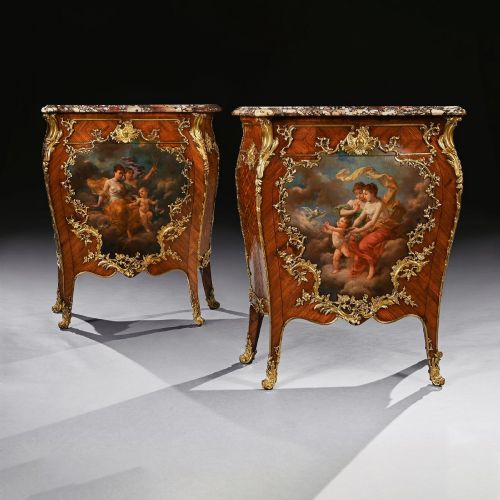
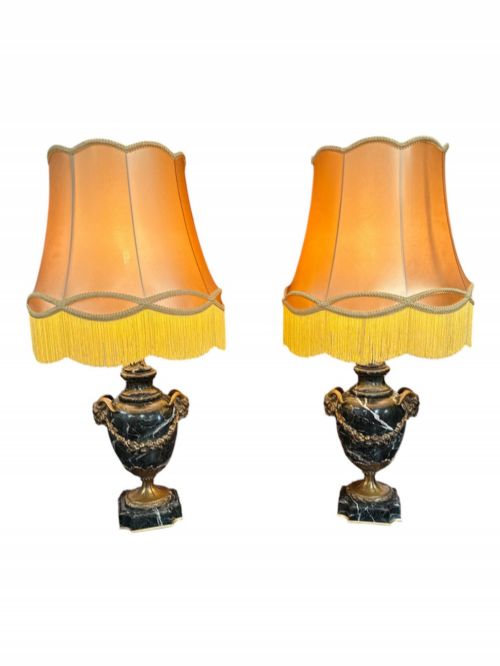
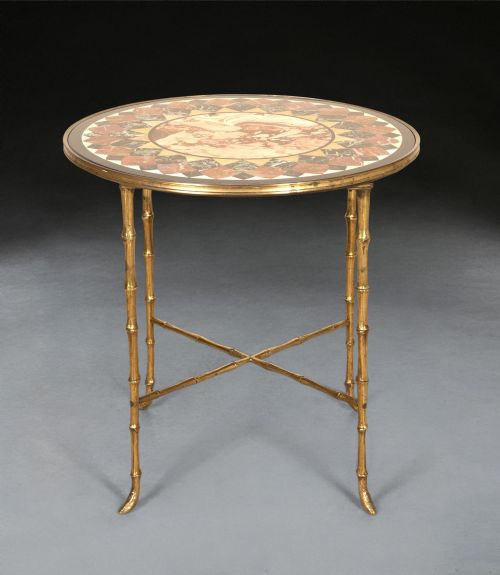

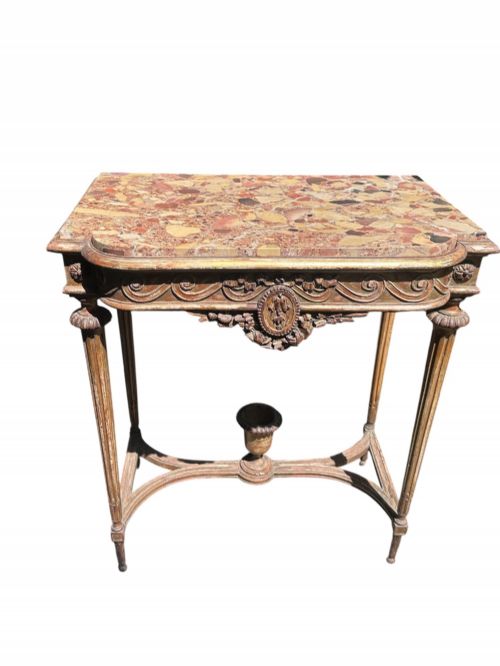


Gilt Marble Accent Table
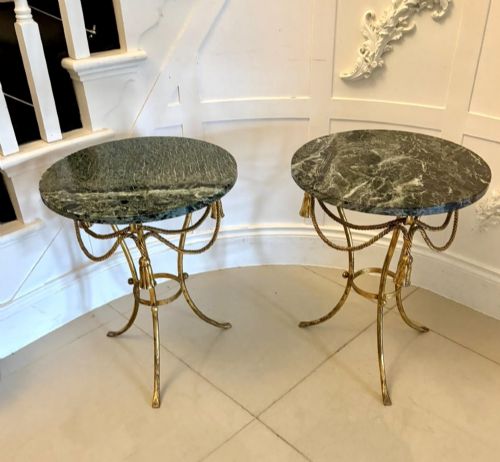
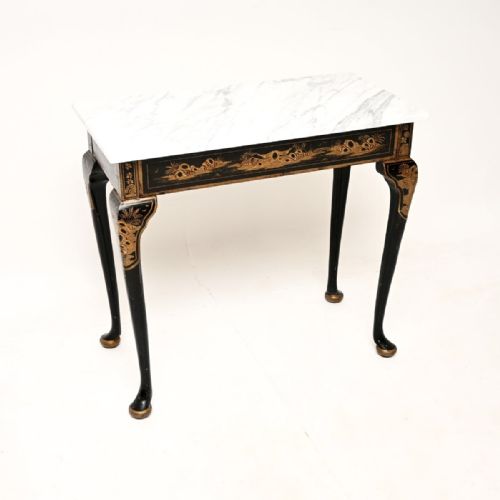
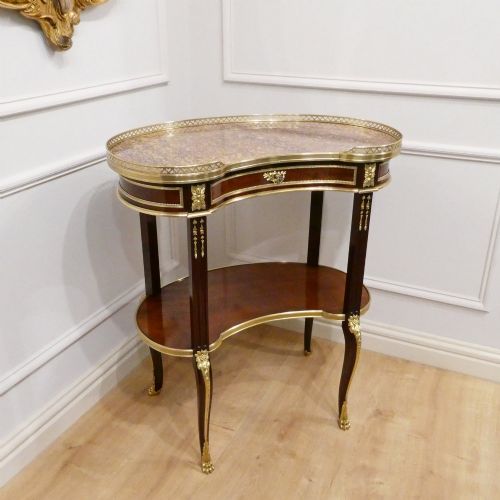
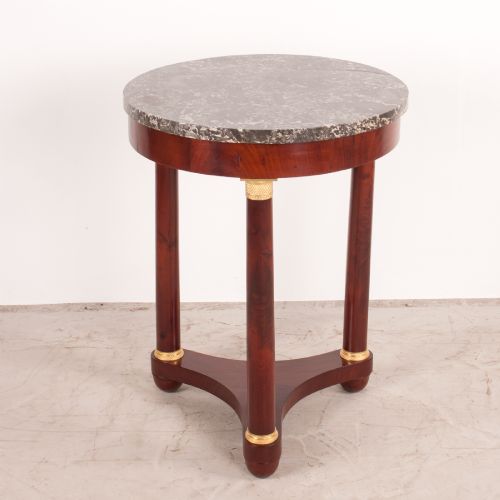
These gilt marble accent tables bring a bright, formal presence to a room, combining stone tops with gilded frames.
Gilt Marble Accent Table
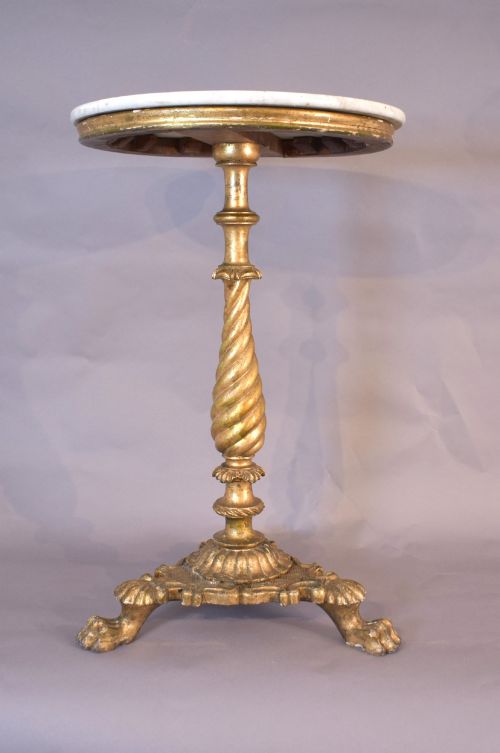
A gilt marble accent table sits in a lineage of French and Italian design, taking forms such as the round guéridon, the compact side table, and the occasional stand. These pieces serve small display and lighting functions while carrying considerable decorative weight through their polished surfaces.
Most examples found here date across the nineteenth and early twentieth centuries, drawing on Neoclassical, Louis XVI, and Rococo vocabularies. They appear in formats designed to fit beside seating or stand as central room punctuation.
The combination of heavy stone tops and gilded timber or cast metal creates a deliberate contrast between cold, solid mineral and warm, reflective metalwork. Makers adapted these proportions for domestic spaces that required both utility and formal elegance.
Materials and construction
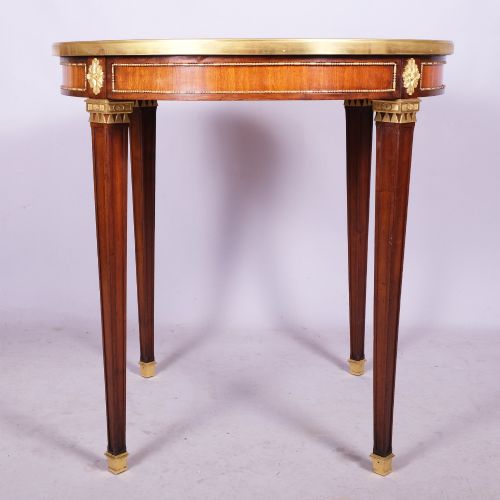
The structural frames rely on hardwoods like mahogany and kingwood, or carved giltwood, paired with cast mounts in ormolu, gilt bronze, and gilt brass. Artisans carved intricate floral mouldings and structural supports by hand before applying water gilding or leaf.
Table tops utilise inset slabs of marble, onyx, or specimen stone, often finished with polished edges and fitted snugly into wooden or metal bezels. These heavy mineral surfaces require secure housing within the apron or tripod base to maintain balance.
Materials recorded across the inventory include onyx, kingwood, ormolu, and various forms of marble.
Variations in quality
Quality rests in the crispness of the bronze chasing, the depth of the wood carving, and the selection of the marble slab. Superior pieces display hand-chiselled detail in the metal mounts rather than soft, cast-only surfaces.
The choice of timber and the precision of the joinery distinguish workshops of high reputation from standard commercial output. Gilt surfaces show refinement through the layering and burnishing of the leaf rather than flat, uniform paint.
Maison Millet·F. Linke·Zwiener Jansen Sucesseur·Henry Dasson
The Gilt Marble Accent Table Glossary
- Guéridon
- A small French table, typically round and supported by a central column or three legs. These tables often feature marble tops and gilt mounts.
- Ormolu
- Gilt bronze, created by applying a mixture of gold and mercury to a bronze base and firing it. This technique produced a durable, rich metallic finish on nineteenth-century mounts.
- Vernis Martin
- A type of decorative lacquer developed in France, mimicking Asian lacquerwork. It appears on fine furniture panels alongside gilt frames.
- Bouillotte table
- A small neoclassical occasional table with a raised gallery around the marble top. It was originally designed for card playing.
Gilt Marble Accent Table: Frequently Asked Questions
What rooms suit a gilt marble accent table?
These tables fit well in drawing rooms, hallways, and studies where a touch of reflective metal and stone adds visual weight. Their compact footprints allow them to sit beside chairs or serve as display surfaces for lamps and small objects.
Because the materials are formal, they anchor neutral or traditional interiors and create contrast in more contemporary spaces. The combination of marble and gilt bronze brings light into darker corners through reflected illumination.
How do I care for the marble top?
Marble requires gentle cleaning with a damp cloth and mild, neutral soap to avoid dulling the polished surface. Acidic liquids like wine or citrus should be wiped away immediately to prevent etching the stone.
Applying a specialist stone wax periodically helps protect the surface from minor marks. Avoid placing abrasive items directly onto the marble without protective pads.
How do I identify a nineteenth-century piece?
Nineteenth-century tables show construction methods consistent with period workshop practices, such as hand-cut screws, timber shrinkage patterns, and patinated bronze mounts. The weight and thickness of the marble slab, along with the hand-applied gilt leaf, point to historical manufacture.
Stylistic cues draw heavily on Louis XVI and Neoclassical revivals popular during the Victorian and Napoléon III eras. Examining the underside often reveals the joinery and material age clearly.
Were these tables used for dining?
Most pieces matching this description were built as occasional, side, or centre tables rather than dining furniture. Their smaller dimensions and delicate gilt supports meant they were intended for holding lamps, decorative objects, or serving drinks.
The inclusion of raised galleries on certain formats kept small items from sliding off during use.