




Gilt Japanese Table Vases
These gilt japanese table vases bring a distinct decorative presence to a room, offering rich metallic finishes alongside traditional ceramic forms.
Gilt Japanese Table Vases
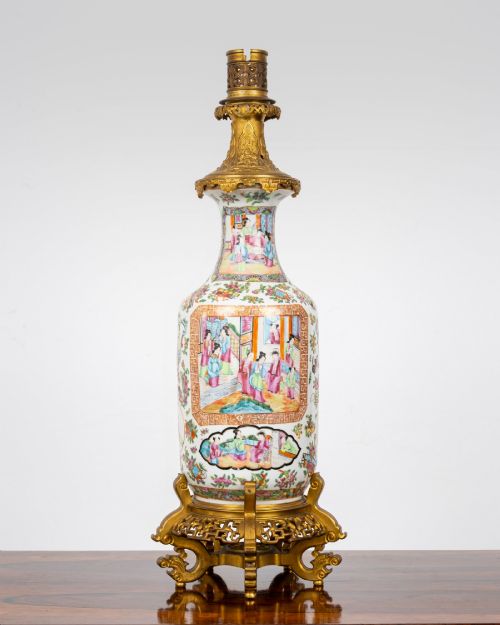
When you search for gilt japanese table vases, you encounter decorative vessels and converted lamps originating from various historical periods, including the Edo and Meiji eras. These pieces frequently combine traditional ceramic or metal bodies with gilded mounts, often adapted for lighting.
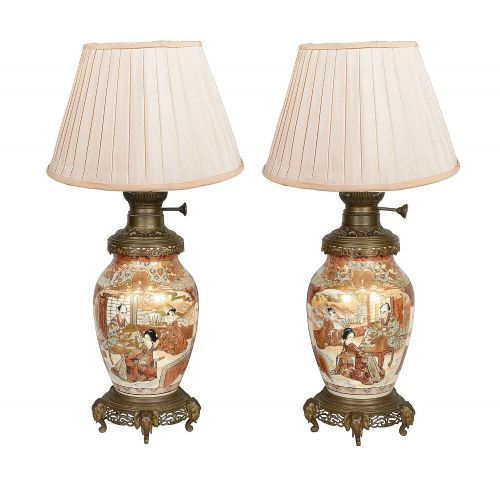
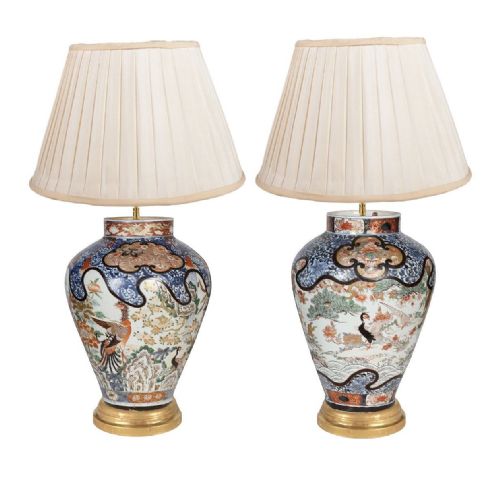
The selection on this page largely consists of nineteenth-century porcelain and bronze items, such as Satsuma, Kutani, and Imari wares, alongside cloisonné enamel. Many of these forms function as table lamps, merging Far Eastern craftsmanship with European or domestic wiring.
Makers and workshops from the seventeenth century onwards contributed to this tradition, utilising porcelain, earthenware, and bronze as a base for intricate hand-painted designs. The resulting objects range from large blue and white vases to smaller pairs mounted in ormolu.
Assessing quality and craftsmanship
Quality in these pieces rests upon the fineness of the hand-painted details and the crispness of the gilt bronze or ormolu mounts. Finer examples display precise brushwork on Satsuma or Kutani surfaces, whereas simpler productions show heavier, less defined patterns.
The integration of mounts also defines the standard of the object, with custom-fitted bronze work indicating higher workshop standards. Pairs that match closely in size, glaze colour, and wear generally command greater attention than assembled counterparts.
Some nineteenth-century makers experimented with bamboo-handle forms in earthenware, giving rigid ceramic vessels an organic, plant-like twist.
Kinkozan
The Gilt Japanese Table Vases Glossary
- Satsuma
- A type of Japanese earthenware featuring a crackle glaze and ornate polychrome and gilt decoration. It became widely produced for export during the nineteenth century.
- Kutani
- Japanese porcelain or pottery traditionally recognised for its bold colour palette, frequently incorporating extensive iron-red and gold details. These wares often depict figurative or natural scenes.
- Imari
- A style of Japanese export porcelain characterised by a palette of underglaze blue, iron red, and gilt. It originated in Arita and was heavily collected in Europe.
- Cloisonné
- A metalwork technique where enamel paste is applied within compartments created by soldered flat wires. The object is subsequently fired and polished to a smooth finish.
- Ormolu
- Gilded bronze mounts applied to furniture, ceramics, or vases to enhance their decorative appeal. This technique was frequently utilised during nineteenth-century European adaptations of Asian wares.
Gilt Japanese Table Vases: Frequently Asked Questions
Are these lamps originally wired?
Most of these pieces started as decorative vases or temple vessels before being converted into table lamps at a later date. The original ceramic or bronze bodies date back significantly further than the electrical components attached to them.
Buyers often find that nineteenth-century or earlier items have been adapted with modern wiring to suit contemporary interiors, meaning the mounts and fittings reflect European or domestic interventions rather than original Japanese manufacture.
How do I identify Satsuma ware?
Satsuma ceramics are typically distinguished by an ivory-coloured, finely crackled earthenware glaze that serves as a backdrop for elaborate hand-painted scenes. Artisans frequently added heavy gilding to highlight figures, flowers, and geometric borders.
Unlike hard-paste porcelain, Satsuma has a warmer, porous clay body underneath the glaze. Pieces from the Meiji period often bear workshop signatures on the base.
What is the difference between Kutani and Imari?
Kutani wares generally feature dense, colourful enamel painting with a strong emphasis on gold and reddish tones, often portraying people and natural scenery on porcelain or pottery. Imari porcelain relies on a more restricted palette of cobalt blue and iron-red, accented with gilt.
Imari pieces were predominantly produced in the Arita area and exported in large quantities during the Edo period. Kutani production gained significant momentum later, particularly during the nineteenth century.
How should I care for a gilt bronze mount?
Gilt bronze and ormolu mounts require gentle dusting with a soft, dry cloth to prevent the accumulation of dirt in recessed areas. Avoid using abrasive cleaning agents or metal polishes, which can strip away the thin layer of gold.
Keep these objects away from direct sunlight and excessive moisture to protect both the metal gilding and the underlying ceramic body or enamel work.