
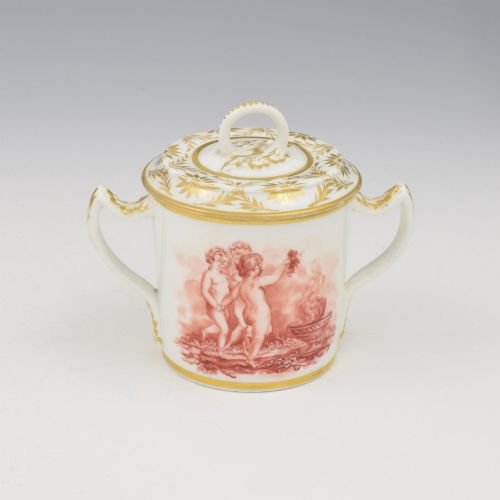


Gilt Handle Ceramic Vessel
A gilt handle ceramic vessel brings together delicate clay forms and bright metallic ornament from the nineteenth and early twentieth centuries.
Gilt Handle Ceramic Vessel
A gilt handle ceramic vessel is a broad term for vases, loving cups, and chocolate cups featuring metallic highlights applied to their mounts and grips. These pieces appear across Victorian, Edwardian, and Meiji periods, taking the form of cabinet vases, potpourri jars, and pilgrim flasks.
The most common examples on this page are porcelain and earthenware pieces from English potteries and Japanese workshops. Makers produced everything from blush ivory loving cups to intricately painted cabinet pieces with pierced gilt handles.
Forms range from large nineteenth-century loving cups to smaller decorative vases adorned with hand-painted birds, floral scenes, and portrait panels. Each vessel displays the characteristic metallic detailing that defines the grouping.
Materials and construction
Makers utilised porcelain, fine bone china, ironstone, and earthenware as the primary ceramic bodies for these vessels. Artisans shaped these clays on wheels or cast them in moulds before firing them to high temperatures.
Gilding was applied by hand using gold leaf or liquid gold preparations, then fired to bond the metal to the ceramic glaze. Skilled painters added hand-painted scenes of landscapes, animals, and portraits before the final glaze firing.
Materials recorded across the selection include porcelain, ironstone, earthenware, gold leaf, and enamel.
Judging quality and execution
Quality rests in the precision of the hand-painted decoration and the crispness of the modelled handles. Pieces featuring named artists or detailed scenic work stand apart from simpler factory output.
The application of the gilding reveals the maker's skill, with heavier, burnished gold finishes indicating superior craftsmanship compared to thin or rubbed metallic paint. The weight and balance of the ceramic body also mark the distinction between standard production and exhibition pieces.
Royal Worcester·Royal Doulton·Bloor Derby·Coalport·Mason Ironstone
The Gilt Handle Ceramic Vessel Glossary
- Gilding
- The application of gold leaf or powder to the ceramic surface. This technique highlights handles, rims, and decorative motifs.
- Loving cup
- A large drinking vessel featuring two or three handles designed to be passed around a company. These often commemorate specific events or display hand-painted panels.
- Potpourri
- A jar or vase with a pierced cover designed to hold dried scented flowers. The perforations allow fragrance to diffuse into a room while concealing the contents.
- Ironstone
- A heavy, durable type of earthenware patented in the nineteenth century. It provides a sturdy body for large decorative vessels.
- Imari
- A style of ceramic decoration featuring deep blue, iron red, and gilt highlights. Originating in Japan, this palette influenced European potteries.
Gilt Handle Ceramic Vessel: Frequently Asked Questions
How do I clean a gilt handle ceramic vessel safely?
Dust the surface gently with a soft, dry cloth to remove particles without disturbing the metallic finish.
Avoid using water, chemical cleaners, or abrasive cloths, as these can wear away the delicate gold leaf over time.
What is the difference between a loving cup and a standard vase?
A loving cup is distinguished by its multiple handles, traditionally intended for communal sharing at gatherings. Vases are primarily designed to hold flowers or stand alone as decorative objects.
While both can feature gilt handles, the loving cup form carries a specific social history distinct from display vessels.
How can I tell a Japanese Satsuma piece from European porcelain?
Japanese Satsuma ware typically presents a characteristic crackle glaze over a cream-coloured earthenware body. European pieces on this page are generally hard-paste porcelain or bone china with smooth white glazes.
The motifs also differ, with Satsuma vessels often incorporating Shimazu crests and distinct regional painting styles.
Are these vessels suitable for holding fresh flowers?
Most antique vessels with gilt handles are best reserved for display rather than daily use with water. Moisture and mineral deposits can seep into older ceramic bodies and damage interior glazes or exterior gilding.
Dry floral arrangements or simply showcasing the piece on its own preserves the condition of the antique.