






Gilt Hand Painted Coffee Table
A gilt hand painted coffee table brings brilliant colour and pattern to a room, drawing on nineteenth century and Edwardian designs.
Gilt Hand Painted Coffee Table
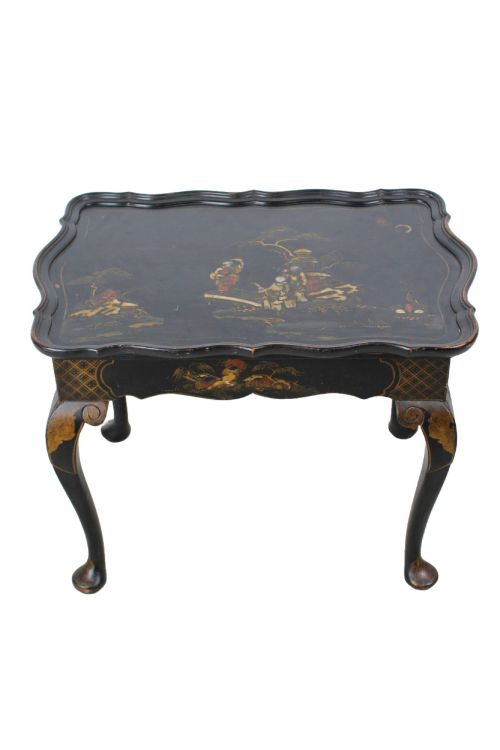
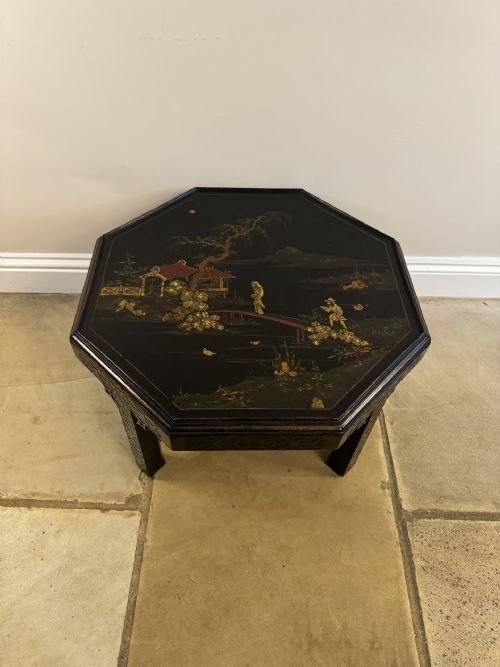
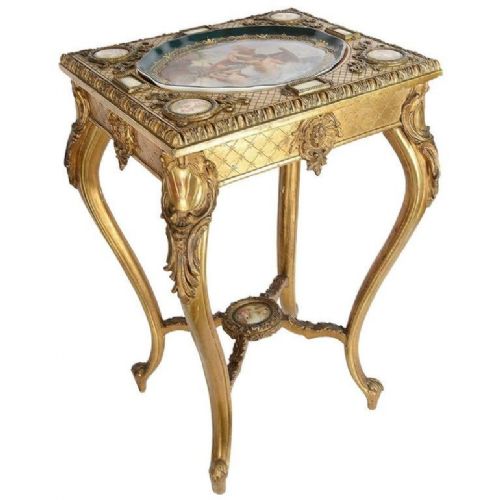
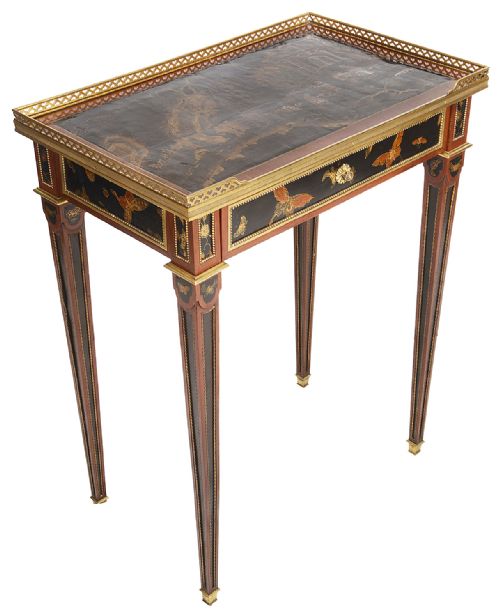
When you search for a gilt hand painted coffee table, you find low tables adapted from serving trays or constructed in specific decorative styles. The selection includes Edwardian Chinoiserie and Victorian pieces alongside Regency style and Venetian Rococo examples.
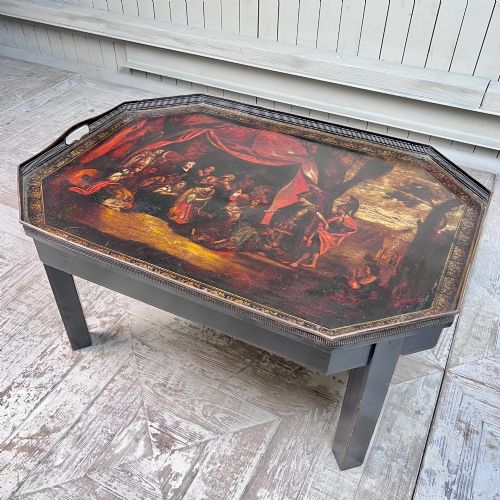
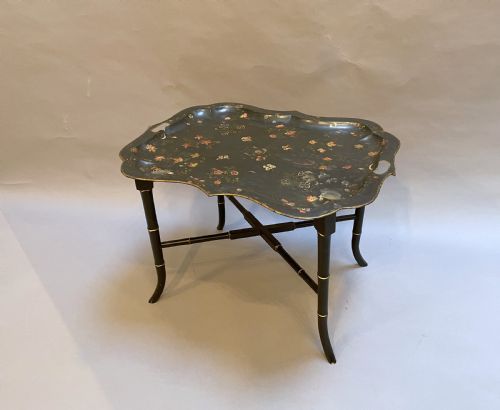
Tray tables are the most common form here, utilising nineteenth century papier-mâché, toleware, or lacquer trays mounted on later stands. You will also encounter circular coffee tables and nests of tables designed for low placement.
The periods span from the nineteenth century through the Edwardian era into the nineteen thirties, drawing heavily on Chinoiserie motifs and hand painted details. These low tables function as central decorative accents while retaining their practical surfaces.
How they were made
Construction relies on wood, metal, and papier-mâché, often built around repurposed serving trays or manufactured as dedicated low tables. Lacquer and paint provide the foundational surfaces for intricate decoration.
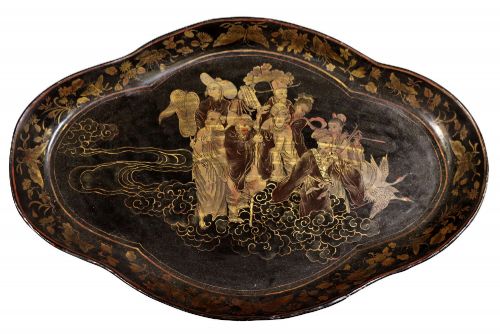
Gilt and gold leaf application creates the metallic highlights characteristic of these items, contrasting against dark lacquer or painted backgrounds. Artisans applied hand painted scenes directly onto wood, toleware, or papier-mâché surfaces.
Object forms on this page range from single tray tables and circular coffee tables to quartetto nests of four stacking tables.
What varies in quality
The standard of the hand painted details separates simpler versions from finer examples, particularly in the precision of Chinoiserie figures and floral motifs. Finer pieces demonstrate careful execution in the gilt highlights and the depth of the lacquer.
The integration of the tray top with its stand affects the overall cohesion of the piece, as many historical trays were mounted on later supports. Original pairings and signed works, such as those by identified makers, elevate the status of the furniture.
E Daligny
The Gilt Hand Painted Coffee Table Glossary
- Chinoiserie
- European decorative style reflecting Chinese artistic influences, frequently seen in landscapes and figures on lacquered furniture.
- Papier-mâché
- Composite material made of paper pulp and binding agent, moulded and lacquered to form durable serving trays.
- Toleware
- Enamelled or lacquered metalware, commonly shaped into trays and mounted as table tops.
- Gilt
- Application of gold leaf or gold paint to wooden and lacquered surfaces to produce metallic enrichment.
- Nest of tables
- Set of graduated tables designed to fit neatly beneath one another when not in use.
Gilt Hand Painted Coffee Table: Frequently Asked Questions
Are these coffee tables converted trays?
Many examples on this page consist of nineteenth century papier-mâché, lacquer, or toleware trays placed upon later stands to serve as coffee tables. This adaptation preserves decorative surfaces that were originally intended for serving.
Other items were constructed specifically as low tables or occasional tables during the Edwardian period or the nineteenth century, maintaining their original form without later conversions.
How do I care for painted lacquer?
Painted and lacquered surfaces require gentle dusting with a soft, dry cloth to protect the delicate pigments and gold leaf. Avoid harsh cleaning agents, moisture, and direct sunlight to preserve the finish.
Keep the tables away from extreme temperature fluctuations, which can cause cracking in the underlying wood, papier-mâché, or lacquer layers.
What is Chinoiserie design?
Chinoiserie is a European artistic tradition that interprets Chinese decorative motifs, featuring painted pavilions, figures, and landscapes. It appears frequently on the lacquer and painted surfaces of Edwardian and nineteenth century tables.
This style relies heavily on contrasting gold gilt against dark backgrounds to create intricate, narrative scenes across the table tops.
How do I date these tables?
Dating relies on material construction, such as papier-mâché or toleware trays, alongside stylistic markers of the Victorian, Edwardian, or Regency periods. Structural details of the stands and the style of the hand painting provide further chronological clues.
Signatures or specific construction techniques can narrow the origin down to precise decades, such as the early twentieth century or mid nineteenth century.