
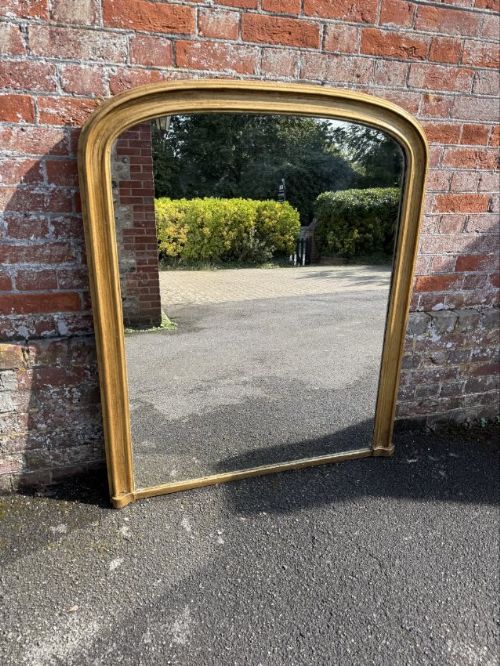
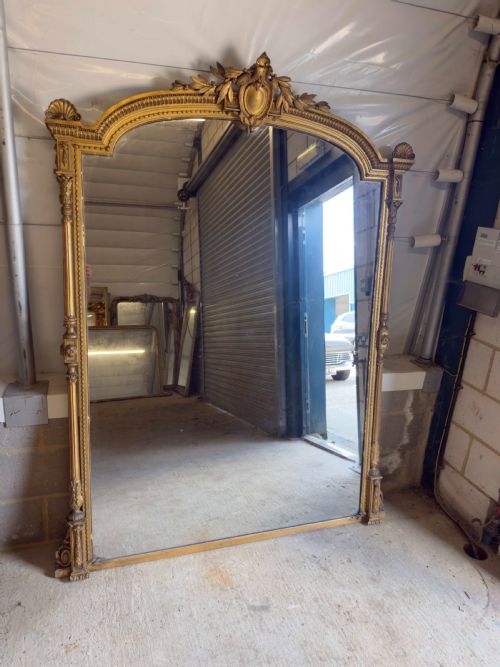
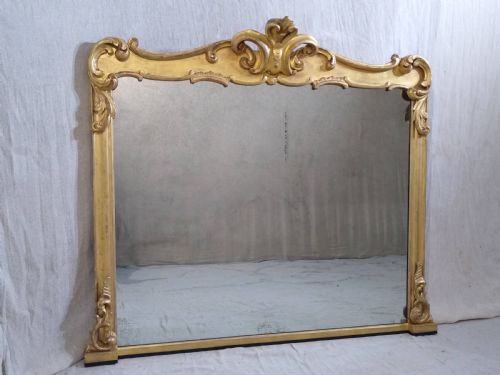


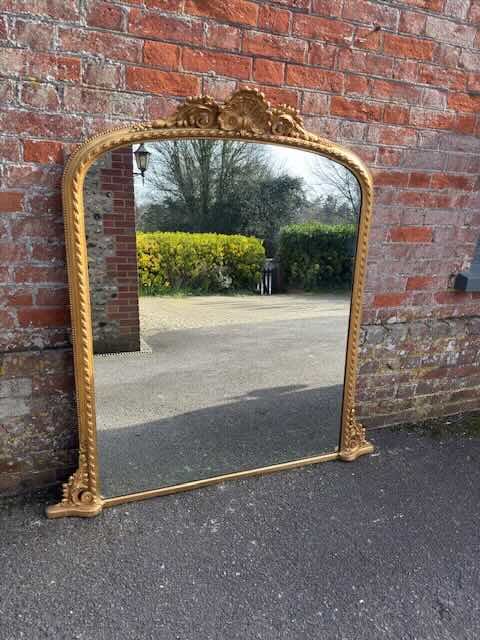


Gilt French Chimney Glass
Gilt french chimney glass pieces are large decorative mirrors designed to sit above a fireplace, bringing historic Continental style and reflected light into a room.
Gilt French Chimney Glass
When searching for a gilt french chimney glass, buyers encounter large decorative mirrors primarily intended for placement above a fireplace. These objects function as substantial wall furniture, designed to dominate a chimney breast and alter the sense of scale and illumination within a period interior.
The versions most commonly met on this page date from the nineteenth century, including pieces reflecting Victorian tastes alongside French Chateau, Rococo Revival, and Neoclassical styles. Forms span arched top, shaped top, and rectangular formats, frequently executed as overmantel mirrors or trumeau mirrors.
How They Were Made
Frames are constructed from wood, carved wood, or painted wood, providing the foundational structural support for the glass plate. Artisans applied layers of gesso to these wooden carcases to build up decorative reliefs, mouldings, and ornamental details such as floral embossed motifs or ribbed columns.
Gilt finishes were achieved using gold leaf applied over the prepared gesso and wood substrates, creating a reflective metallic surface. Composition material was also utilised for intricate mouldings, whilst mirror glass provided the reflective plate, sometimes accompanied by painted wood or parcel-gilt treatments.
Listings feature periods spanning the 19th century, Victorian era, and early 20th century, utilising materials including gesso, giltwood, gold leaf, and mirror glass.
What Varies in Quality
The refinement of the carved wood and gesso ornamentation dictates the visual hierarchy of these objects, separating standard mouldings from deeply undercut, hand-carved floral or scrollwork details. Crisp execution in the relief work indicates superior craftsmanship during the manufacturing process.
The application and preservation of the gold leaf influence the overall appearance, where even burnishing and intact historical gilding distinguish better examples. The integrity of the original mirror glass and the stability of the heavy wooden frames further separate workshop tiers.
The Gilt French Chimney Glass Glossary
- Gesso
- A plaster-like mixture applied to wooden frame bases to create a smooth surface for subsequent gilding or carving. This material allows for intricate relief decoration.
- Giltwood
- Timber that has been coated with gold leaf or gold paint for a metallic decorative finish. It forms the primary visual structure of these grand mirrors.
- Overmantel Mirror
- A large mirror specifically proportioned to hang on the wall directly above a fireplace mantelpiece. These pieces often feature arched or shaped tops to fit architectural chimney breasts.
- Trumeau Mirror
- A decorative wall mirror, often incorporating painted panels or carvings above the glass plate. They reflect classical French interior design traditions.
- Rococo Revival
- A nineteenth-century design style drawing on eighteenth-century French motifs, characterised by asymmetric scrolls, C-scrolls, and organic plant forms. It appears frequently in nineteenth-century mirror frames.
Gilt French Chimney Glass: Frequently Asked Questions
Where should a chimney glass be hung?
These mirrors are traditionally positioned centrally above a fireplace mantelpiece, where they anchor the wall space and reflect light from across the room.
Because of their substantial weight and dimensions, they require secure installation directly into solid wall studs or masonry rather than standard drywall anchors.
How do I clean a gilded frame?
Gilded surfaces require extremely gentle maintenance to avoid disturbing the delicate gold leaf layers applied over gesso or wood. Dusting should be performed using a soft, dry brush without applying liquid cleaners or chemical agents.
Moisture can penetrate historic gesso and cause flaking, so liquids must be kept entirely away from the metallic finish.
What periods do these mirrors represent?
The pieces available predominantly span the nineteenth century, encompassing Victorian craftsmanship alongside French Chateau, Neoclassical, and Rococo Revival movements.
Stylistic markers such as ribbed columns, rope twist details, and floral embossed motifs help distinguish specific design influences within this broad Victorian and nineteenth-century timeframe.
Are these mirrors original antiques?
The inventory consists of period pieces dating from the nineteenth century, featuring authentic materials like carved wood, gesso, composition, and original mirror glass.
Construction techniques, wear patterns on the gold leaf, and traditional frame joinery confirm their historical origins rather than modern reproduction status.