



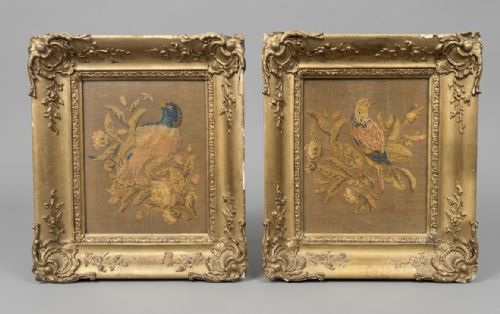


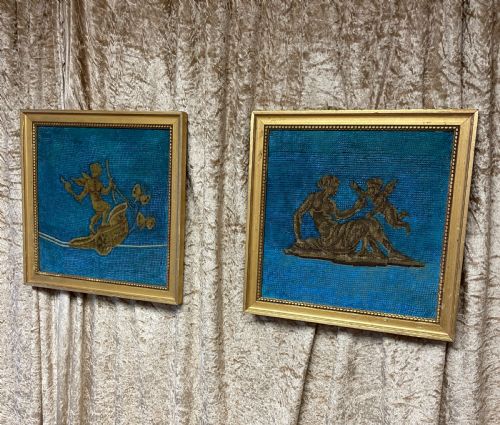


Gilt Framed Textile Picture
These gilt framed textile picture examples bring together historic needlework and rich gilded surrounds, offering a direct window into centuries of domestic art.
Gilt Framed Textile Picture
When you search for a gilt framed textile picture, you encounter works spanning the 18th century, the Regency era, and the Victorian period, alongside various revival styles. These objects combine historical fabrics with ornamental wooden surrounds finished in gold leaf or giltwood.
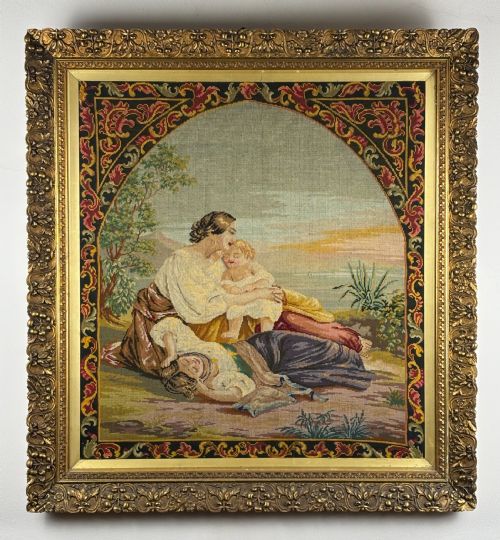
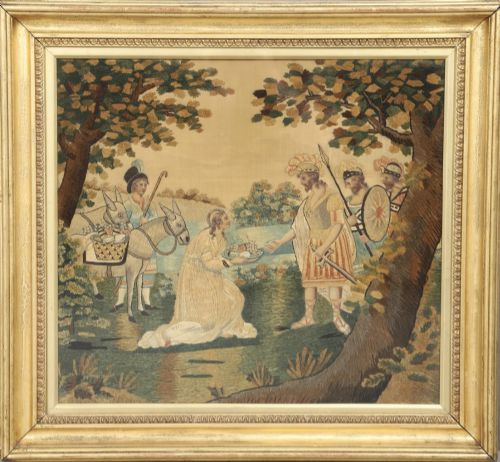
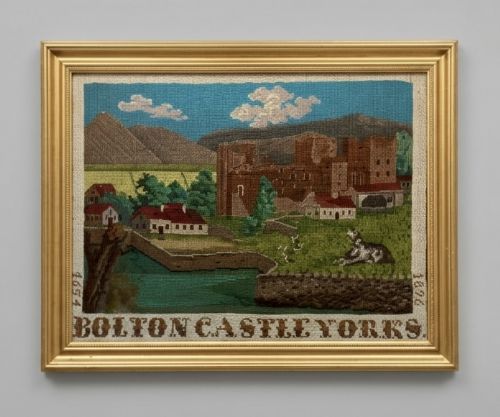
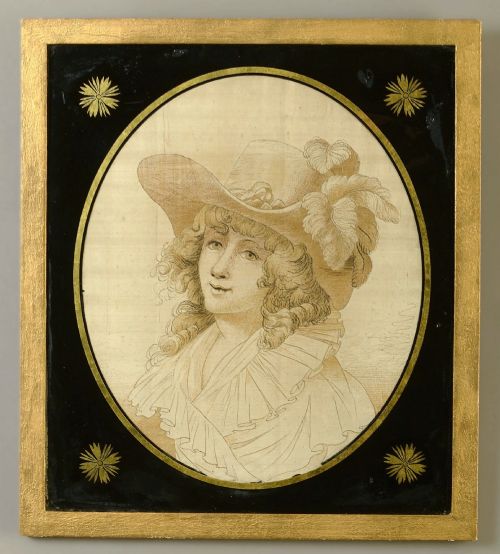
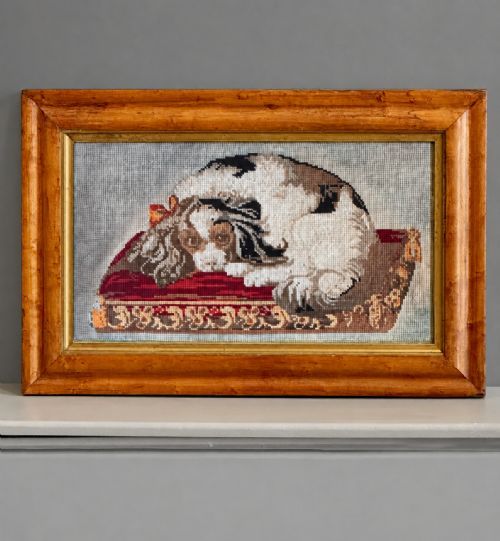
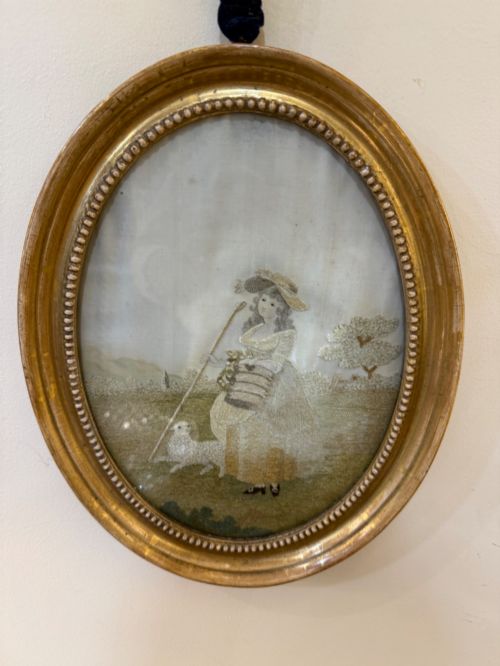
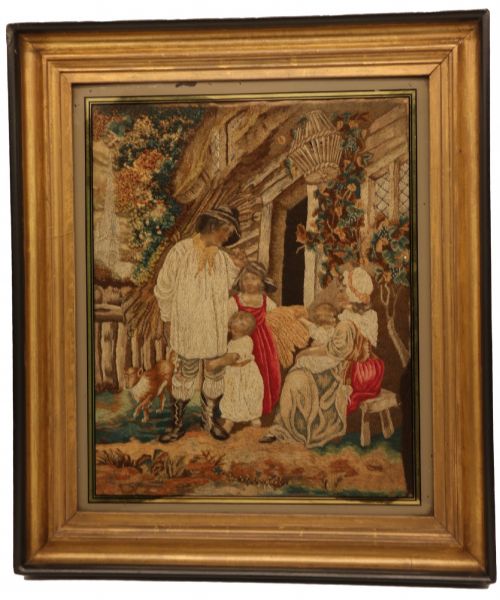
The selections on this page most commonly present themselves as needlework pictures, silk embroideries, and woolwork pieces, often depicting pastoral scenes, portraits, or animals. Many of these artworks originate from English and continental workshops, reflecting domestic craftsmanship and needle skill across generations.
Makers utilised canvas, silk, and wool threads within glass-fronted enclosures to preserve delicate textile art. The surrounding frames range from simple gilded mouldings to elaborate burr maple or verre églomisé glass borders.
How they were made
Artisans constructed these works by stitching wool, silk, and occasionally beadwork onto supportive canvas grounds using various embroidery techniques. Needlework pictures often combined hand-painted silk sections with detailed thread work to depict faces and landscapes.
Makers housed these delicate fabrics inside wooden frames treated with gold leaf, water gilding, or applied gesso. Glass protection, sometimes featuring reverse glass painting techniques known as verre églomisé, shielded the textiles from environmental damage.
Gilt Framed Textile Picture Retail Price Guide 2026
Typical asking prices for gilt framed textile picture among the pieces listed under this phrase on Sellingantiques today, from the lower quarter to the upper quarter. They describe what is for sale here now, not the wider market.
One listed woolwork depicts a Constable landscape, proving that needlework enthusiasts have long enjoyed copying the masters stitch by stitch.
What varies in quality
The refinement of the stitchwork and the complexity of the pictorial composition largely determine the standing of an individual piece. Works demonstrating sophisticated thread blending and detailed hand-painted elements sit above simpler, repetitive domestic exercises.
The execution and preservation of the surrounding frame contribute significantly to the overall character of the piece. Original water-gilded wooden frames and specialised glass mounts retain greater historic integrity than later replacements.
The Gilt Framed Textile Picture Glossary
- Verre églomisé
- A process of applying design and gilding to the reverse side of glass. This technique provides a decorative border around the central textile.
- Berlin work
- A type of needlepoint embroidery worked on canvas from printed colour-coded grid patterns. Popularised during the 19th century, it allowed for complex pictorial designs.
- Crewel work
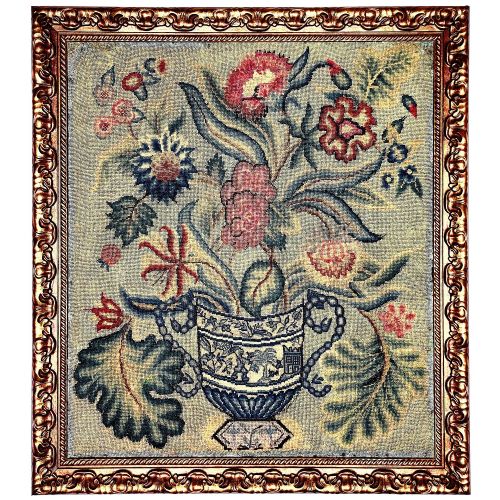
- Embroidery executed using fine wool yarn on a plain linen or cotton ground. This traditional technique appears frequently in early textile pieces.
- Giltwood
- Wood that has been coated with a thin layer of gold leaf or powder. It forms the primary decorative surround for many historical picture frames.
- Sampler
- A piece of textile work produced by a person to demonstrate proficiency in various stitches. These items often display alphabets, motifs, and maker details.
Gilt Framed Textile Picture: Frequently Asked Questions
How do I date a textile picture?
Examine the materials, stitching techniques, and framing methods used in the construction of the artwork. Stylistic indicators within the clothing, subjects, and framing styles often point to specific periods like the Georgian or Victorian eras.
Supporting documentation such as signatures, dates stitched into samplers, or original framing components provide further clues to the decade of creation.
Were these always framed?
Most textile pictures received protective framing shortly after completion to prevent the delicate silk and wool threads from accumulating dust and fading. Glass fronts were standard practice to shield the fabric.
Some pieces retain their original gilded or burr maple frames, while others have received replacement surrounds during later centuries.
How should I care for silk embroidery?
Display your textile art away from direct sunlight to prevent the natural silk and wool threads from losing their colour. Maintaining stable room humidity protects both the fabric and the wooden frame.
Avoid hanging these pieces in damp areas or near heat sources, as fluctuations can warp the wood and degrade the antique textiles.
What subjects are most common?
Historical needlework frequently depicts pastoral landscapes, domestic animals, religious scenes, and classical portraits. Floral arrangements and allegorical figures also appear regularly across different decades.
Map samplers and commemorative military embroideries represent more specialised categories within historical textile art.