
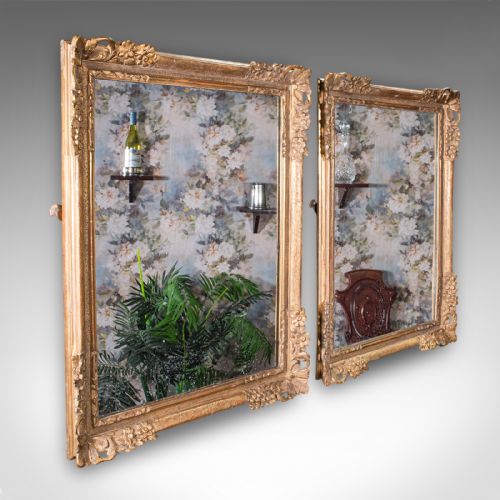
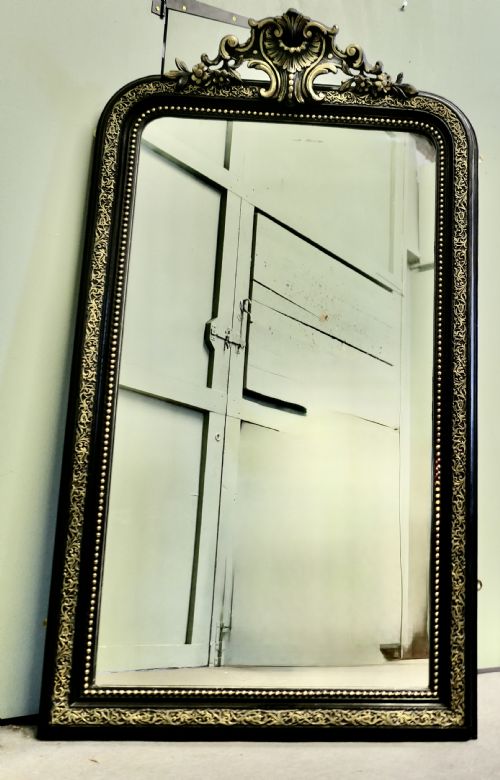
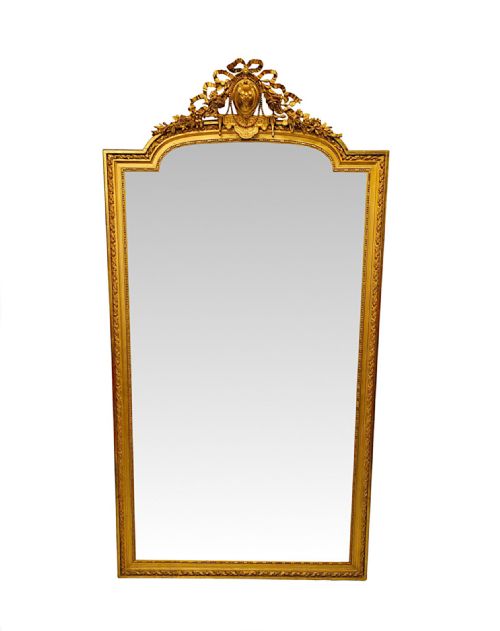
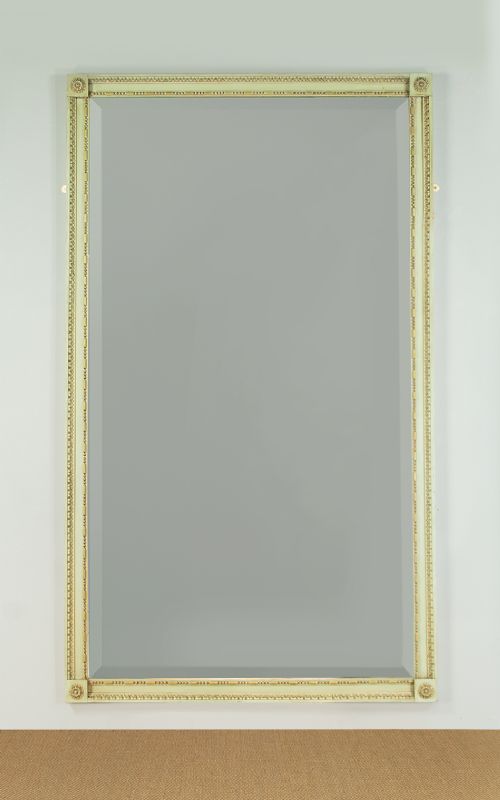
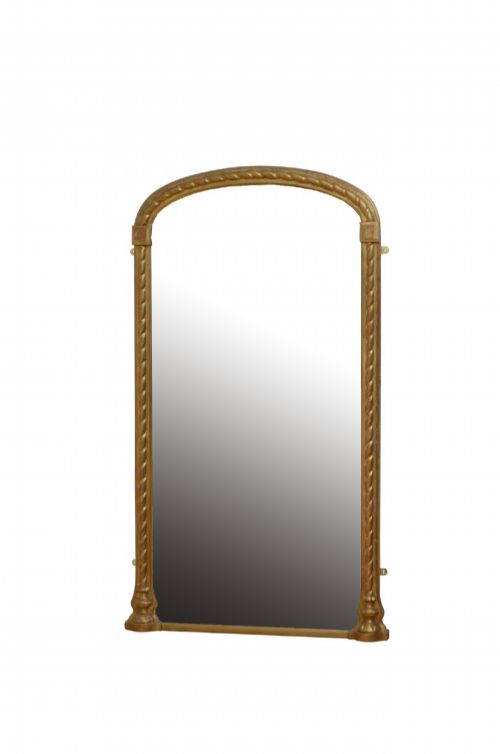
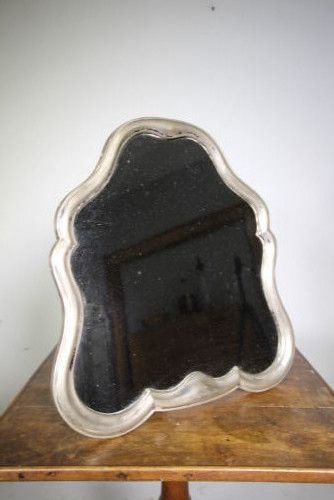
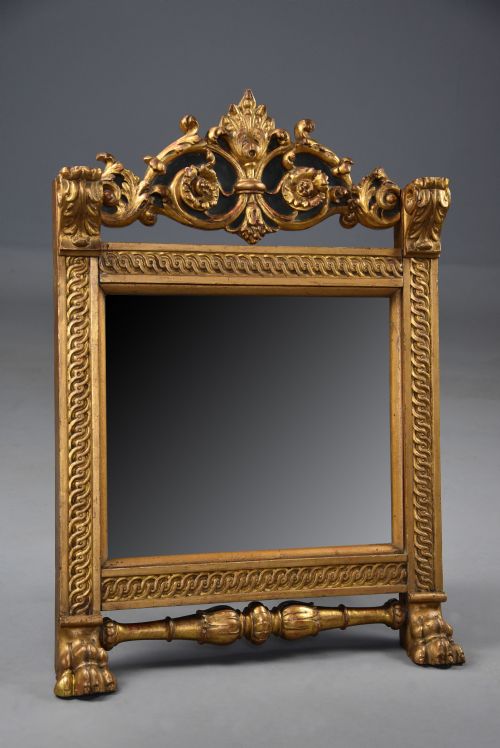


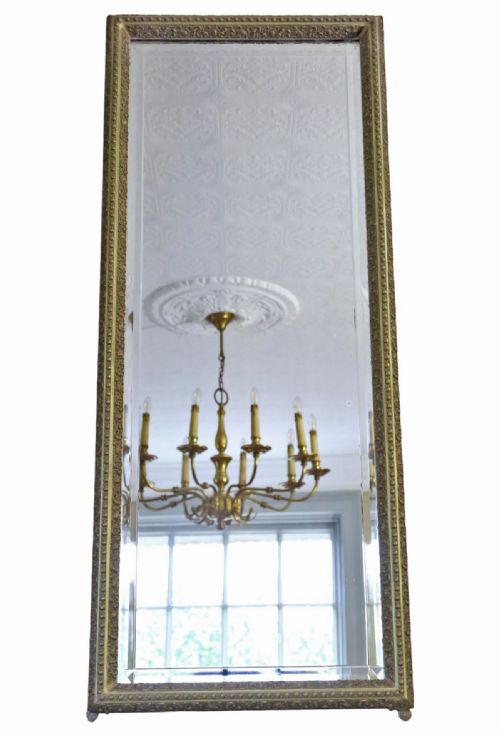
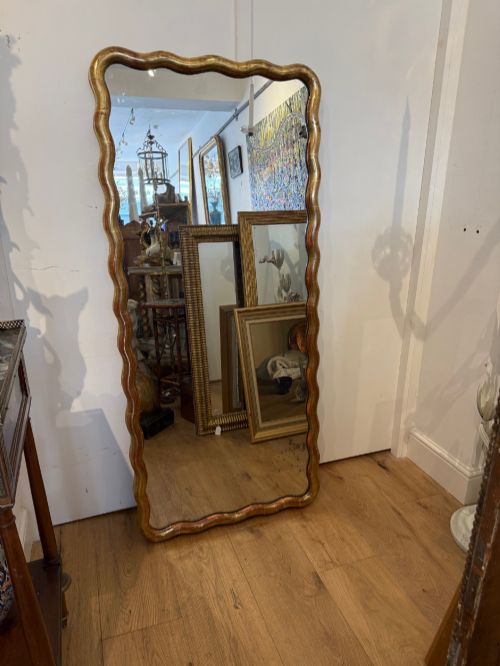

Gilt Framed Dressing Mirror
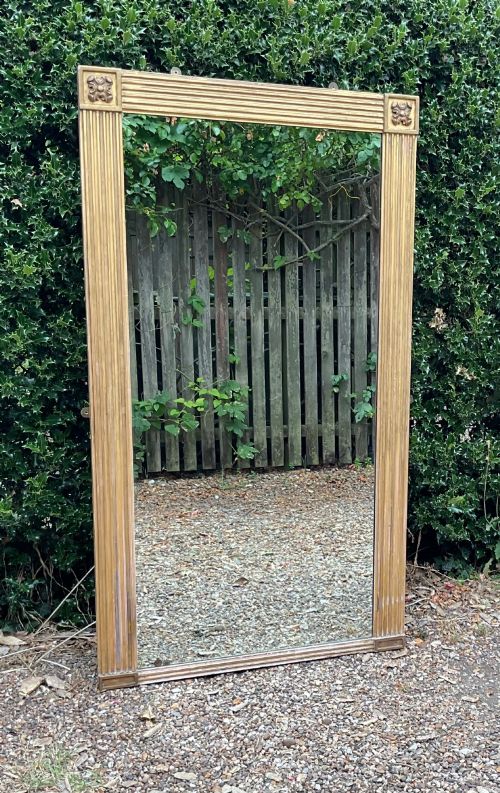
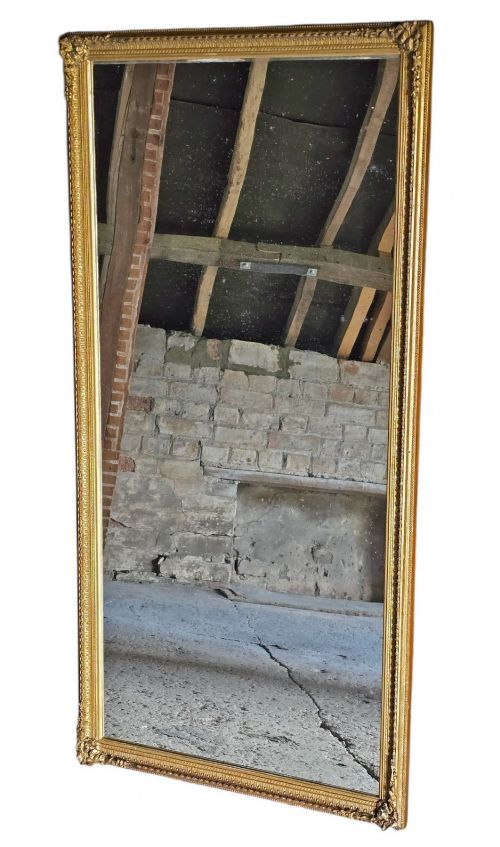
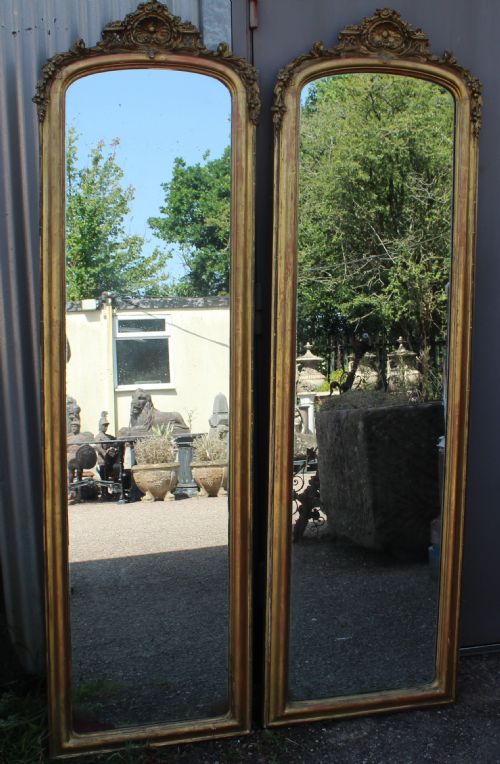
A gilt framed dressing mirror brings warmth and reflective depth to a room, spanning nineteenth-century Regency styles through to Edwardian designs.
Gilt Framed Dressing Mirror
A gilt framed dressing mirror encompasses a variety of forms designed for bedrooms and dressing rooms, ranging from small table mirrors to large full-length floor mirrors. The selection includes cheval mirrors, triple dressing mirrors, and wall-mounted pieces suited to period interiors.
Examples date from the Regency era through the Victorian period, including pieces from the eighteen-eighties and eighteen-nineties up to nineteen-ten. French Rococo Revival, Louis XVI style, and Napoleon III designs appear alongside English works, showing diverse Continental and domestic craftsmanship.
Assessing Quality
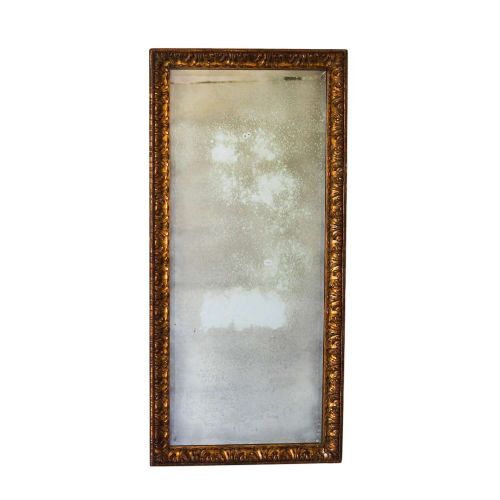
Quality shows in the depth and crispness of the carved ornamentation on the wood and gesso frame, where hand-carved detailing surpasses mass-produced composition mouldings. The preservation of the original gilt surface and the clarity or bevel of the glass plate also indicate a higher standard.
Structural integrity of the joints, easel backs, or support stands dictates how well a piece survives daily use. Superior examples retain their original backing panels, mirror plates, and hardware without extensive modern replacements.
Listings feature periods spanning from the Regency era and Victorian times through to Edwardian and nineteen-ten designs.
The Gilt Framed Dressing Mirror Glossary
- Giltwood
- Wood carved and covered with a thin layer of gold leaf. This material provides the primary shimmering finish for many antique frames.
- Gesso
- A plaster-like mixture applied to wood frames to create a smooth surface for carving and gilding. It allows for intricate relief decoration.
- Cheval mirror
- A freestanding full-length mirror hung on a vertical frame with pivots. This design allows the glass to tilt to various angles.
- Pier glass
- A tall mirror traditionally hung on the pier, the section of wall between two windows. These pieces often feature elaborate gilt frames.
- Easel mirror
- A smaller mirror supported by a hinged prop at the back. Such pieces sit upright on dressing tables or mantelpieces.
Gilt Framed Dressing Mirror: Frequently Asked Questions
How do I date a gilt frame?
Dating relies on stylistic clues such as Regency proportions, Victorian ornamentation, or Edwardian simplicity. Examining construction methods, backing boards, and screw types helps confirm the age.
The composition of the gesso and the wear patterns on the gilding further reveal whether a piece originates from the nineteenth century or later.
Where should I place a dressing mirror?
These mirrors function effectively in bedrooms, dressing rooms, and hallways where they reflect natural light and create a sense of space. Full-length leaner versions anchor larger walls, while table mirrors suit chests of drawers.
Positioning them opposite or adjacent to windows maximises the illumination they bring into the room.
Are original mirror plates important?
Original glass plates preserve the authentic character and slight imperfections expected in antique mirrors. Foxing and light clouding are typical signs of age that collectors value.
While replacement glass offers a clearer reflection, surviving original bevelled plates maintain the historical integrity of the piece.
How do I clean a gilt frame?
Dusting requires a very soft, dry brush to prevent dislodging delicate gesso or gold leaf. Moisture and chemical cleaners can damage historical gilt surfaces.
Gentle care ensures the preservation of the original metallic finish and prevents flaking over time.