




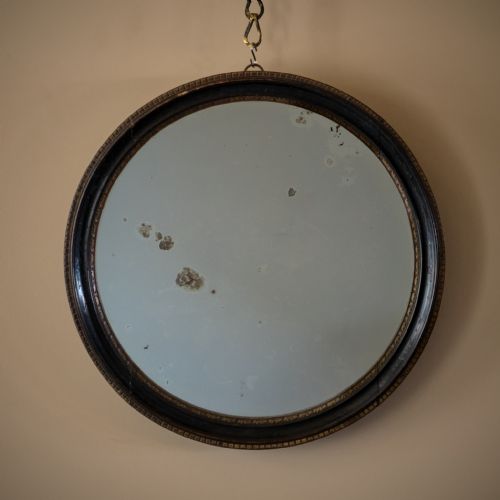


Gilt Framed Convex Mirror
A gilt framed convex mirror bends the light of a room, bringing depth and a distinct nineteenth-century presence to any wall.
Gilt Framed Convex Mirror
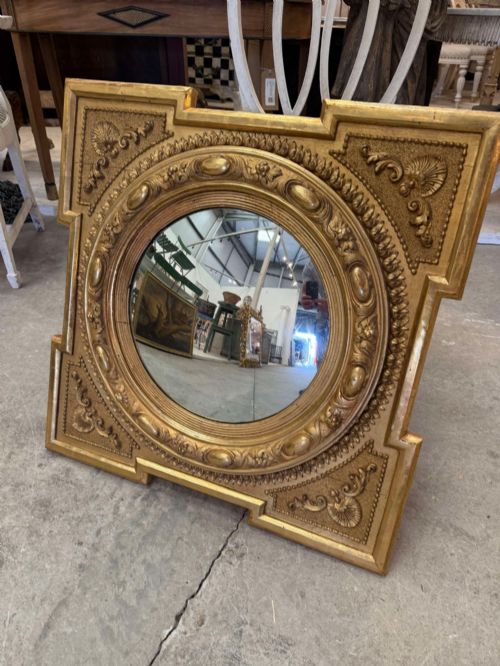
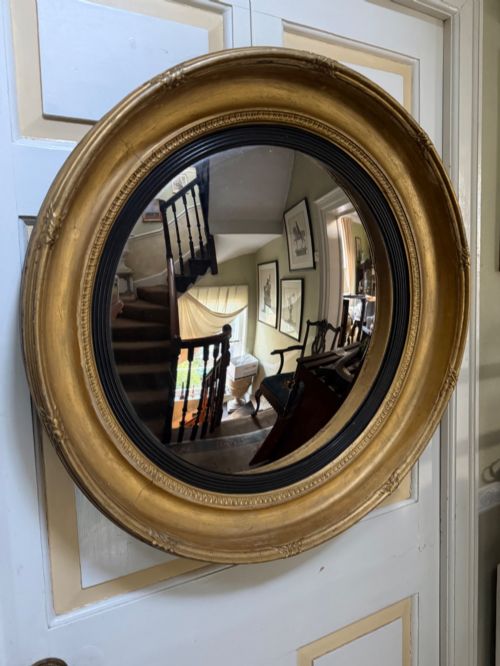
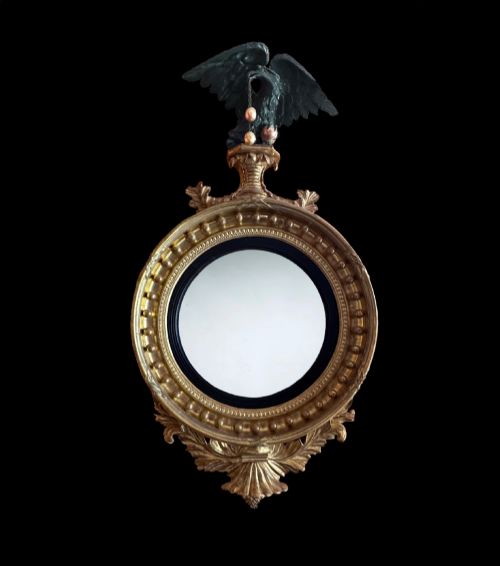
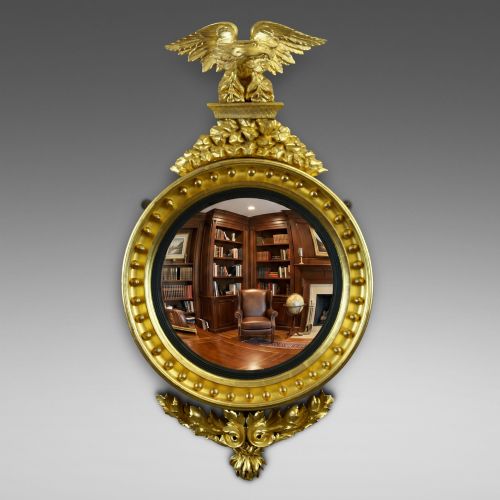
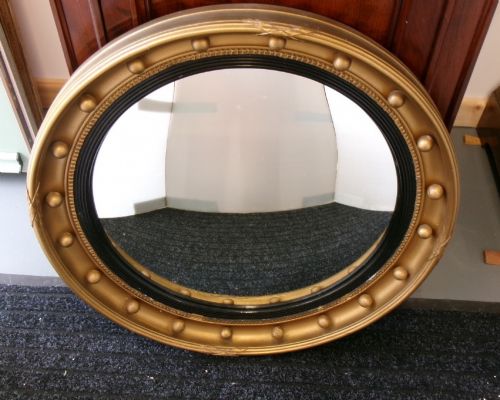
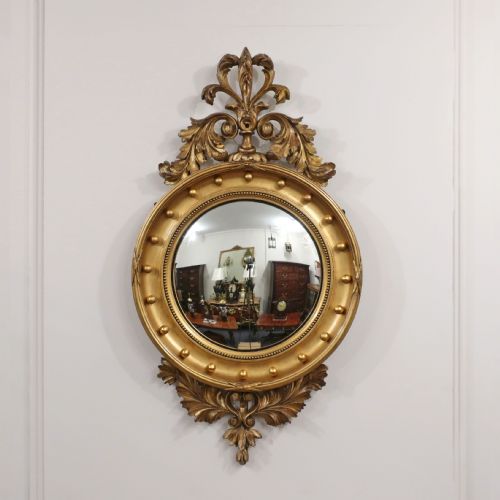
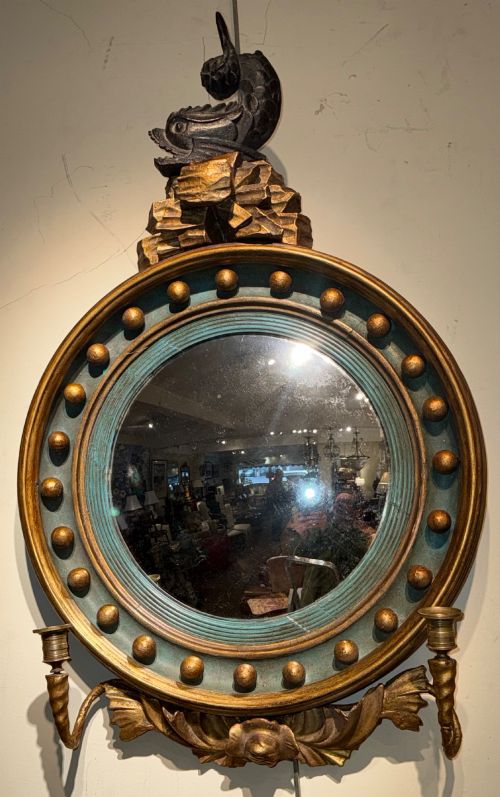
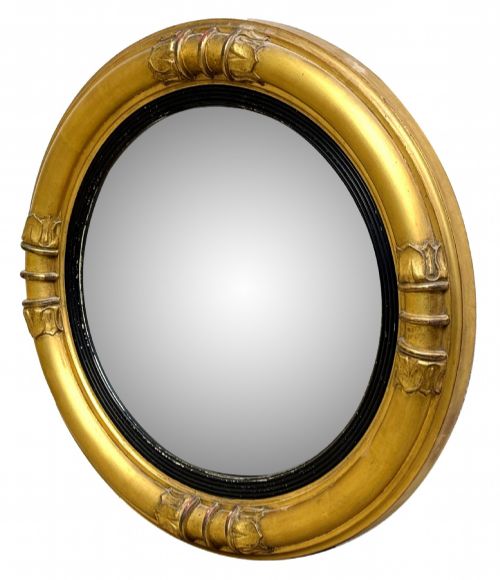
A gilt framed convex mirror presents a rounded, bulging glass plate that captures a wide-angle reflection of its surroundings. These circular wall hangings appear most frequently in Regency and nineteenth-century formats, often taking the shape of a bold porthole or a grand scale centrepiece.
Buyers encounter examples spanning the Regency period through the Victorian era and into later twentieth-century revivals. The forms range from modest hall mirrors of smaller size to imposing four-foot diameter frames designed for substantial drawing rooms.
Makers often incorporated classical motifs, such as Grecian revival design or ebonised details within the circular frame. Whether listed as French nineteenth-century pieces or English antiques, these wall mirrors serve as both optical curiosities and striking focal points.
Materials and Construction Techniques
Craftsmen shaped these frames primarily from wood, applying layers of gesso to build up intricate decorative mouldings before finishing the surface with gold leaf or gilt paint. Ebonised wood often appears alongside the gilt elements, creating sharp tonal contrast within the circular structure.
The mirrored glass itself is curved to achieve the characteristic convex distortion. Supporting structures commonly utilise painted wood or solid timber to bear the heavy weight of the circular plate glass.
Gilt Framed Convex Mirror Retail Price Guide 2026
Typical asking prices for gilt framed convex mirror among the pieces listed under this phrase on Sellingantiques today, from the lower quarter to the upper quarter. They describe what is for sale here now, not the wider market.
Listings feature circular wall mirrors spanning the Regency and Victorian periods, constructed from giltwood, ebonised wood, and gesso.
Distinguishing Quality Across Periods
Quality rests heavily on the crispness of the gesso mouldings and the depth of the gilding. Finer examples display sharp, well-defined decorative details rather than softened contours.
The proportion between the convex plate glass and the surrounding frame dictates the visual balance. Bold scale and substantial weight mark the superior Regency pieces, whereas lesser examples rely on simpler, flatter wooden turns without the same sculptural presence.
The Gilt Framed Convex Mirror Glossary
- Convex mirror
- A circular wall glass curved outward to reflect a wide, panoramic view of the interior space. This optical design was historically believed to ward off evil spirits.
- Giltwood
- Timber coated with fine gold leaf or gilt preparation. It provides the bright reflective surface characteristic of formal nineteenth-century frames.
- Gesso
- A plaster-like mixture applied to wooden frames and carved into decorative motifs before gilding. It allows for intricate relief work around the circular glass.
- Ebonised wood
- Timber treated to imitate ebony, producing a deep black finish. This dark material frequently contrasts with gilt highlights on the frame.
- Regency
- An English design period spanning the early nineteenth century known for classical revival forms. Pieces from this era often feature bold scale and architectural detailing.
Gilt Framed Convex Mirror: Frequently Asked Questions
Why are they called sorcerers mirrors?
The curved surface distorts perspective in a manner that historically fascinated scientists and magicians alike. People once believed the unique optical properties could detect unseen spirits in a room.
This folklore led to the alternative name, linking the functional household object to early scientific curiosity and domestic superstition.
How do I date an antique convex mirror?
Examine the construction of the wooden frame, the composition of the gesso, and the character of the glass plate. Regency pieces often display bold classical motifs and heavier proportions.
Later Victorian and twentieth-century revivals tend to simplify these elements or utilise different backing materials and modern fixing methods.
Are all convex mirrors circular?
The vast majority of traditional examples feature a distinct round format, often housed within a heavy circular frame. Oval variants do occur occasionally in later revivals.
Circular frames remain the standard form across both English Regency pieces and French nineteenth-century imports.