
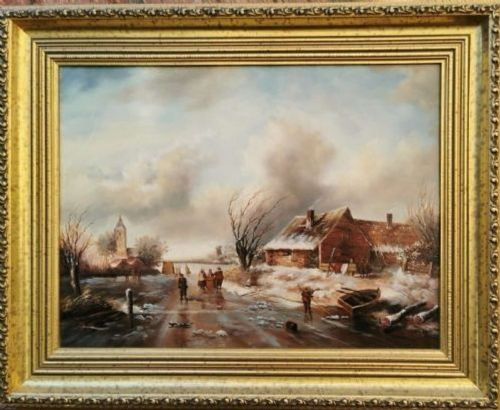
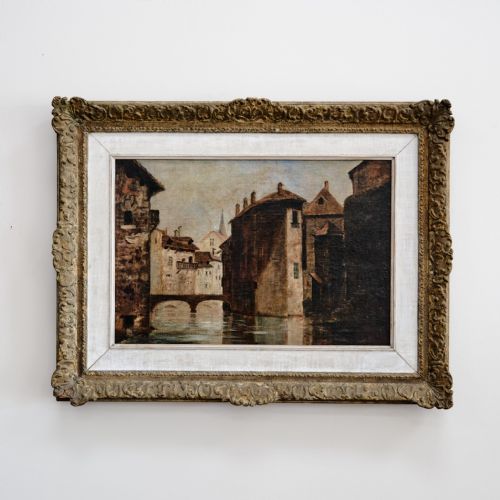
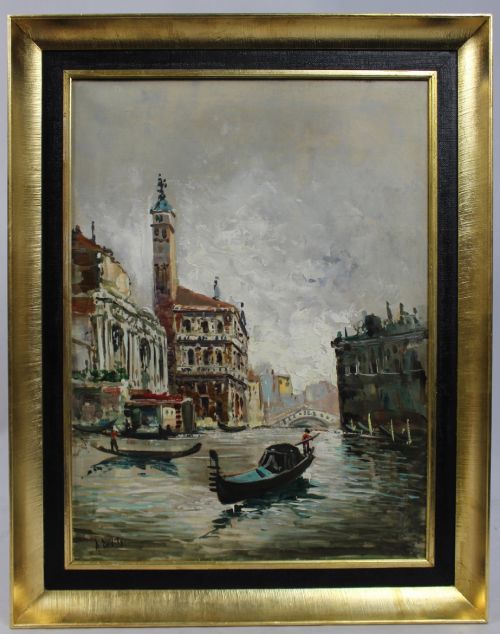
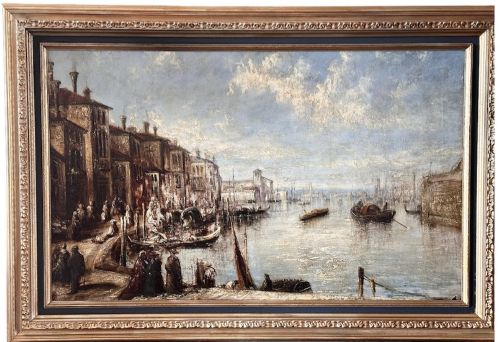
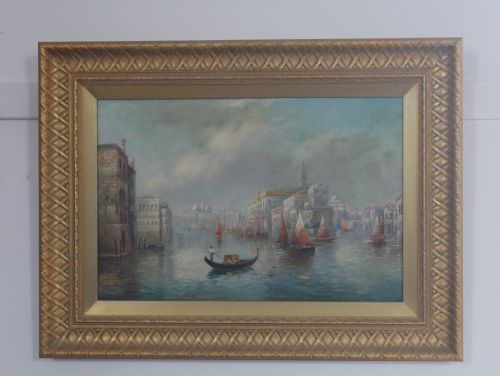


Gilt Framed Canal Painting
These works capture the atmospheric waterways of Europe inside ornate gilded timber surrounds, bringing historic Continental architecture and quiet river scenes directly into your room.
Gilt Framed Canal Painting
A gilt framed canal painting brings together maritime topography and nineteenth-century townscapes, most frequently depicting the historic waters of Venice alongside Dutch rivers and Flemish waterways. When searching for a gilt framed canal painting, collectors encounter oil on canvas and watercolour formats produced across various periods ranging from the Victorian era into mid-century impressionism.
The subjects on this page span French, German, and British artistic traditions, capturing specific locations such as the Grand Canal, the Dogana, and continental quaysides. Nineteenth-century examples dominate the selections, accompanied by twentieth-century interpretations that maintain traditional compositional methods.
Materials and Construction
Works in this category rely primarily on oil paint applied to stretched canvas or oil on board, supplemented by occasional watercolours on paper. Canvas supports receive preparatory grounds before the application of pigments to build atmospheric depth across water and sky.
Surrounding housings are constructed from wood, finished with applied gesso and heavy gilding to create reflective borders that frame the painted view. These gilded surrounds utilise traditional joinery and surface preparation, contributing substantial weight and historical character to each piece.
Materials recorded across the inventory include oil paint, canvas, gesso, watercolour, and gilded wood.
Assessing Artistic Quality
The distinction between standard examples and superior works lies in the handling of light reflected off water and the precise architectural rendering of historic palazzos. Masterful brushwork captures the damp atmosphere and movement of boats, whereas lesser items rely on formulaic repetition without observational depth.
Frame craftsmanship also dictates overall merit, separating simple modern replacements from period-appropriate gesso and giltwood mouldings with hand-carved detailing. A harmonious pairing between the artistic execution of the canvas and the decorative integrity of its perimeter enhances the piece significantly.
Antonio DeVity·Francis Moltino·Thomas Baker·Frederick Tully Lott·Antonietta Brandeis·Antoine Bouvard Senior·Alfred Pollentine·Jane Vivian·William Dommersen·Ludwig Hermann
The Gilt Framed Canal Painting Glossary
- Giltwood
- Timber carved and surfaced with fine gold leaf. This material provides a warm, metallic sheen designed to catch interior candlelight or daylight.
- Gesso
- A plaster-like mixture applied to wooden frames as a smooth base before gilding. It allows craftsmen to model crisp decorative mouldings.
- Oil on canvas
- Pigments bound in drying oils applied to a woven fabric support. This technique permits rich colour blending and textured brushwork.
- Townscape
- A painting depicting urban architecture, streets, and waterways. These scenes often record historical city layouts and identifiable landmarks.
- Watercolour
- Pigments suspended in a water-soluble binder applied to paper. This medium creates translucent washes suited to capturing shifting weather and atmospheric haze.
Gilt Framed Canal Painting: Frequently Asked Questions
How do I date a gilt framed canal painting?
Dating relies upon examining the canvas preparation, the construction techniques of the wooden stretcher, and stylistic clues within the architectural dress of the buildings depicted. Nineteenth-century works typically display heavier craquelure in the oil paint and older backing materials compared to mid-century examples.
Frame styles further assist with chronology, as Victorian gesso mouldings differ noticeably in weight and profile from twentieth-century alternatives. Comparing the signature or recorded dates of identified artists provides the most secure chronological anchor.
Where should I hang a canal painting?
These works suit dining rooms, libraries, or drawing rooms where traditional furniture complements the historical subject matter and gilded timber surrounds. Placing the piece away from direct sunlight protects both the oil pigments and the fragile gilded surfaces from fading.
Ensure the wall space accommodates the substantial physical weight of wood and gesso housings by using appropriate fixings secured directly into wall studs or masonry.
Are watercolours as durable as oil paintings?
Watercolour paintings require protection behind glass to prevent moisture damage and paper degradation over time. Unlike oil on canvas, which possesses a tougher pigmented skin, works on paper demand careful environmental control regarding humidity and light exposure.
Both mediums benefit from stable indoor climates that prevent the timber stretcher or frame from warping due to excessive seasonal dryness or damp.
What subjects appear most frequently?
Venetian waterways dominate the selections, featuring landmarks such as the Grand Canal, Santa Maria della Salute, and the Doge's Palace. These Italian views are accompanied by Dutch river scenes, windmills, and Belgian canal views from Bruges and Ostend.
Continental quaysides and figures operating boats near historic bridges form the secondary tier of subjects recorded across the inventory.