

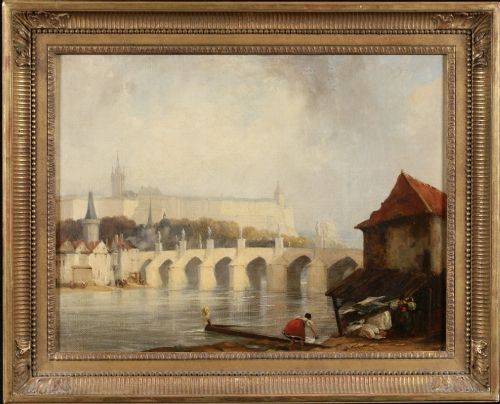
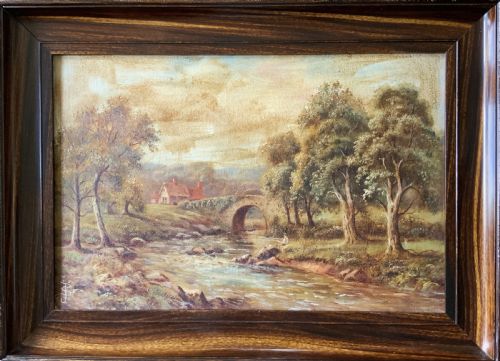


Framed Bridge Oil Painting
A framed bridge oil painting brings river views, architectural spans and nineteenth-century scenery straight into the room.
Framed Bridge Oil Painting
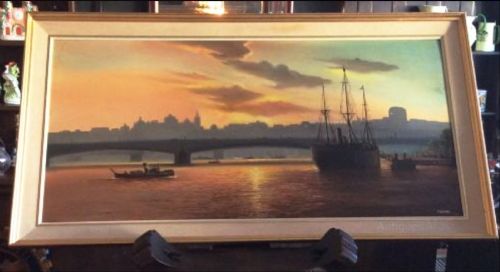
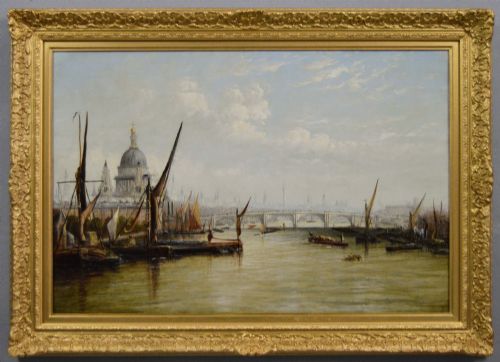
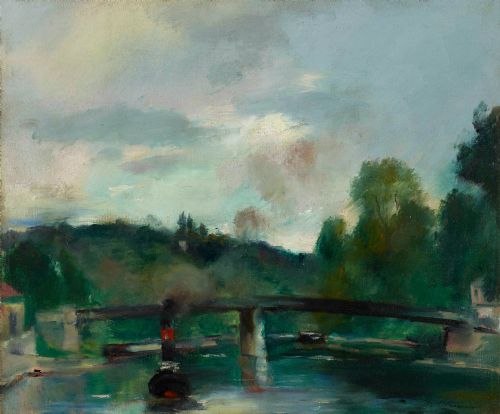
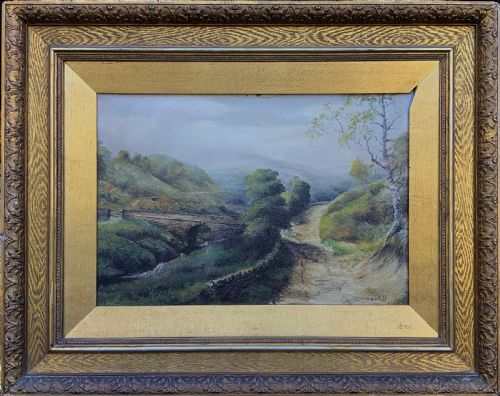
A framed bridge oil painting depicts rivers, waterways and architectural spans across various British and continental settings. These works range from Victorian landscapes to mid-twentieth-century townscapes featuring urban crossings and rural streams.
The pieces on this page lean heavily into nineteenth-century traditions, alongside Edwardian and later twentieth-century interpretations. Scenes stretch from Welsh rivers and Scottish stone bridges to London landmarks like Waterloo, Blackfriars and Tower Bridge.
Artists often place figures, boats or drovers near the structure to establish scale and narrative within the composition. Viewers encounter footbridges, historic masonry arches and panoramic marine waterscapes framed ready for hanging.
Quality and execution
Quality rests in the handling of light, brushwork confidence and the structural proportion of the bridge within the landscape. Finer examples display assured draftsmanship in architectural masonry and atmospheric depth in the surrounding water and sky.
The integration of the original frame adds merit, particularly where period gilt or gesso mouldings match the age of the canvas. Finer paintings demonstrate a clear command of tone, whether capturing a bustling London river or a quiet rural stream.
Materials recorded across the inventory include oil paint, canvas, wood panels, gilt, gesso and gold leaf.
Francis Moltino·Florence Adelina Hess·Sydney Yates Johnson·E A Minardo·William Grant Murray·Frederick Waters Watts·Henry Dawson·Franz Reder-Broili·Edward Fletcher·Peter Greenham·Edward Seago·Sir David Murray·Arthur Netherwood·Charles Henry Passey
The Framed Bridge Oil Painting Glossary
- Oil on canvas
- Pigments bound in drying oil applied to a woven fabric support stretched across a wooden frame. This combination allows for rich blending and textured brushwork.
- Wood panel
- A flat wooden board utilised as a rigid support for painting instead of flexible canvas. Panels frequently appear in nineteenth-century works.
- Gesso
- A plaster-like mixture applied to wood or canvas to prepare a smooth surface for painting, or used beneath gold leaf on frames. It provides a crisp base for decorative moulding.
- Gilt
- A thin layer of gold or gold-coloured material applied to the surface of a wooden frame. This finish catches ambient light and defines the edge of the artwork.
- Provenance
- The documented history of ownership surrounding a work of art. It establishes authenticity and traces the journey of the piece through time.
Framed Bridge Oil Painting: Frequently Asked Questions
What periods do these paintings cover?
The selection spans from the nineteenth century through the Edwardian era into the mid-twentieth century. Works reflect Victorian landscape traditions as well as later impressionist movements.
Dates recorded range across the eighteen-hundreds and nineteen-hundreds, capturing evolving artistic approaches to landscape and architecture.
How should I hang a framed oil painting?
Hang the piece on a sturdy wall away from direct sunlight and excessive heat sources to protect the canvas and gilt frame. Ensure the fixing matches the weight of the wooden support.
Position the painting at eye level so the composition can be comfortably viewed within the room.
Are the frames original to the paintings?
Many works retain period frames featuring wood, gesso and gilt work appropriate to the date of the canvas. These surrounds complete the presentation of the artwork.
Individual listings note the specific framing details associated with each particular canvas or panel.
What subjects feature besides bridges?
Alongside architectural spans, compositions frequently incorporate rivers, shipping, marine waterscapes, figures, boats and townscapes. Artists embed the bridge within broader topographical and rural views.
Scenes range from London landmarks on the Thames to remote Welsh streams and Scottish stone structures.