
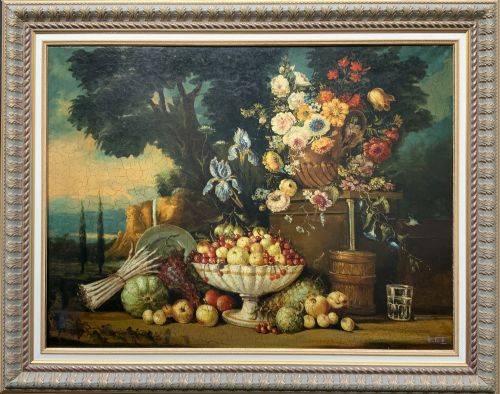
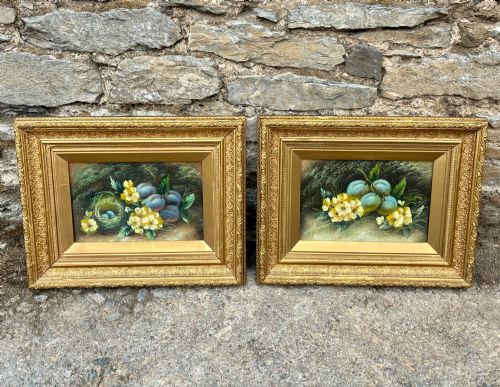
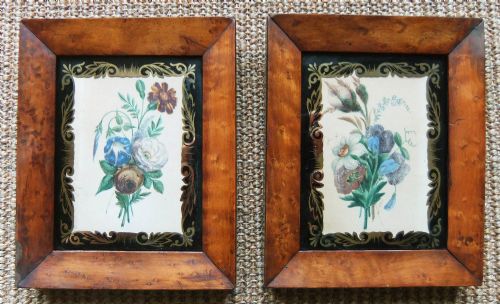
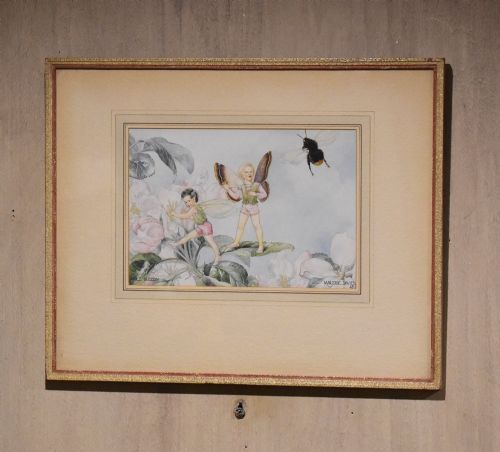
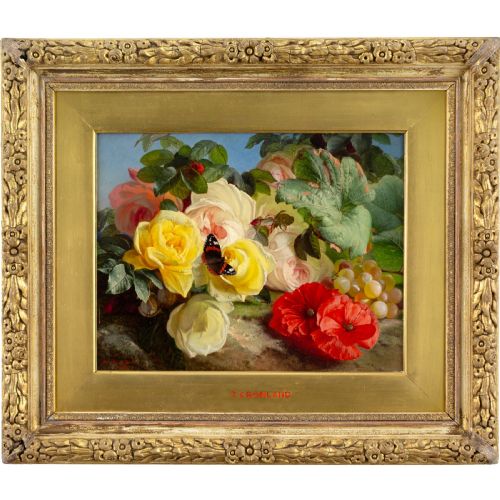
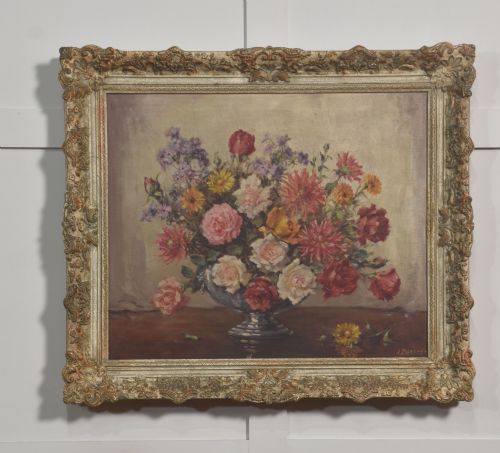
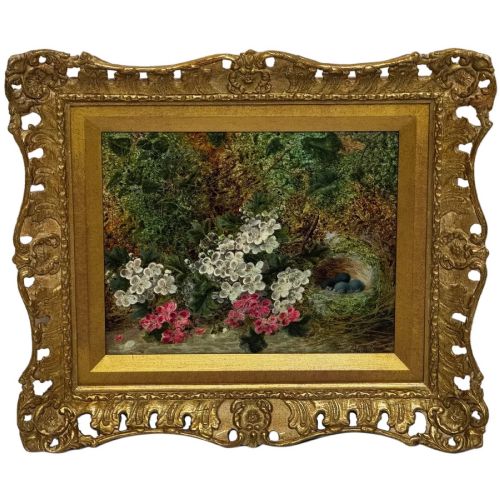
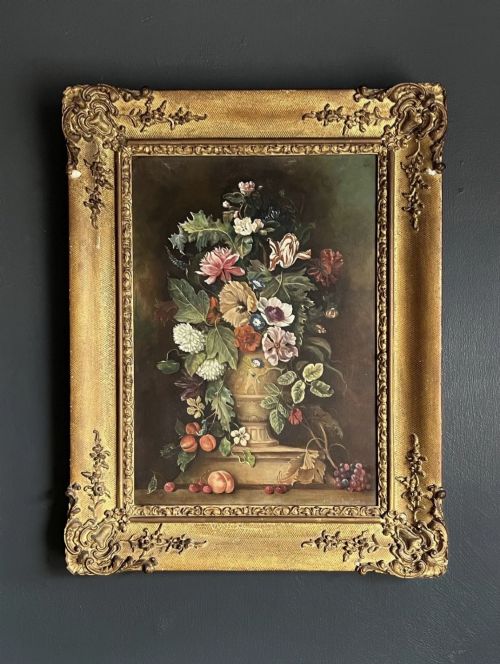
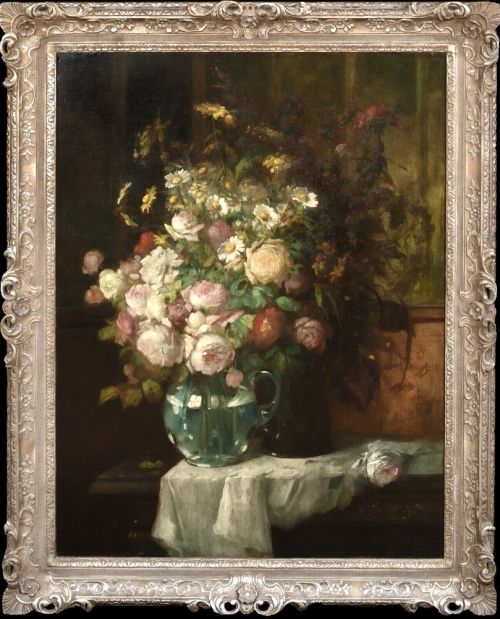
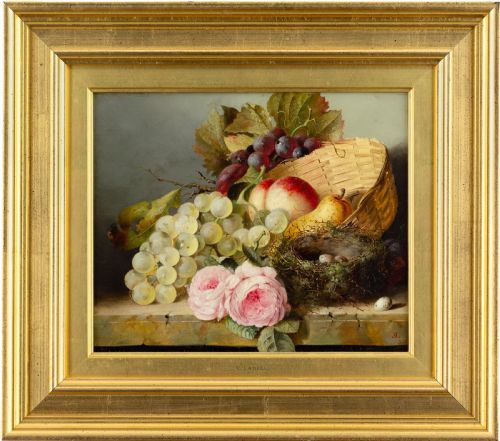
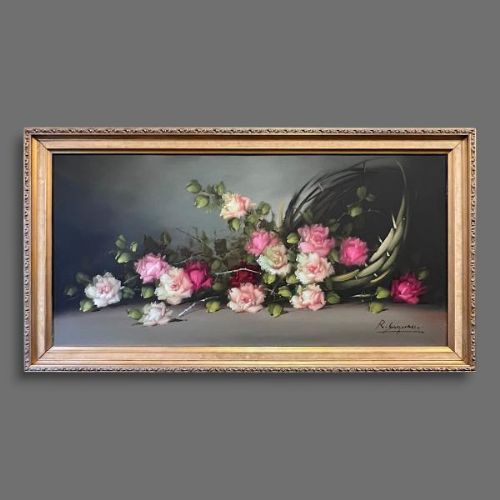
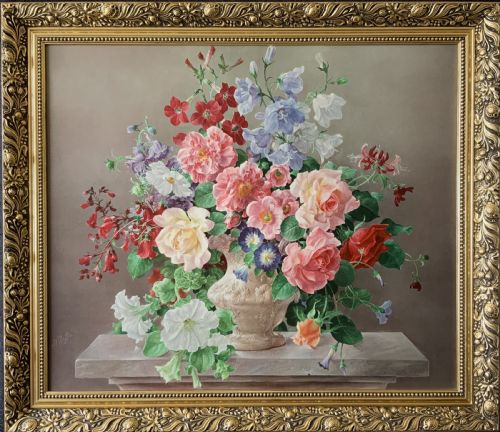
Gilt Frame Floral Artwork
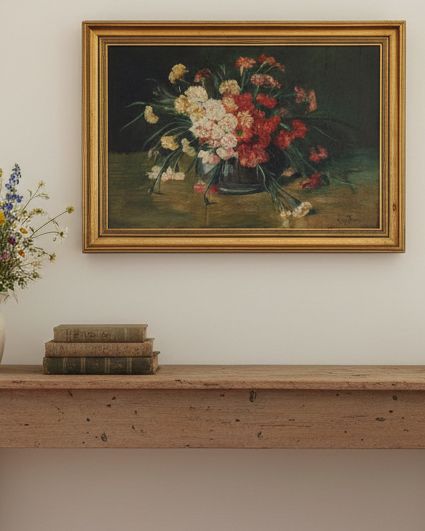
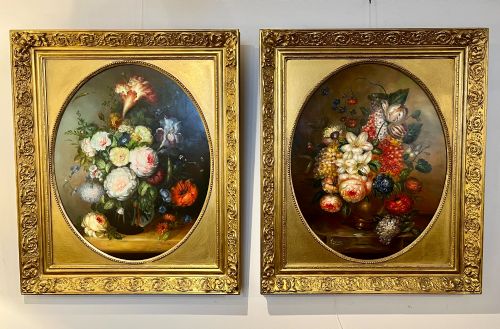
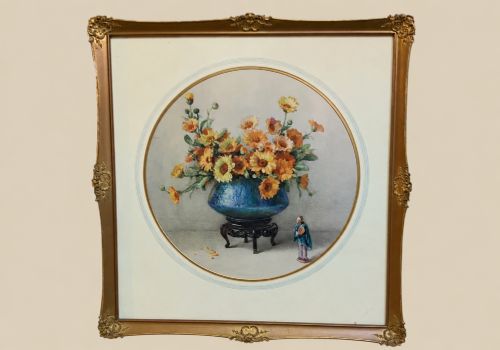
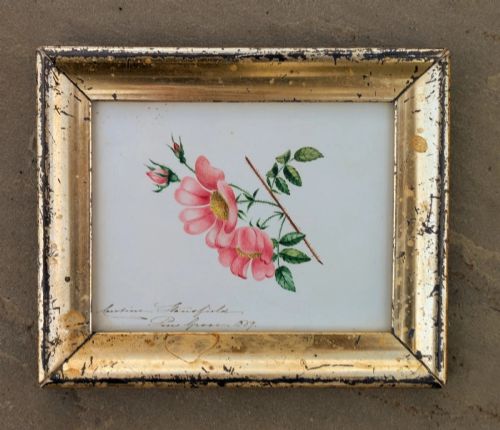
Gilt frame floral artwork brings botanical subjects into interior spaces through historic paintings and prints enclosed in ornate metallic borders.
Gilt Frame Floral Artwork
When you search for gilt frame floral artwork, you encounter compositions celebrating botanical subjects captured across multiple centuries.
The pieces on this page span the nineteenth and twentieth centuries, incorporating Victorian oil paintings, British impressionism, and mid-century European works.
Common formats include oil on canvas, watercolours, gouache, and oleographs depicting roses, lilies, and garden scenes.
Materials and Technique
Makers utilised wood, canvas, and heavy paper as supports for oil paint, watercolours, and mixed media.
Frames combine wooden structures with moulded gesso surfaces finished in gold leaf to highlight the central imagery.
Listings feature works from British, French, Belgian, Italian, and Hungarian artists spanning the 1850s to the 1960s.
Evaluating Execution
Depth of colour and precision of brushwork distinguish accomplished impressionist or classical compositions from standard decorative prints.
The intricacy of the gesso moulding on the surrounding enclosure alters the visual weight and historical authenticity of the piece.
Oliver Clare·Edward Ladell·Konstantin Stoitzner·Victor Simonin
The Gilt Frame Floral Artwork Glossary
- Gesso
- A plaster-like mixture applied to wooden frames before gilding to allow for detailed sculptural moulding. This material provides the smooth foundation necessary for catching light.
- Oleograph
- A mechanical colour lithograph produced to imitate the texture and appearance of an oil painting. These prints gained popularity for reproducing classical subjects affordably.
- Impressionism
- An artistic style focusing on light and its changing qualities rather than minute detail. Practitioners capture spontaneous botanical displays with visible brushstrokes.
- Gouache
- An opaque water-based paint producing dense, matte colour surfaces. It frequently appears in historic botanical illustrations and paper works.
Gilt Frame Floral Artwork: Frequently Asked Questions
How do I date these artworks?
Dating relies on stylistic clues, framing techniques, and the materials used for the support. Canvas types and pigment compositions offer further chronological markers.
Examining signatures and archival records helps place specific works within nineteenth or twentieth-century artistic movements.
Where should I hang them?
These pieces suit living rooms, dining spaces, or hallways where traditional wall art enhances interior decor. Pairing them with neutral walls lets the metallic finish stand out.
Direct sunlight should be avoided to protect organic pigments used in watercolours and oil paints.
What is the difference between oils and watercolours?
Oil paints utilise slow-drying binders that allow for rich layering and textured brushwork. Watercolours offer translucent effects on paper supports.
Each medium creates a distinct visual atmosphere suited to different rooms and display preferences.
Are all frames original?
Some pieces retain their period enclosures, whilst others have been paired with complementary historic mouldings later. Gilt gesso surrounds often show patination matching their age.
Assessing the construction reveals whether the enclosure dates to the same period as the artwork.