




Gilt Figure Clock
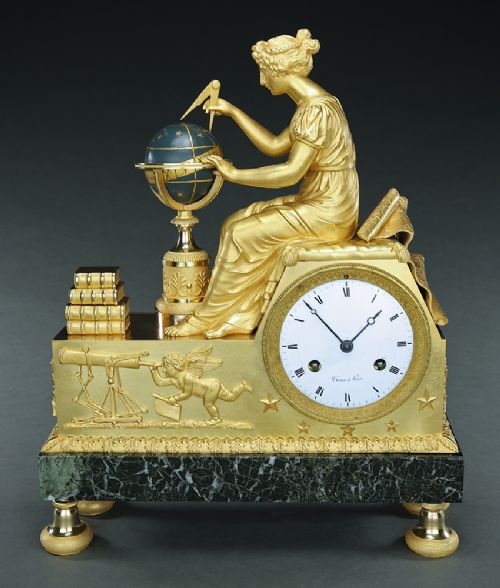
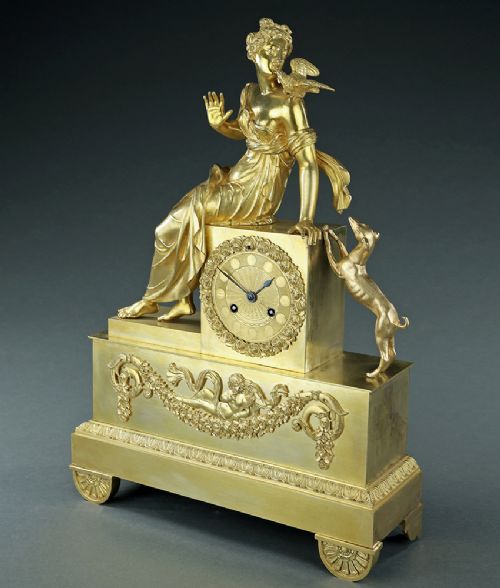
A gilt figure clock brings together ornamental metalwork and classical or allegorical figures to anchor a grand mantelpiece.
Gilt Figure Clock
A gilt figure clock integrates a functional timekeeping movement with cast metal ornamentation and figurative sculpture. These pieces span the nineteenth century, including Victorian, Regency, and Napoleon III periods, often adopting French Empire, Rococo, and Louis XVI styles.
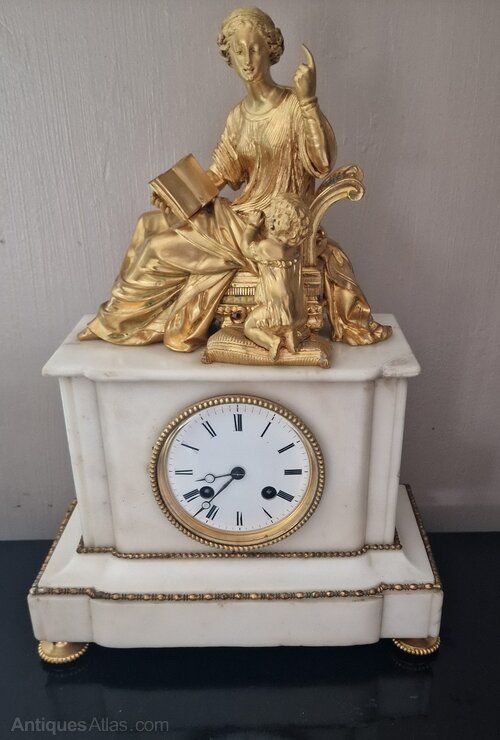
The form typically manifests as a mantel clock, sometimes accompanied by matching garniture sets or wall clocks. Figures depicting historical, mythological, or allegorical subjects stand beside or atop the dial housing.
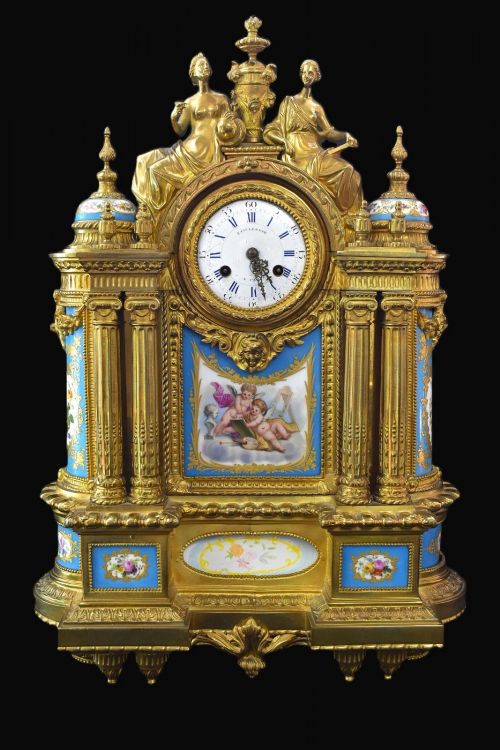
Buyers encounter examples ranging from architectural marble plinths carrying bronze figures to elaborate ormolu compositions featuring cherubs, literary characters, and classical deities.
Materials and construction methods
The construction relies heavily on ormolu and gilt bronze, often paired with contrasting elements of white or rouge marble, brass, and enamel dials. Workshops utilised mercury gilding or electroplating to achieve the characteristic golden surface sheen on bronze castings.
Movements were typically housed within architectural or sculptural bronze cases, sometimes protected beneath glass domes alongside carved alabaster or porcelain components. Complex clock garniture sets integrated matching candelabra manufactured in the same metalworking traditions.
Diana the Hunter stands ready with her bow while a Meissen harlequin dances beside a miniature windmill.
Distinctions in craftsmanship
The integration between the sculptural figures and the clock case separates standard production from exceptional workshops. Furthermore, signed movements by notable makers and intact enamel dials without hairline fractures elevate the standing of the piece.
Etienne Lenoir·Berger Paris·Charpentier Paris·Phillipe H Mourey·Deniere Et Fils·Japy Freres·F Marti·Russels Liverpool
The Gilt Figure Clock Glossary
- Ormolu
- Gilded bronze produced by applying a mixture of gold and mercury to a bronze base, followed by heat treatment. This technique creates a durable golden finish characteristic of French decorative arts.
- Garniture set
- A decorative grouping consisting of a central clock flanked by matching ornaments such as urns or candelabra. These sets were designed to display symmetrically on a mantelpiece.
- Fusee movement
- A conical pulley mechanism connected to a chain or cord that equalises the driving force of the mainspring as it unwinds. This mechanical addition improves timekeeping accuracy.
- Cartel clock
- A wall-mounted clock housed in an ornate, asymmetrical frame of gilt metal or carved wood. They gained popularity during the Rococo revival period.
- Chasing
- The manual process of refining cast metal details using small punches and hammers. High-level chasing adds texture, hair strands, and fabric patterns to figures.
Gilt Figure Clock: Frequently Asked Questions
How do I wind the clock?
Use the appropriate winding key on the arbors located on the dial face. Turn gently until resistance is felt.
Avoid over-winding to prevent damage to the mainspring and internal gear trains.
Are these clocks accurate?
Nineteenth-century mechanical movements can keep reasonable time when properly serviced and adjusted. Slight daily gains or losses are normal for antique pendulum clocks.
Professional calibration helps stabilize the escapement mechanism.
What is a garniture?
A garniture comprises matching ornamental objects designed to sit alongside the clock. These often include candelabra or decorative urns sharing identical material finishes.
Together they create a unified decorative display on a fireplace mantel.