




Gilt Enamel Glass
Gilt enamel glass pieces combine luminous coloured glass with intricate metallic painting, bringing decorative brilliance to any interior.
Gilt Enamel Glass
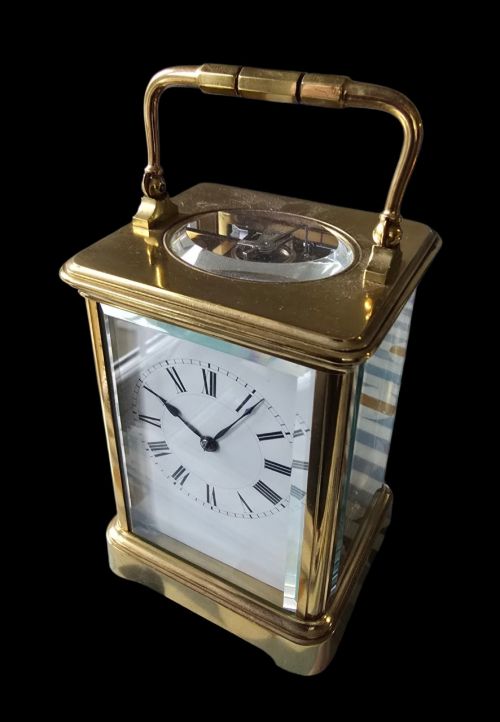
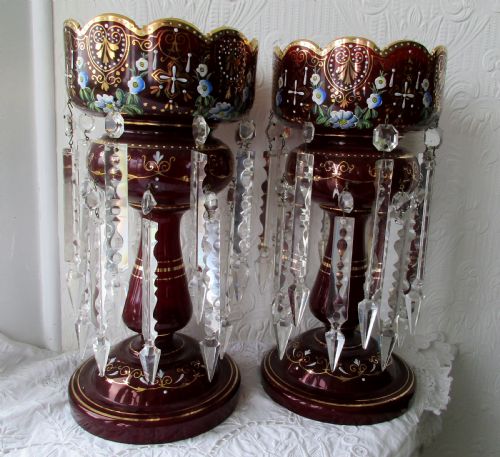
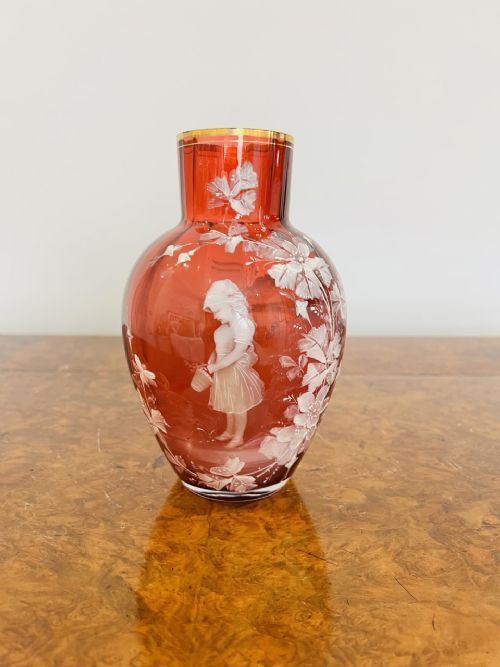
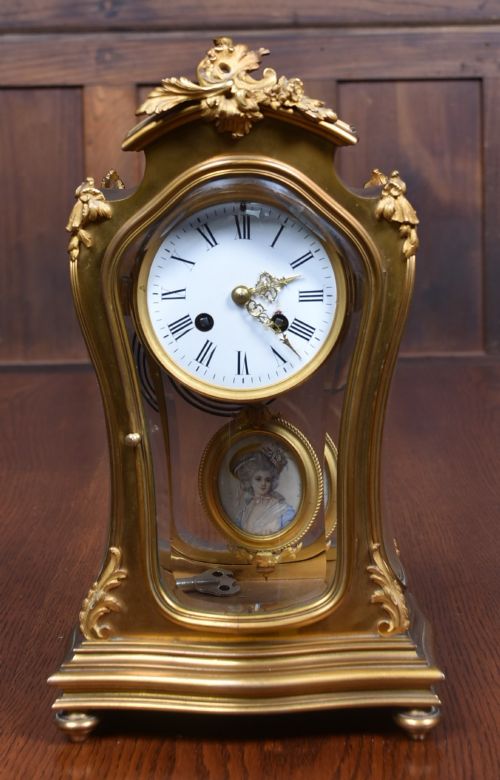
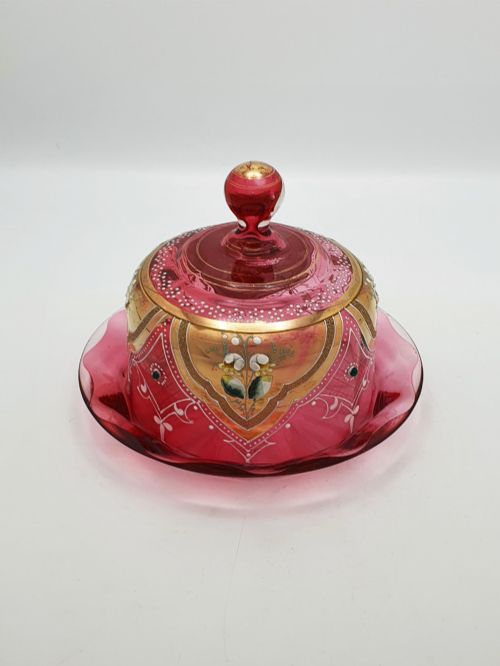
The objects span domestic and display items, including mantel clocks framed in gilt brass alongside ruby glass lustres and covered cheese dishes. English, Russian, and Bohemian origins appear throughout the listings, demonstrating diverse regional approaches to glass decoration. Cranberry and ruby hues provide a vibrant background for the applied gold leaf and enamel work.
Materials and technique
Glass forms provide the foundational structure, frequently utilising cranberry or ruby coloration achieved through specific mineral additions during production. Artisans applied opaque and translucent enamels onto the glass surface by hand before fusing the pigments with heat. Gold leaf and gilt details were then painted or pressed onto the exterior, sometimes combined with brass mounts, ormolu, and silver fittings.
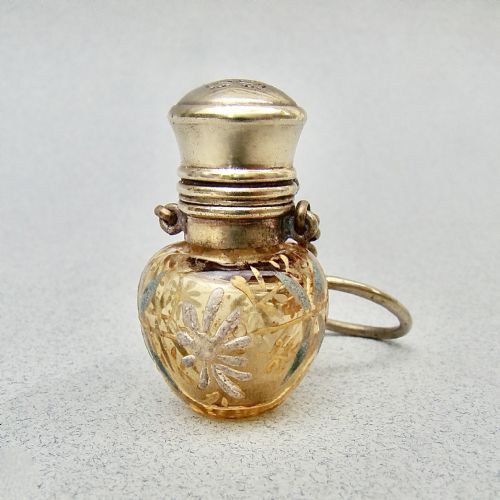
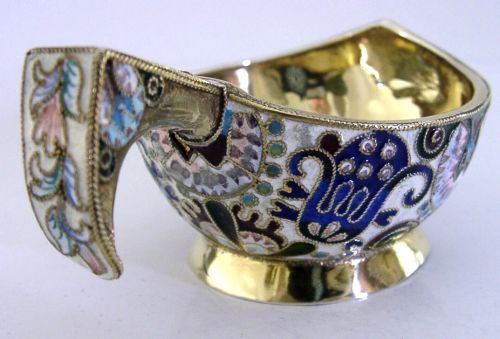
Makers integrated various metallic elements to complement the glass bodies, incorporating gilt bronze and solid silver in pieces like scent bottles and kovsh cups. The application of champlevé and guilloché enamel techniques appears on related components such as clock dials and panels. This combination of glassblowing, metal casting, and precision enamelling required distinct specialist workshops.
Gilt Enamel Glass Retail Price Guide 2026
Typical asking prices for gilt enamel glass among the pieces listed under this phrase on Sellingantiques today, from the lower quarter to the upper quarter. They describe what is for sale here now, not the wider market.
Listings span the nineteenth century to the early twentieth century, incorporating French, English, and Russian origins.
Distinctions in quality
The refinement of the enamel work and the crispness of the gilding set superior examples apart from standard production. Artisans who executed delicate, hand-painted motifs with precise registration achieved a higher degree of visual depth than those using simpler stencilled designs. Weight and substance in the underlying glass and metal mounts also indicate superior manufacturing standards.
Integration between the decorative glass and its mounting hardware distinguishes master workshops from commercial producers. Pieces featuring fully signed movements, hallmarked silver, or documented makers demonstrate greater craftsmanship. The preservation of the original gold leaf and the vibrancy of the coloured glass remain central to the overall standard of the object.
Henri Jacot·Moser Glass·Thomas Webb·Samuel Marti·Drocourt
The Gilt Enamel Glass Glossary
- Cranberry glass
- A transparent pinkish-red glass created by adding gold chloride to the molten batch. This distinctive material forms the body of many Victorian vases and decorative vessels.
- Gilding
- The application of gold leaf or powdered gold onto the surface of glass or metal. This technique highlights raised enamel patterns and architectural mounts.
- Guilloché
- A decorative mechanical engraving technique that produces precise, intricate geometric patterns beneath a translucent enamel layer. It frequently appears on small luxury items like scent bottles.
- Champlevé
- An enamelling process where troughs or cells are carved into a metal surface and filled with vitreous enamel paste before firing. The technique produces robust coloured designs on clock panels and frames.
- Ormolu
- Gilded bronze furniture and decorative hardware produced by applying a mercury-gold amalgam to cast brass or bronze. It provides heavy metallic framing for glass bodies and clock dials.
Gilt Enamel Glass: Frequently Asked Questions
What is gilt enamel glass?
Gilt enamel glass refers to decorative glassware adorned with painted enamel designs and metallic gold leaf or gilding. These items combine coloured glass bodies with detailed surface artwork.
Craftsmen produced these pieces during the nineteenth and early twentieth centuries across various European workshops. They served as ornamental vessels, scent bottles, and display objects for affluent homes.
Where were these glass items made?
Production centres spanned several European regions, with significant contributions from English, French, and Bohemian glasshouses. Each region developed distinct palettes and decorative motifs.
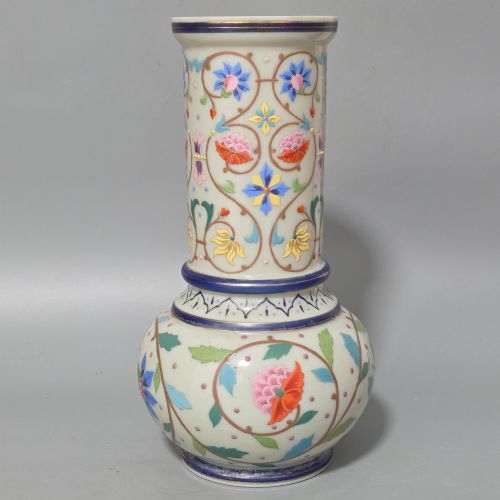
French makers frequently combined glass bodies with ormolu mounts and enamel clock panels. Bohemian and English manufacturers focused on rich cranberry glass vessels and layered tapestry vases.
How should I care for antique glass?
Antique glass and enamel require gentle cleaning with a soft, dry cloth to remove dust. Avoiding harsh chemical cleaners preserves the delicate surface gilding.
Keeping items away from direct sunlight prevents fading in the coloured glass and enamel pigments. Secure placement protects fragile glass rims and applied brass mounts from accidental impact.