





Gilt Edge Porcelain
Gilt edge porcelain pieces bring hand-painted artistry and metallic trim to cabinets and tables across centuries of ceramic design.
Gilt Edge Porcelain
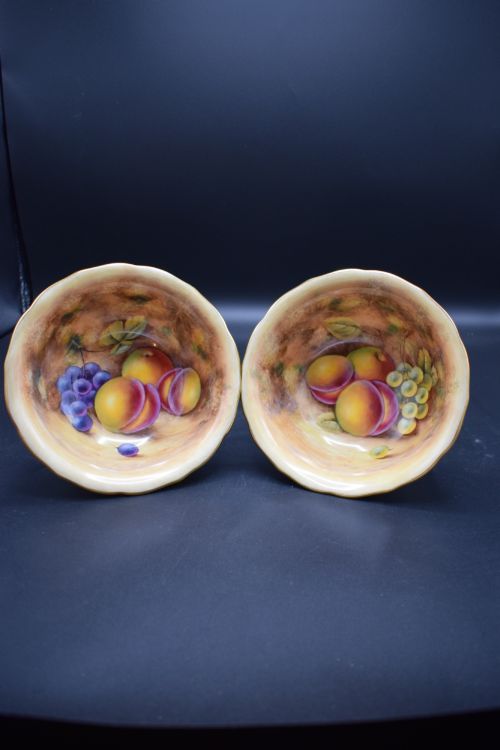
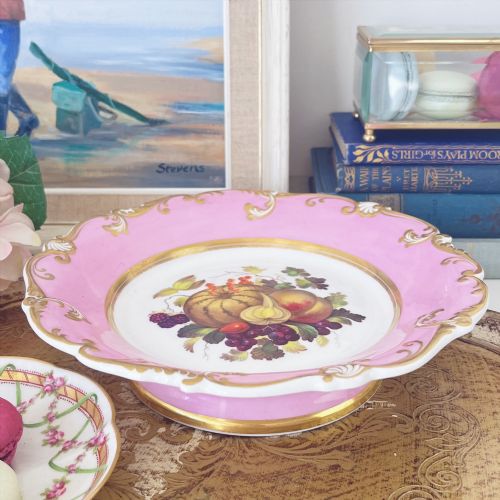
When buyers search for gilt edge porcelain, they look at decorative plates, cabinet plates, chargers, and teacups formed from hard-paste porcelain, bone china, and earthenware. These items span periods from the eighteenth century through the Victorian era and into the early twentieth century.
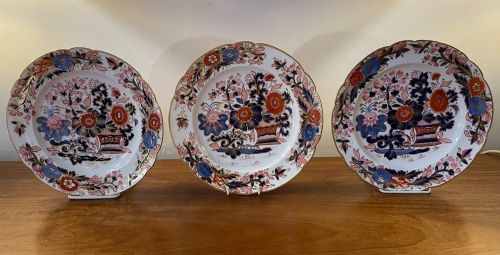
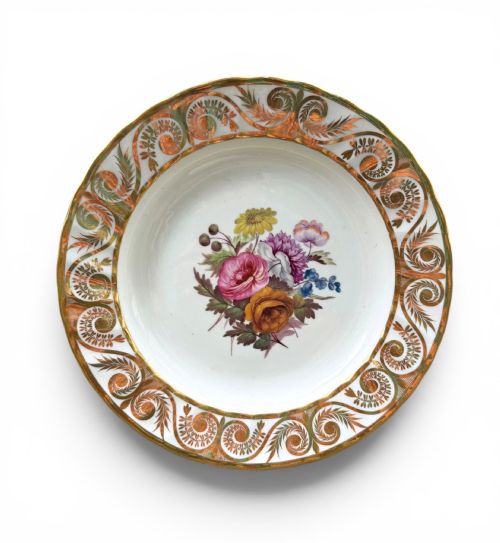
You will most frequently meet nineteenth-century English and continental forms on this page, including floral cabinet plates and Japanese Imari chargers with metallic borders. Makers applied gold leaf and gilding to accentuate scalloped rims, shaped edges, and painted central scenes.
The objects serve primarily as cabinet displays, dessert services, and decorative dishes rather than utilitarian tableware. Their survival depends heavily on the resilience of the glaze and the adhesion of the metallic trim applied by workshops.
Materials and production methods
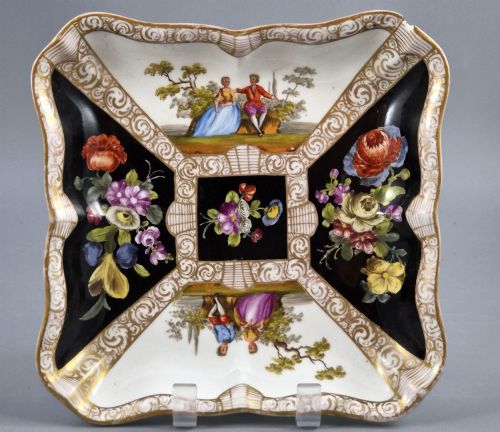
Potteries shaped these pieces using soft-paste and hard-paste porcelain, bone china, and ironstone before applying enamel pigments by hand. Artisans painted floral sprays, landscapes, and Watteau scenes directly onto the ceramic body prior to or during secondary kiln firings.
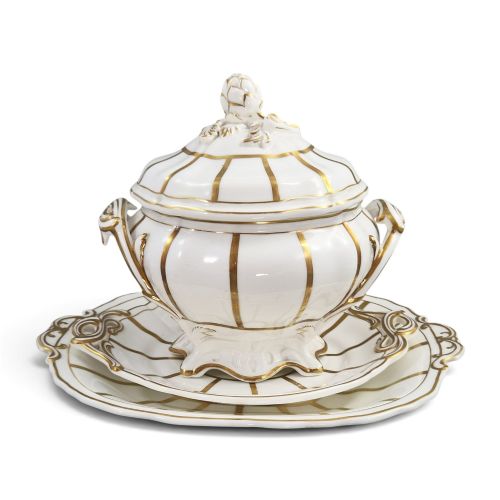
Gold leaf, gilt, and heavy gilding were then applied to rims and edges, sometimes combined with raised enamel work or pate-sur-pate techniques. The pieces underwent precise firing to bond the metallic borders permanently to the underlying glaze.
Gilt Edge Porcelain Retail Price Guide 2026
Typical asking prices for gilt edge porcelain among the pieces listed under this phrase on Sellingantiques today, from the lower quarter to the upper quarter. They describe what is for sale here now, not the wider market.
Some nineteenth-century decorators apparently forgot birds had wings until they added them directly over the gold trim.
Factors that separate grades of quality
The standard of painting on the ceramic surface dictates much of the standing of a piece, separating factory-printed designs from meticulous hand-painted artistry by named artists. Precision in the application of the gold leaf and the crispness of the moulded or scalloped edge further divide standard production from exceptional output.
The historical significance of the manufactory and the complexity of the ground colour or border decoration determine where an object sits in the wider hierarchy. Preservation of the original gilding without extensive rubbing or modern restoration maintains the integrity of the design.
Royal Crown Derby·Meissen·Davenport·Royal Worcester·Chamberlain Worcester·Flight Barr And Barr·Mintons·Moorcroft Macintyre·Ernst Wahliss·Coalport
The Gilt Edge Porcelain Glossary
- Gilding
- The application of gold leaf or powdered gold to the edges and borders of ceramic vessels. It provides the characteristic metallic boundary seen on cabinet plates.
- Cabinet plate
- A decorative ceramic plate intended for display in a cabinet or on a wall rather than for everyday dining. These often feature elaborate hand-painted scenes.
- Imari palette
- A decorative style utilising underglaze blue, iron red, and gilt, originating from Japanese export wares and widely copied in Europe.
- Bone china
- A type of soft-paste porcelain containing bone ash, developed in England to create a durable, bright white body suitable for intricate gilding.
- Pate-sur-pate
- A ceramic decoration method where liquid clay is built up in successive layers on a contrasting background to create a low relief cameo effect.
Gilt Edge Porcelain: Frequently Asked Questions
What is gilt edge porcelain?
Gilt edge porcelain refers to ceramic tableware and decorative items finished with a border of gold leaf or metallic gilding along the rims.
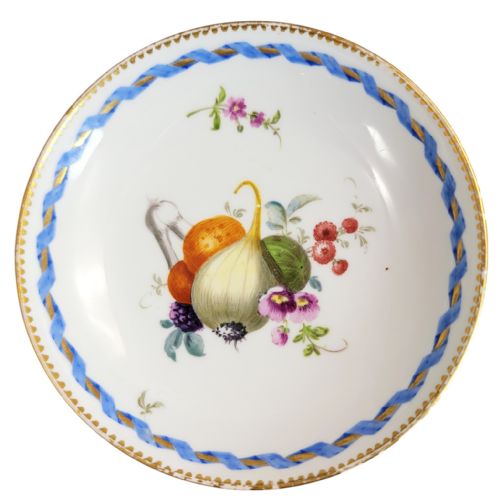
These pieces range from eighteenth-century French and English dessert plates to twentieth-century Japanese export chargers and Victorian tea services.
How do I date these porcelain pieces?
Dating relies on factory backstamps, ceramic body composition, and stylistic markers such as Neoclassical borders or Rococo Revival moulding.
Changes in porcelain formulas, from soft-paste to bone china and hard-paste, also help narrow down the period of manufacture.
Can I use these plates for dining?
Most antique gilt edge porcelain is intended for display as cabinet plates, chargers, or decorative dishes rather than heavy daily use.
Hand-washing is essential to preserve the delicate enamel painting and prevent the metallic gilding from wearing away.