




Gilt Chinoiserie Lamp Pair
These gilt chinoiserie lamp pair examples bring together Asian ceramics and European metalwork to illuminate a room with rich texture and historical depth.

Gilt Chinoiserie Lamp Pair
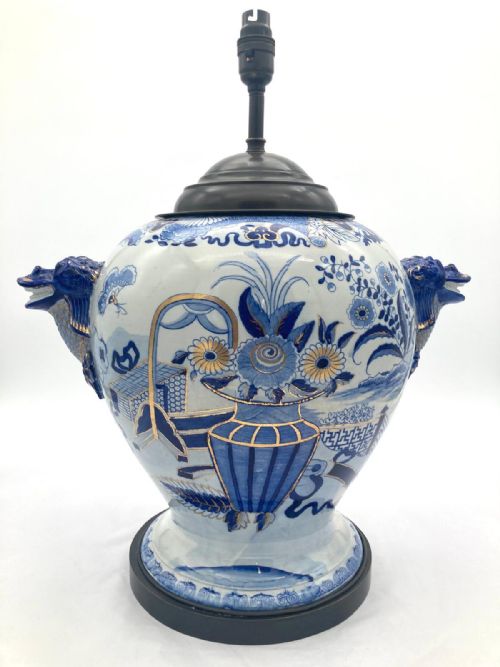
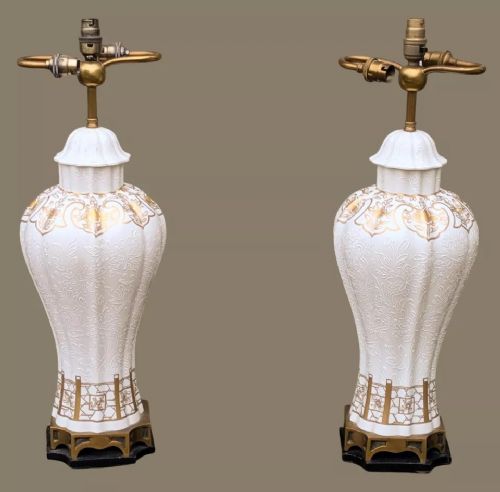
A gilt chinoiserie lamp pair consists of two matching light fittings created from converted vases or decorative vessels, frequently bearing Chinese export designs or European interpretations of Asian motifs. These pieces combine decorative arts from various periods, including the eighteenth century, nineteenth century, and early decades of the twentieth century.
The objects take the form of table lamps built from porcelain, enamel, or pottery bodies mounted on metal bases, often accompanied by handmade shades. Origin styles range from Regency chinoiserie and French chinoiserie to Victorian interpretations and Dutch Delft influences.
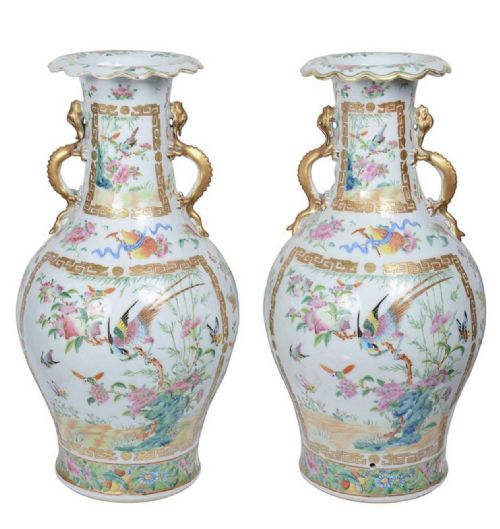
Buyers seeking a gilt chinoiserie lamp pair encounter formations originating from diverse traditions, such as Cantonese porcelain, Chinese cloisonné, Paris porcelain, and Japanese Imari. Many examples utilise converted vases, turning antique vessels into functional household lighting.
How They Were Made
Makers constructed these table lamps by taking existing ceramic or enamel vessels and adapting them for electrical fittings, often mounting the bodies on cast metal foundations. Artisans applied surface gilding, gold leaf, or cast ormolu mounts to enhance the decorative presence of the ceramic elements.
The material palette draws heavily on porcelain, brass, fabric, ormolu, gilt, enamel, gilt bronze, and gold leaf. Ceramic bodies like ironstone, powder blue porcelain, and cloisonné enamel provide the structural foundation for the metal ornamentation.
Secretly, every lamp pair is a converted vase waiting for someone to forget it plugs into the wall.
What Varies in Quality
The refinement of the metal mounts sets examples apart, with cast ormolu and gilt bronze displaying superior definition compared to simpler brass fittings. The integration between the ceramic body and the metal base dictates the overall harmony of the piece.
The artistic execution of the painted or enamelled surfaces determines the visual weight of the pairing. Hand-painted porcelain details and crisp enamel work demonstrate higher levels of craftsmanship across the eras represented.
Hicks and Meigh
The Gilt Chinoiserie Lamp Pair Glossary
- Ormolu
- Gilded bronze mounts applied to furniture and ceramics, popular in French and Regency decorative arts. This technique adds structural weight and ornamental detail to the finished object.
- Cloisonné
- An enamelling technique where metal wire forms compartments on a base, which are then filled with coloured enamel paste and fired. The resulting surface presents intricate patterns separated by thin metal lines.
- Chinoiserie
- European artistic styles that reflect Chinese artistic influences, prevalent in furniture, porcelain, and interior decoration. This aesthetic blends Asian motifs with Western forms.
- Canton
- A style of Chinese export porcelain featuring bright colours and detailed panels of figures, flowers, and birds. These wares were produced in Southern China primarily for Western markets.
Gilt Chinoiserie Lamp Pair: Frequently Asked Questions
How do I wire antique lamps?
Conversion work involves threading electrical cord through the body or mounting hardware of the converted vessel. Professional rewiring ensures modern safety standards while preserving the antique structure.
Most pieces require standard bulb fittings and custom shade fixings designed to sit securely atop the mounted ceramic body without damaging the antique material.
What is Chinese export porcelain?
This category includes ceramics manufactured in China specifically for export to European and American markets from the sixteenth through the nineteenth centuries. Designs often blended traditional Eastern techniques with Western shapes and preferences.
Such ceramics frequently form the bodies of converted table lamps, combining utilitarian purpose with historical ceramic artistry.
How are periods identified?
Dating relies on the manufacturing characteristics of the ceramic body, the style of the hand-painted decoration, and the composition of the metal mounts. Regency and Victorian interpretations exhibit distinct stylistic choices in their gilding and form.
Comparison with documented examples from eras like the nineteenth century or the 1930s helps establish the timeline of the base vessel and its mounts.
Where should I place these lamps?
These decorative objects function well on side cabinets, sideboards, or large tables where their height and gilt details can catch the light. Their dual nature as art objects and light sources suits formal sitting rooms and studies.
Pairing them together creates symmetry on either side of a larger piece of furniture or architectural feature.