


Vintage Orientalist Table Lamps
These vintage orientalist table lamps bring exotic character and rich texture into a room.

Vintage Orientalist Table Lamps
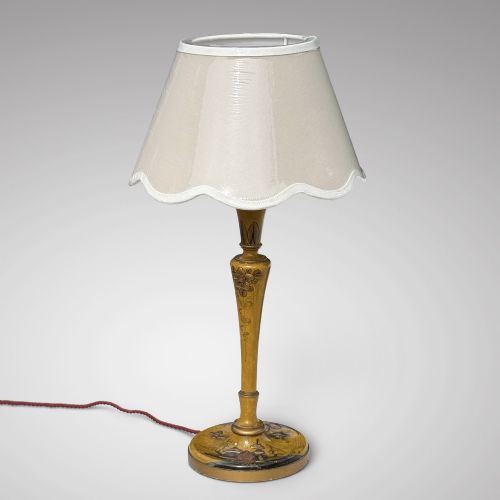
When you search for vintage orientalist table lamps, you encounter decorative lighting drawing on distant aesthetics from the nineteenth century through the interwar decades. These pieces borrow freely from diverse traditions, ranging from the Near East to East Asia.
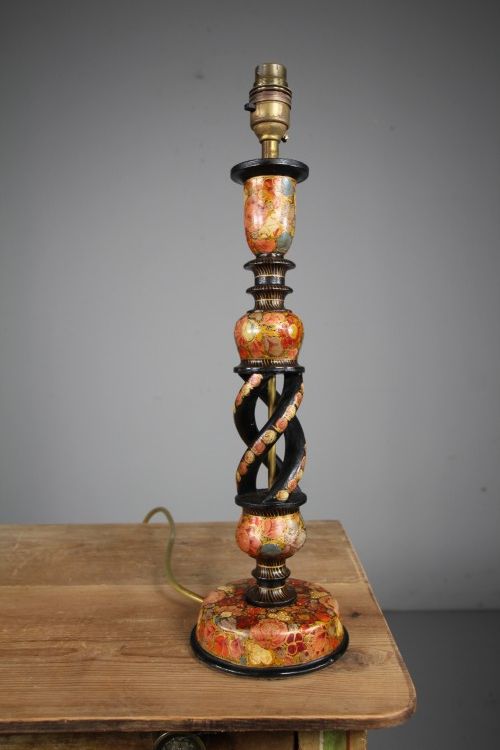
The selection here encompasses several distinct interpretations of foreign styles created for Western interiors. You find items rendered in the Chinese taste alongside Kashmiri woodwork and pressed brass from the Edwardian era.
Forms vary from tall timber columns to patinated metal figures and lacquered vessels adapted for illumination. Many date from the nineteen-twenties, though earlier nineteenth-century examples also appear among the offerings.
How they were made
Maker construction relies heavily on traditional woodcraft, metalworking, and surface decoration such as lacquer and papier-mache. Artisans shaped timber into architectural pagoda forms or turned tall lamp bodies by hand.
An elephant tamer once held a French perfume, but now simply stands guard beside your evening reading.
What varies in quality
Quality rests upon the depth of detail in the surface decoration and the integrity of the base material. Hand-painted lacquer and finely chased brass display superior artisan skill compared to simpler commercial output.
The success of the conversion from other objects, such as perfume lamps or vases, dictates the overall proportion and balance. Scale also plays a part, with larger matched pairs commanding greater presence in a room.
Argilor Paris
The Vintage Orientalist Table Lamps Glossary
- Chinoiserie
- European interpretation and imitation of Chinese and East Asian artistic traditions, popular in furniture and decorative objects. It often employs motifs of landscapes, pagodas, and figures.
- Anglo-Japanese
- A nineteenth-century design style combining British construction with Japanese aesthetic principles and structural simplicity. This movement influenced furniture and decorative arts from the late Victorian period.
- Cairoware
- Metalwork originating from Islamic workshops in Cairo during the late nineteenth and early twentieth centuries, typically brass inlaid with silver and copper. These items were widely collected by European travellers.
- Toleware
- Painted or lacquered metalware, usually tin or sheet steel, finished with a durable pigmented varnish. It frequently appears in decorative household items.
- Veilleuse
- A French night light or food warmer, often ceramic or porcelain, enclosing a small flame. In lighting terms, it refers to small decorative figural lamps from the Art Deco era.
Vintage Orientalist Table Lamps: Frequently Asked Questions
What periods do these lamps come from?
The pieces span from the nineteenth century through the Edwardian era and into the nineteen-twenties and thirties. This encompasses distinct design movements including Art Deco and the Mamluk Revival.
Most items date from the early twentieth century, reflecting a sustained European fascination with eastern decorative arts during the interwar years.
How do I identify a Kashmiri lamp?
Kashmiri pieces typically utilise turned timber, lacquered surfaces, or papier-mache construction. They often feature intricate hand-painted floral or geometric patterns inspired by traditional shawl designs.
These lamps range from standard table heights to tall, slender columns designed to command attention in a room.
What materials are common in these designs?
Construction materials include brass, wood, porcelain, metal, and lacquer over timber. Some examples utilise pressed brass or silver plating to achieve an ornate metallic sheen.
Fabric shades and painted toleware also appear, contributing to the varied textures found across the selection.
Are these lamps rewired for modern use?
Many listings indicate that pieces have been updated or rewired for contemporary electrical standards. This ensures safer integration into modern homes while preserving the antique body.
Buyers should examine specific descriptions to confirm the current wiring status of each individual lamp.