
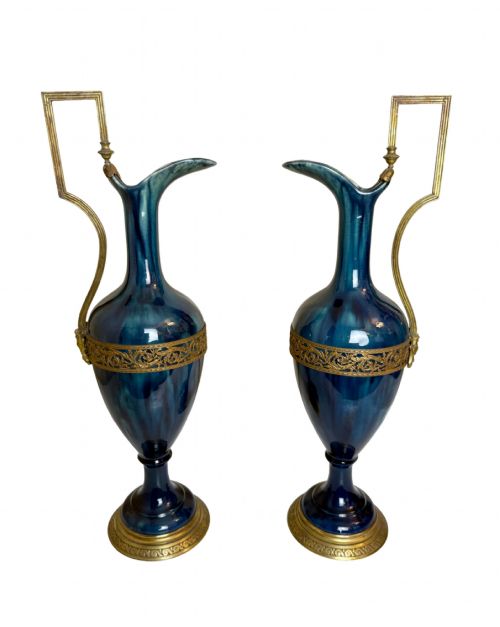
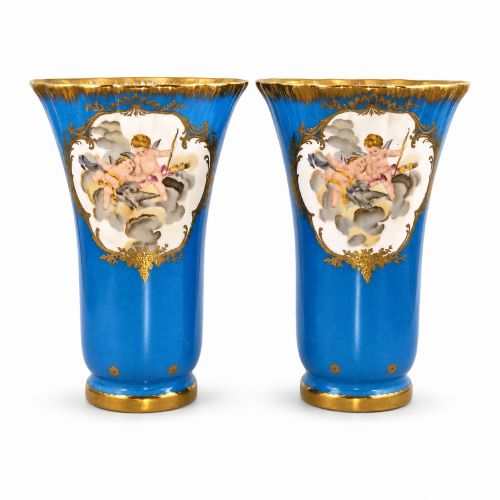
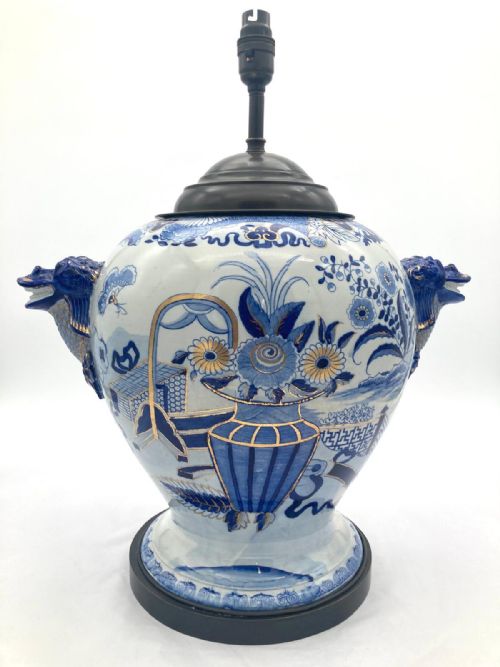
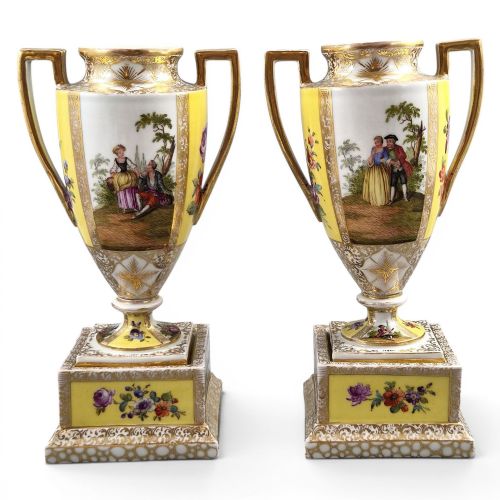

Gilt Ceramic Vase Pair
When you search for a gilt ceramic vase pair, you find matching vessels of earthenware and porcelain enriched with gold leaf and metallic finishes.
Gilt Ceramic Vase Pair
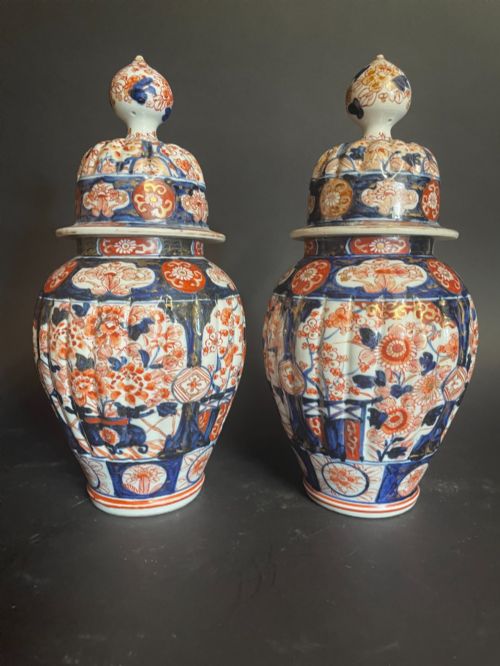
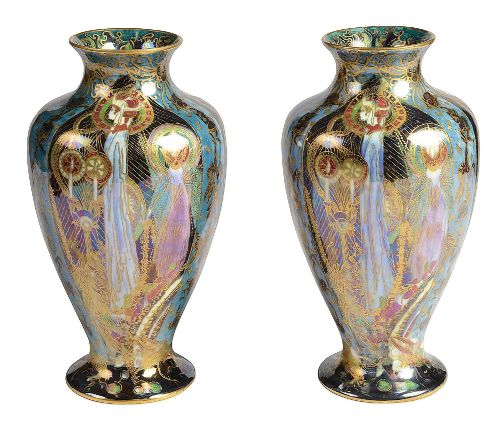
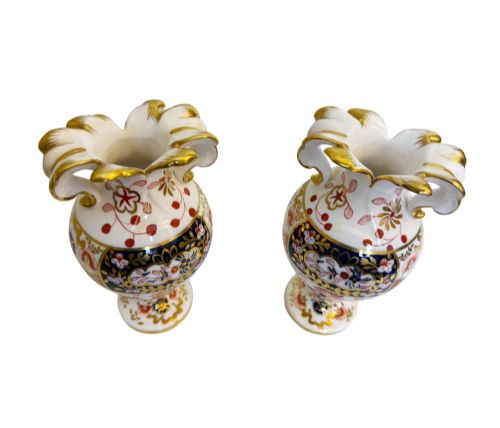
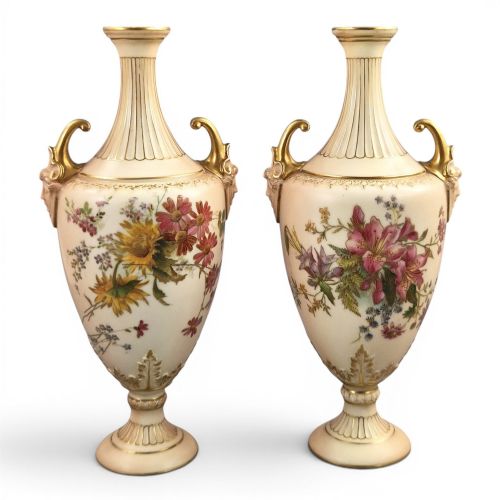
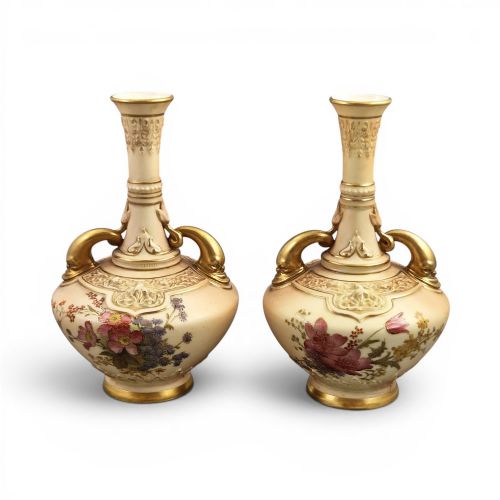
A gilt ceramic vase pair brings symmetrical display pieces into domestic spaces, appearing in forms such as baluster vessels, campana shapes, lidded jars, and urns. These matching sets emerge across the nineteenth and early twentieth centuries from diverse origins, including English factories, French workshops, and Japanese kilns.
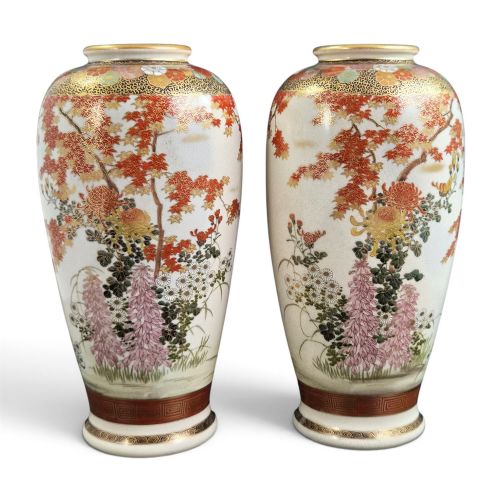
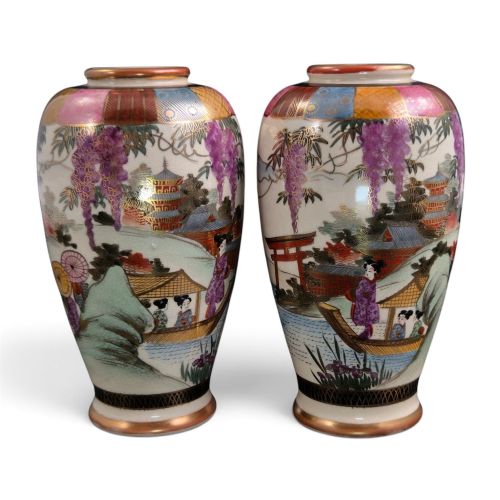
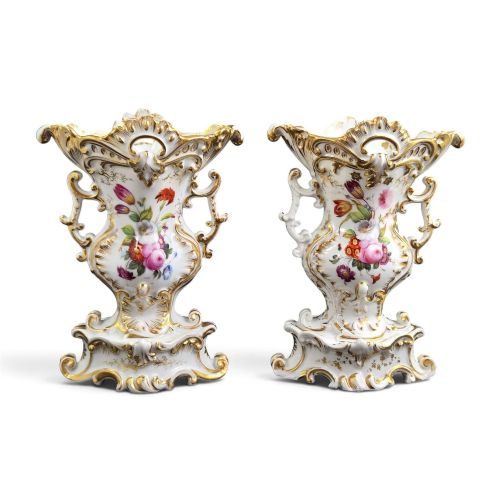
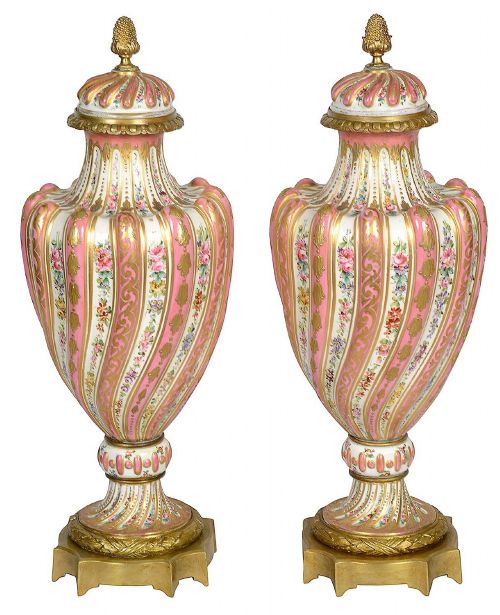
Buyers meet pairs decorated with hand-painted floral scenes, landscape panels, and elaborate surface patterns. Many examples combine porcelain or earthenware bodies with applied metal mounts, bronze trimmings, or handles modelled as dolphins and cornucopias.
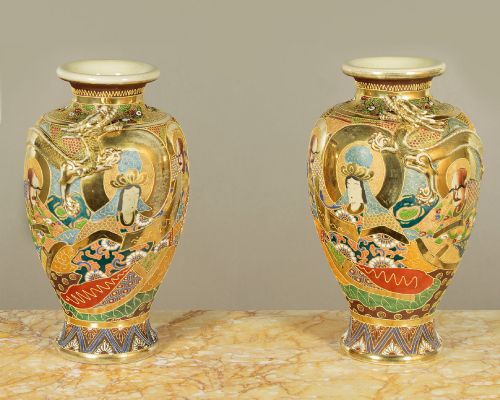
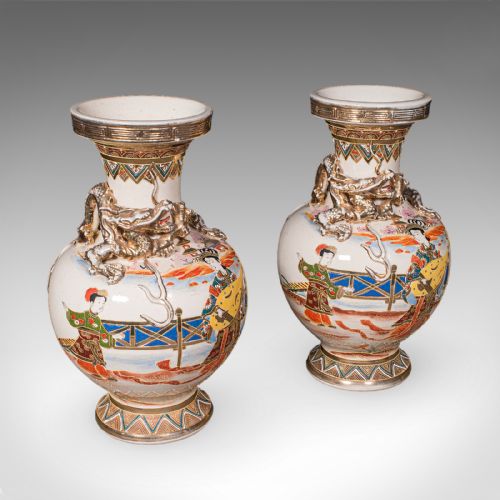
The selection spans traditional regional styles, from Satsuma earthenware and Imari porcelain to European factory wares influenced by French taste and domestic Revival movements. These dual vessels serve both decorative display and functional interior lighting through period conversions into table lamps.
Materials and construction methods
Potters shaped these vessels from ceramic, earthenware, and porcelain bodies, frequently applying enamel pigments and gold leaf by hand to the exterior surfaces. Gilding techniques varied from painted gold highlights to extensive leaf application framing pictorial panels and geometric motifs.
Makers integrated structural metal components, attaching gilt bronze mounts, brass fixtures, and ormolu settings to secure handles, bases, and lids. These combined media required distinct firing and assembly stages to unite the glazed ceramic body with metallic decorative elements.
Distinctions in execution and finish
Quality rests in the precision of the hand-painting, the crispness of the modelled ceramic forms, and the preservation of the delicate gold leaf and enamel details. Finer pairs demonstrate meticulous brushwork in complex figural or botanical scenes alongside balanced proportions across both matching vessels.
The integration of metal mounts and the retention of original factory marks or artist signatures indicate higher tier production. Superior examples maintain intact gilding without extensive rubbing, reflecting careful handling and superior initial firing standards.
Jacob Petit·Samson Paris·Royal Worcester·Kinkozan
The Gilt Ceramic Vase Pair Glossary
- Baluster
- A vertical architectural form resembling a pillar, swelling towards the lower section. This shape provides a stable and traditional profile for tall decorative vessels.
- Satsuma
- A type of Japanese earthenware featuring a crackled ivory glaze decorated with intricate enamel and gilt designs. It originated in the Satsuma Province and gained international popularity during the Meiji period.
- Ormolu
- Finely ground high-carat gold applied to a bronze base object using a mercury-gilding process. It provides rich metallic trim and mounts on European porcelain and ceramic bodies.
- Imari
- A traditional Japanese style of porcelain exported widely, characterised by a distinctive palette of underglaze blue, iron red, and abundant gilt highlights. European factories frequently copied these vibrant aesthetic schemes.
Gilt Ceramic Vase Pair: Frequently Asked Questions
How were these vases displayed originally?
These matching pairs traditionally stood upon mantelpieces, sideboards, or dedicated pedestals in nineteenth-century reception rooms. Their symmetrical forms provided visual balance to interior decorative schemes.
Owners frequently positioned them in prominent public rooms to demonstrate refinement and taste to visiting guests.
Can converted vase lamps be reversed?
Converting ceramic vessels into table lamps often involved drilling the base or securing wiring through the top aperture. Reversing this process requires professional restoration to repair structural alterations.
Many collectors choose to live with the lamps as functional lighting rather than attempting to restore the original sealed vessel state.
How do I identify Satsuma pairs?
Satsuma pairs typically exhibit a characteristic cream-coloured earthenware body covered in fine network crackle glaze. Artisans layered dense enamel colours and raised gold leaf over these surfaces.
Signatures or workshop stamps frequently appear on the underside, naming studios from Kyoto or Kobe active during the Meiji period.
What distinguishes European factory wares?
European pairs from French and English producers utilise hard-paste or soft-paste porcelain bodies bearing distinct factory marks. Their decorative vocabularies draw heavily on classical revival styles, Sevres influences, and intricate hand-painted floral motifs.
These pieces often incorporate cast bronze or ormolu mounts that reflect Western metalworking traditions of the nineteenth century.