

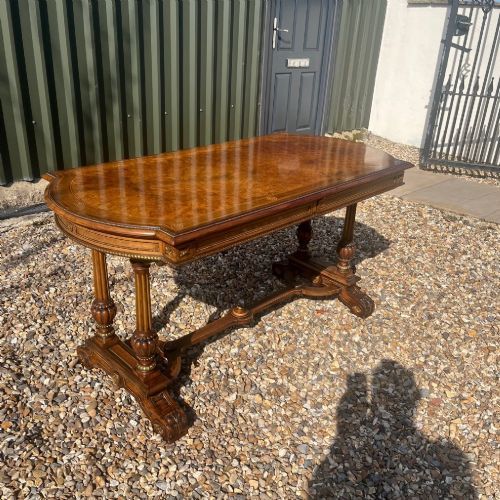
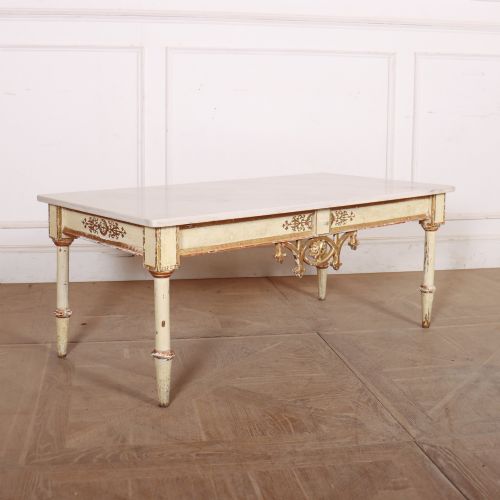


Gilt Carved Centre Table
A gilt carved centre table anchors a grand room with gilded timber and stone, bringing decorative presence to the middle of a floor.
Gilt Carved Centre Table
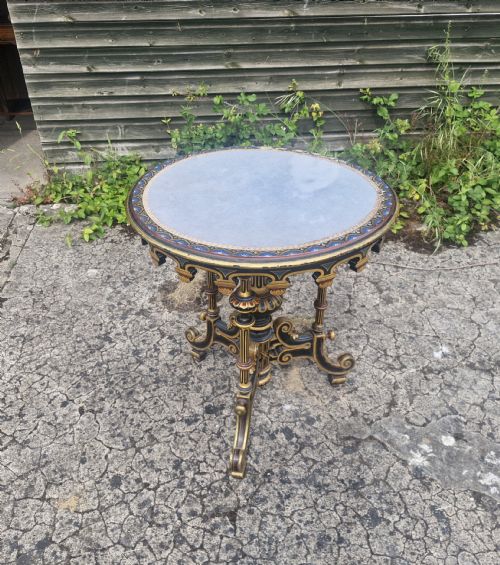
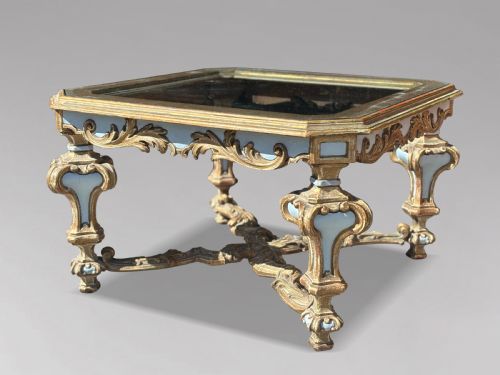
A gilt carved centre table stands freestanding in a room, designed to be viewed from every side rather than pushed against a wall. The pieces matching this search phrase span centuries from the Regency era through the Victorian period and into the early twentieth century, reflecting varied European and global workshops.
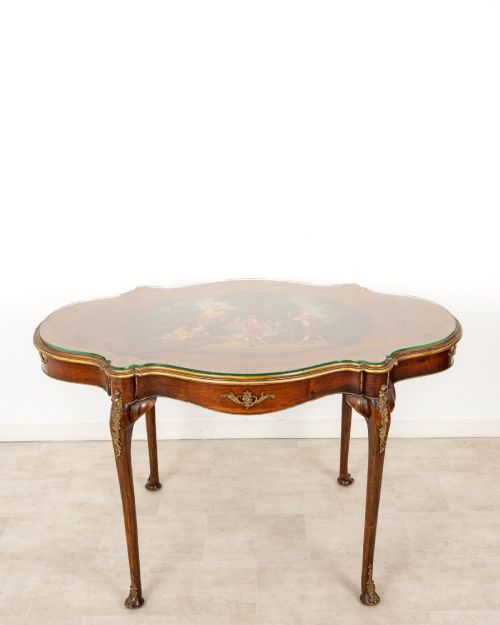
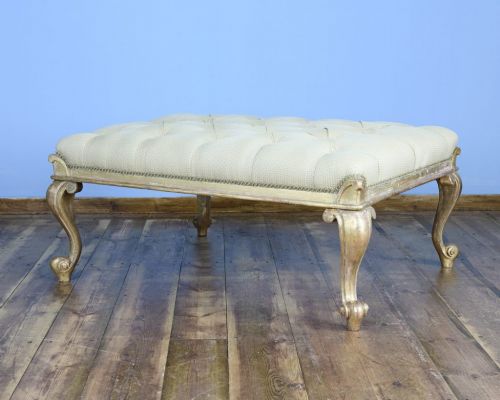
Most examples combine carved timber structures with heavy marble tops, while others feature marquetry inlaid wood, glass, or decorated surfaces. Alongside traditional large tables, the selection includes low coffee tables, occasional tables, and side tables adapted from earlier designs.
Origins stretch across England, France, Italy, Germany, and beyond, drawing on stylistic revivals such as Louis XV, Louis XVI, Baroque, and Neoclassical. Makers ranged from renowned London cabinet makers to Florentine workshops and Parisian bronze workers.
Materials and Construction
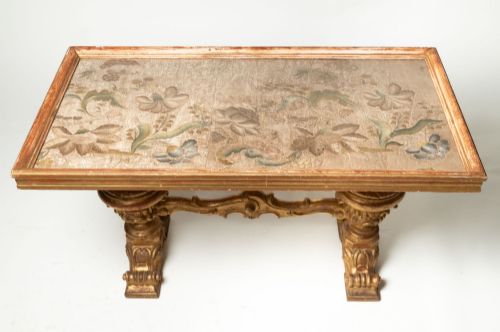
Makers shaped structural carcasses from dense timbers such as mahogany, walnut, rosewood, and pine, applying gold leaf, parcel gilt, or paint directly onto carved wood. Ormolu mounts, brass inlay, and bronze ornaments provide metallic contrast against the warm timber tones.
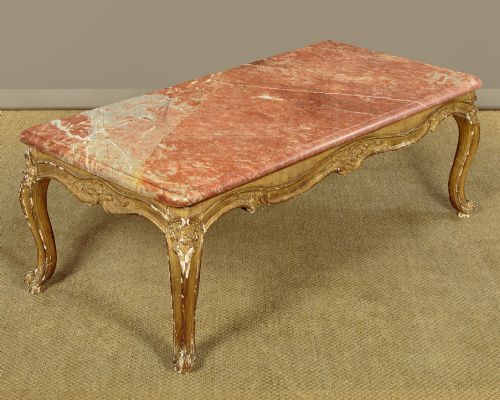
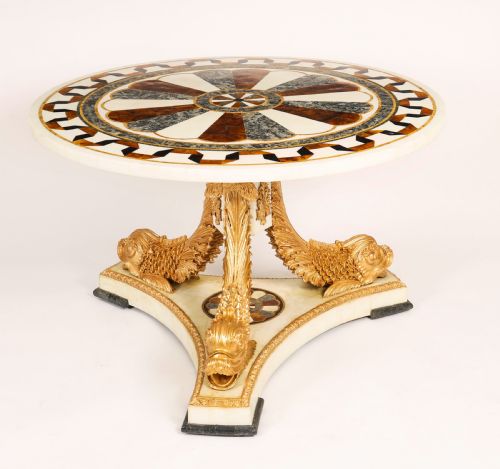
Table tops frequently employ heavy slabs of marble, porphyry, or pietra dura inlay, requiring robust underframes to support the stone weight. Gilding techniques applied gold leaf over gesso and bole, creating the characteristic reflective sheen on carved acanthus leaves, dolphin motifs, and cabriole legs.
Gilt Carved Centre Table Retail Price Guide 2026
Typical asking prices for gilt carved centre table among the pieces listed under this phrase on Sellingantiques today, from the lower quarter to the upper quarter. They describe what is for sale here now, not the wider market.
The documented periods span from the Georgian era and Regency through Victorian, Edwardian, and into the twentieth century.
Craftsmanship and Proportion
Quality rests in the crispness of the hand-carved ornament and the depth of the gilding, where superior examples display sharp undercutting rather than soft, moulded contours. The choice of top matters significantly, with thick, polished marble or intricate pietre dure mosaic work elevating the piece far above simpler painted wooden surfaces.
Structural integrity dictates longevity, particularly in how heavy stone tops meet wooden frames that must bear the downward load without warping. Maker attribution, through signatures or distinctive workshop practices, separates standard production from exceptional artistry.
A. Beurdeley·Holland + Son
The Gilt Carved Centre Table Glossary
- Giltwood
- Timber that has been coated with gold leaf or gold paint over a prepared gesso ground. This finish catches the light and defines carved decorative elements.
- Ormolu
- Gilded bronze or brass mounts applied to furniture edges, legs, and aprons for decoration. The technique requires mercury amalgamation or electroplating to achieve its golden lustre.
- Pietra Dura
- An inlay technique using cut and fitted polished coloured stones to create geometric or pictorial designs. It appears frequently on Italian tabletops.
- Parcel Gilt
- A finishing method where only specific carved details or raised portions of a wooden object are gilded, leaving the underlying wood grain or paint visible elsewhere.
- Vernis Martin
- A type of simulated Japanese lacquer developed in France during the eighteenth century, prized for its glossy, translucent coloured varnish finishes.
Gilt Carved Centre Table: Frequently Asked Questions
Where do you place a centre table?
A centre table belongs in the middle of a room, hallway, or grand reception space where it can be approached and admired from all four sides. Because these pieces lack a designated front or back, they function best away from walls.
Ensure there is sufficient clearance to walk completely around the piece without disrupting the flow of the room.
Can a centre table double as a dining table?
Certain large scale or expandable variants are built to serve dining functions, but most traditional centre tables are designed primarily for display or occasional use. Height and structural bracing dictate whether seating guests comfortably is practical.
Check the clearance beneath the apron and the stability of the central pedestal before pairing chairs with the table.
How do I clean a marble topped table?
Wipe marble surfaces gently using a soft, damp cloth with mild neutral soap, avoiding acidic cleaners, vinegar, or citrus that can etch the stone. Dry the surface thoroughly immediately afterwards.
Protect the stone from direct moisture and heavy impacts by using coasters and mats.
How do I identify a Regency period table?
Regency pieces often draw inspiration from classical Greek, Roman, and Egyptian motifs, featuring dark woods like rosewood paired with parcel gilt or brass inlay. Look for clean architectural lines, sabre legs, or distinctive mounts.
Construction methods, such as hand-cut dovetails and traditional joinery beneath the top, help confirm the nineteenth century dating.