




Gilt Cage Chandelier
A gilt cage chandelier brings a brilliant wash of reflected light and classical French or Italian silhouette to a room.
Gilt Cage Chandelier
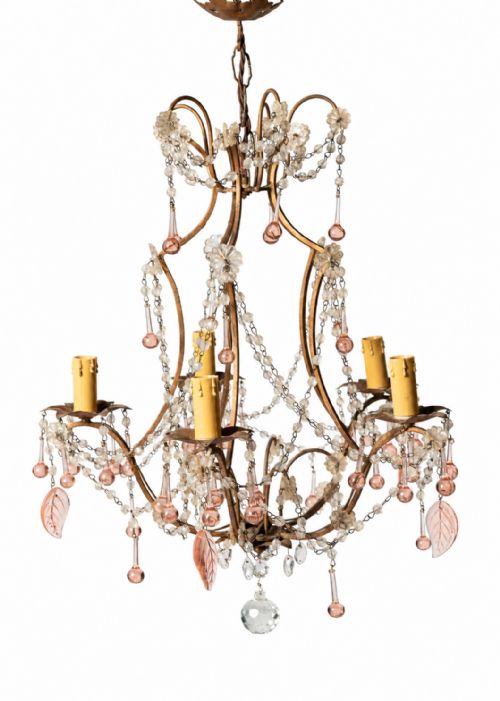
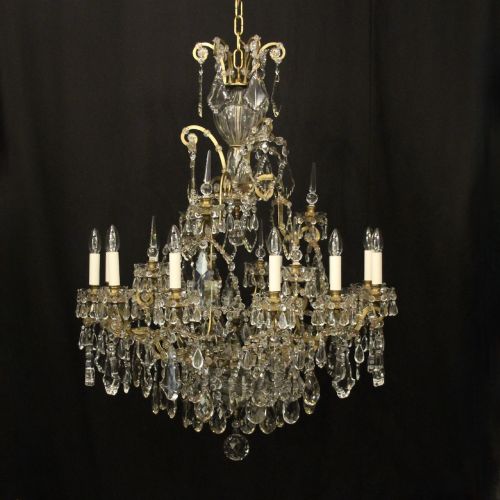
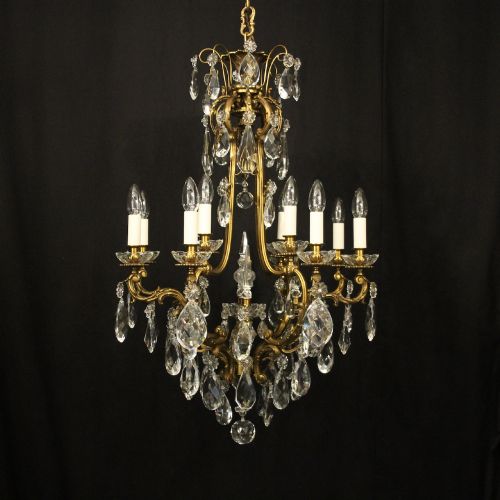
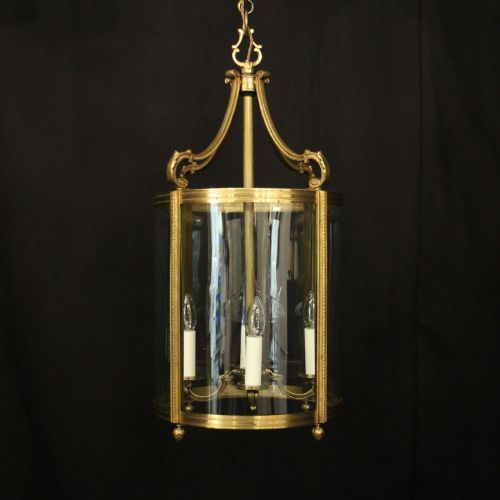
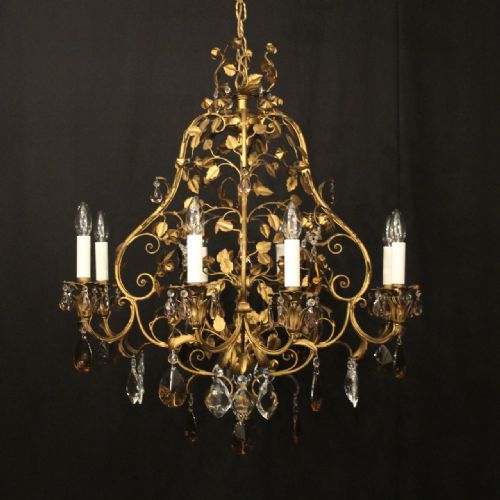
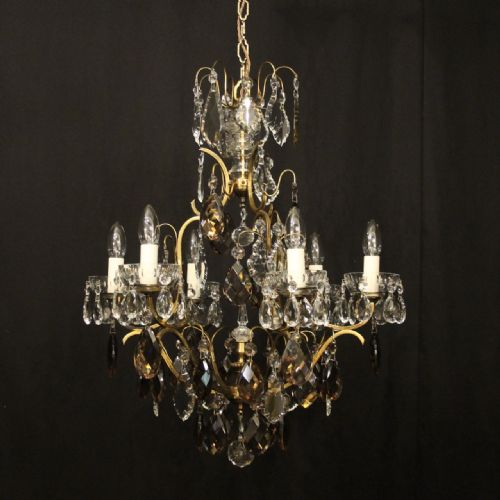
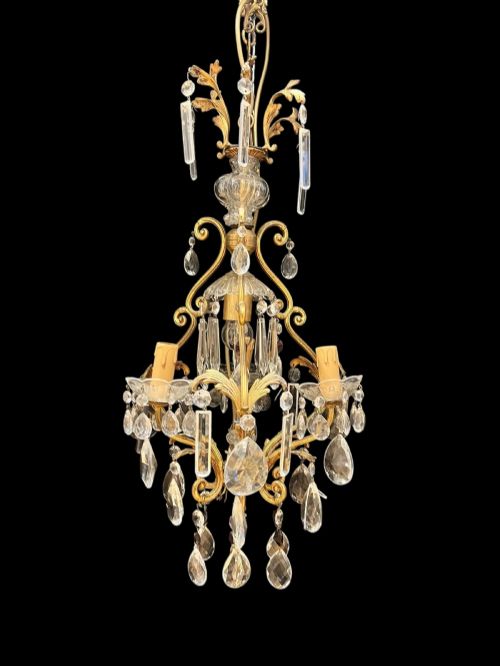
A gilt cage chandelier is a prominent overhead lighting fixture defined by an open framework of metal enclosing or supporting numerous candle arms, glass drops, and crystals. When searching for a gilt cage chandelier, buyers encounter pieces originating primarily from French and Italian workshops across the nineteenth and early twentieth centuries. These fixtures take the form of structured birdcage designs, open-cage formats, and elaborate tiered lanterns hung with crystal prisms and glass beads.
The versions most commonly met on this page span the Edwardian era through the 1930s, alongside older nineteenth-century examples. They frequently employ multiple light branches numbering anywhere from a modest single bulb up to sixteen or twenty-four arms on grander structures. The underlying metal frames are shaped to mimic architectural cages or ornate birdcages, designed to maximise the dispersal of illumination from internal or surrounding candles and electric bulbs.
How they were made
Makers constructed these chandeliers using durable base metals including brass, bronze, and gilt metal, which were then gilded or finished with ormolu to achieve a bright golden sheen. The metal frameworks were cast, soldered, or forged into rigid structural cages designed to support considerable weight.
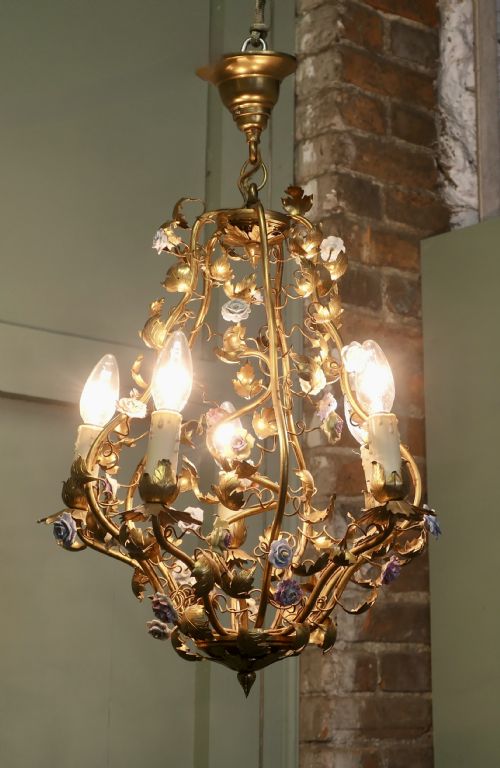
Cut crystal, glass drops, amethyst crystal, and glass beads were suspended from the metal frames using wire loops or pins to catch and refract light. Certain variants integrated painted toleware, ceramic flowers, and coloured fruits to add ornamental variety to the metallic and crystalline structure.
Gilt Cage Chandelier Retail Price Guide 2026
Typical asking prices for gilt cage chandelier among the pieces listed under this phrase on Sellingantiques today, from the lower quarter to the upper quarter. They describe what is for sale here now, not the wider market.
Listings feature items from the Edwardian period alongside the 1880s, 1900s, 1910s, 1920s, and 1930s, constructed in brass, gilt bronze, and cut crystal.
What varies in quality
Quality in these chandeliers is determined by the density and precision of the crystal work, the intricacy of the metal casting, and the weight of the bronze or brass used in the frame. Superior examples feature hand-cut crystal prisms with sharp facets and heavier, finely chased gilt bronze components rather than lighter stamped metal.
The overall harmony of proportions and the complexity of the cage structure also divide standard production pieces from masterworks. Finer items incorporate integrated downlights, elaborate floral ceramic elements, or rich amethyst glass additions that show advanced decorative ambition.
The Gilt Cage Chandelier Glossary
- Cage chandelier
- A lighting fixture featuring a skeletal metal framework shaped like a birdcage that supports interior and exterior glass drops and candle arms.
- Ormolu
- Finely ground high-carat gold mercury-gilded onto a bronze base, creating a brilliant and durable metallic finish found on high-end mounts.
- Toleware
- Painted sheet metal used to form decorative elements such as floral motifs, leaves, and structural components on period lighting.
- Prism
- A cut glass or crystal pendant designed to refract light into spectral colours when illuminated from within the chandelier.
- Candelabra
- A branched candleholder form that was frequently converted to electrical wiring for use as a hanging ceiling light.
Gilt Cage Chandelier: Frequently Asked Questions
How do I hang a heavy chandelier?
These fixtures require secure anchoring directly into ceiling joists or heavy-duty structural noggins using a rated ceiling hook capable of supporting the combined weight of metal and crystal. Professional installation by an electrician ensures the electrical box and chain safely bear the load.
Because many vintage examples arrive with historical chains and ceiling roses, an electrician should verify the structural integrity of the hanging loop before installation.
Were these fixtures originally electrified?
Most pieces dating from the nineteenth and early twentieth centuries were originally designed for candles or gas before being adapted for modern electrical wiring later in their lifespan or during recent restoration. This conversion process often involves running internal wiring through the central metal cage.
Buyers frequently find pieces that have been fully rewired to accept standard contemporary bulbs while retaining their original sockets and decorative glass drops.
How do I clean a crystal chandelier?
Maintenance involves gentle dusting of the metal frame and individual crystal drops using a soft cloth or a specialised non-drip spray cleaner designed for delicate glass. Removing each crystal for a thorough wash in warm soapy water is occasionally necessary for deeply soiled pieces.
Care must be taken around fragile toleware elements, ceramic flowers, and antique gilding to prevent moisture damage or loss of the original surface finish.
What rooms suit a cage chandelier?
The vertical presence and reflective crystal of these chandeliers make them well-suited for high-ceilinged entrance halls, dining rooms, and drawing rooms where they serve as a central focal point. Their open design prevents them from feeling visually heavy despite generous proportions.
Smaller single-light or compact four-light variants function effectively in corridors, bedrooms, or intimate parlour spaces.